As a seasoned supplier of Calender Production Lines, I’ve spent years immersed in the intricacies of this industry. Understanding the industry standards for a Calender Production Line is crucial not only for manufacturers but also for end – users who rely on high – quality products. In this blog, I’ll delve into the key industry standards that govern the design, operation, and quality of Calender Production Lines. Calender Production Line

Design Standards
The design of a Calender Production Line is the foundation upon which its performance and reliability are built. One of the primary design standards is the precision of the calendering rolls. These rolls must be machined to extremely tight tolerances. The diameter variation of the rolls should typically be within a few micrometers. For example, in high – end calendering applications, a tolerance of ± 0.005 mm is often required. This precision ensures uniform pressure distribution across the material being calendered, resulting in consistent product quality.
Another important design aspect is the alignment of the rolls. Misaligned rolls can cause uneven pressure, leading to defects in the calendered product such as thickness variations and surface irregularities. The alignment tolerance for the rolls is usually specified as a few degrees of angular deviation. For instance, the angular misalignment between rolls should not exceed 0.05 degrees to maintain optimal performance.
The structural integrity of the production line is also a critical design standard. The frame and supporting structures must be able to withstand the forces generated during the calendering process. The materials used for the frame, such as high – strength steel, should have sufficient yield strength and stiffness. For example, a yield strength of at least 350 MPa is commonly required for the frame materials to ensure long – term durability.
Safety Standards
Safety is of utmost importance in any industrial production line, and Calender Production Lines are no exception. One of the key safety standards is the installation of safety guards. These guards should cover all moving parts, such as the calendering rolls, gears, and belts, to prevent operators from coming into contact with them. The guards should be made of strong and durable materials, such as steel or reinforced plastic, and should be designed to withstand impacts.
Emergency stop buttons are another essential safety feature. They should be easily accessible from all operating positions on the production line. In the event of an emergency, an operator should be able to quickly stop the entire production line with a single press of the emergency stop button. The response time of the emergency stop system should be within milliseconds to minimize the risk of injury.
Electrical safety is also a major concern. The electrical components of the Calender Production Line must be properly grounded to prevent electrical shocks. All electrical wiring should be protected by conduits and should meet relevant electrical safety codes. For example, the insulation resistance of the electrical system should be at least 1 MΩ to ensure safe operation.
Quality Control Standards
Quality control is an integral part of the Calender Production Line. One of the primary quality control standards is the measurement of the thickness of the calendered product. This can be achieved using various techniques, such as ultrasonic thickness gauges or laser thickness sensors. The thickness tolerance for the calendered product depends on the specific application. For example, in the production of plastic films, a thickness tolerance of ± 5% is often acceptable.
Surface quality is another important aspect of quality control. The calendered product should have a smooth and uniform surface. Any surface defects, such as scratches, pits, or bubbles, are considered unacceptable. Visual inspection is often used to detect surface defects, but more advanced techniques, such as optical profilometry, can also be employed for more accurate assessment.
The mechanical properties of the calendered product, such as tensile strength and elongation, also need to be tested. These properties are crucial for ensuring the performance of the final product. For example, in the production of rubber products, the tensile strength should meet the specified standards, which can range from a few MPa to tens of MPa depending on the application.
Environmental Standards
In today’s world, environmental considerations are becoming increasingly important. Calender Production Lines need to comply with various environmental standards. One of the key environmental standards is the control of emissions. The production process should minimize the release of pollutants such as volatile organic compounds (VOCs). This can be achieved through the use of proper ventilation systems and the installation of air pollution control devices, such as activated carbon filters.
Waste management is another important environmental aspect. The production line should have a system in place for the proper disposal of waste materials, such as scrap rubber or plastic. Recycling programs can also be implemented to reduce the amount of waste sent to landfills. For example, scrap rubber can be recycled into new rubber products, reducing the environmental impact of the production process.
Operational Standards
The operational standards for a Calender Production Line are focused on ensuring efficient and reliable operation. One of the key operational standards is the speed of the production line. The speed should be optimized based on the type of material being calendered and the desired product quality. For example, in the production of thin plastic films, a higher production speed may be possible, while for thicker rubber products, a slower speed may be required to ensure proper calendering.
The temperature control of the calendering process is also crucial. Different materials require different temperature ranges for optimal calendering. For example, in the production of PVC films, the calendering temperature may need to be maintained between 160°C and 180°C. The temperature should be monitored and controlled accurately to ensure consistent product quality.
Regular maintenance is an essential operational standard. The production line should be inspected and maintained on a regular basis to prevent breakdowns and ensure long – term reliability. This includes tasks such as lubrication of moving parts, inspection of electrical components, and replacement of worn – out parts.
Why Choose Our Calender Production Lines
Our Calender Production Lines are designed and manufactured with strict adherence to all the industry standards mentioned above. We use the latest technology and high – quality materials to ensure the precision, safety, and reliability of our products. Our design team has extensive experience in developing calendering solutions that meet the diverse needs of our customers.
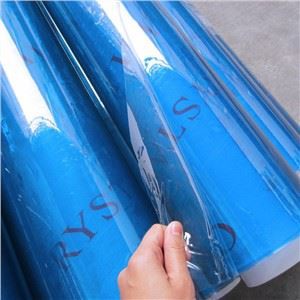
We also offer comprehensive after – sales service, including installation, training, and maintenance support. Our technicians are highly skilled and can provide prompt assistance in case of any issues with the production line.
PE Cling Firm If you are in the market for a Calender Production Line, we invite you to contact us for a detailed discussion. Our team of experts will be happy to understand your specific requirements and provide you with the best solution. Whether you are a small – scale manufacturer or a large – scale industrial enterprise, we have the right Calender Production Line for you.
References
- ASME B5.54 – 2005, “Performance Standard for Computer Numerically Controlled Machining Centers”
- ISO 12100:2010, “Safety of machinery – General principles for design – Risk assessment and risk reduction”
- ASTM D882 – 18, “Standard Test Method for Tensile Properties of Thin Plastic Sheeting”
Baoding Yashen Technology Co., Ltd.
Baoding Yashen Technology Co., Ltd. is well-known as one of the leading calender production line manufacturers and suppliers in China. If you’re going to buy bulk high quality calender production line in stock, welcome to get free sample from our factory. For customized service, contact us now.
Address: Qingyuan Industrial Area, Baoding, Hebei, China.
E-mail: info@yashenchina.com
WebSite: https://www.yashenchina.com/
