Hey everyone, so you’re here because you’re either a spec engineer, a facility manager, or maybe another SPD supplier who’s dealt with the headaches of a T1 25KA surge protective device failing when you need it most. As someone who’s been selling and supporting these units for over a decade, I’ve seen way too many failures that aren’t just random—they’re predictable, and most stem from things we (as suppliers) or our installers, even our clients, mess up. Today, I’m breaking down the main failure modes of T1 25KA SPDs, no overly technical jargon, just real-world stuff I’ve run into on jobs. T1 25KA Surge Protective Device
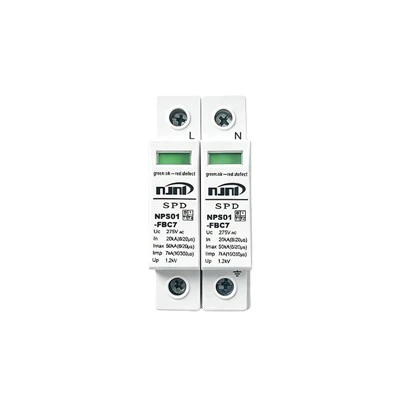
First, let’s get a quick recap of what a T1 25KA SPD is, for anyone who’s new to the party. T1 is the lightning protection category from IEC 61643, right? That means it’s rated to handle direct or near-direct lightning strikes—25kA is the peak current it’s supposed to absorb before kicking in. These aren’t the little plug-in ones you put on your TV; they’re hardwired into your main electrical panel, your data center’s utility feed, or industrial equipment that can’t afford a surge taking it offline. So when this thing fails, it’s not just a broken gadget—it’s a potential fire hazard, downtime that costs you thousands, or even damaged equipment you thought was protected.
The first big failure mode I see all the time: thermal runaway due to overloading. Wait, let’s break that down. T1 25KA SPDs have a maximum continuous operating voltage (MCOV), right? It’s usually around 440V for 3-phase systems, but a lot of installers or even clients will try to use a lower MCOV unit because it’s cheaper, or they’ll connect the SPD to a circuit that’s got a higher voltage spike than the MCOV can handle. Or worse, they’ll load the SPD beyond its rated current capacity. Let me give you an example: a data center I worked with a couple years ago had their T1 25KA SPD wired to a 480V bus instead of the 400V it was rated for. Over time, the varistors inside the SPD (that’s the part that does the surge absorbing) heated up because they were constantly leaking current at the higher voltage. The heat built up, the plastic housing started melting, and eventually the SPD shorted out—no more protection, and if their breakers hadn’t tripped fast enough, they would’ve had a fire in their electrical room. Thermal runaway isn’t just “overheating”; it’s a chain reaction where one varistor’s heat makes the next one hotter, until the whole unit fails completely. I’ve also seen this when clients run multiple SPDs in parallel without checking the current sharing—one ends up taking way more than its 25KA rating, and boom, thermal runaway.
Next up: degradation from repeated minor surges. A lot of people think T1 SPDs only deal with big lightning strikes, but no—every time your HVAC kicks on, your elevator starts, or there’s a switching surge from the utility, that’s a small current going through the SPD. Each of these surges wears down the varistors inside, even if they’re way below the 25KA rating. I had a client last year who installed a T1 25KA SPD at a factory with frequent manufacturing equipment starts. After three years, the SPD failed because the repeated 1-2kA surges had eroded the varistor’s metal oxide layers. It couldn’t absorb a big test surge we ran during maintenance, so it blew. The kicker here? They thought the SPD was fine because it hadn’t had a direct lightning hit. But T1 SPDs aren’t just for one big strike—they’re for a lot of smaller ones over time. That’s a mistake a lot of people make: not testing or replacing them based on surge count, not just age.
Third failure mode: mechanical damage from improper installation. T1 SPDs are rugged, but they’re not indestructible. I see installers crimping the wires too tight, which cracks the varistor inside, or leaving too much slack that gets pulled loose during equipment vibration—especially in industrial settings with big motors. Another big one: installing the SPD too far from the main breaker. The NEC (National Electrical Code) says T1 SPDs need to be within 10 feet of the service disconnect, right? A lot of installers will run 50 feet of wire to where they “think” it’s accessible, but that extra wire increases the impedance, so when a surge hits, the SPD has to work harder. The voltage drop across the long wire also means the SPD isn’t seeing the full surge, so it’s absorbing less than it’s rated for. I had a job where an installer ran 40 feet of wire for a T1 25KA SPD; when a lightning strike hit, the wire’s impedance limited the current to 12kA instead of 25kA, and the SPD failed. The client thought the product was junk, but it was the installer cutting corners on distance. Also, improper grounding—T1 SPDs need a solid earth ground, at least 25kA capacity. If you use a small ground wire (like 14 gauge instead of the recommended 6 gauge), that ground can’t carry the surge, so the SPD’s internal parts fry. I’ve seen this in commercial buildings where electricians use leftover wire for grounding instead of the correct size.
Fourth: end-of-life circuit interruption. Modern T1 25KA SPDs have a built-in fuse or disconnect mechanism that kicks in when the varistors are too far gone, right? The good ones (the ones we sell, obviously) have a thermal disconnect that isolates the SPD before it can cause a short circuit. But cheaper, no-name SPDs skip this part. I saw a unit last year that just kept running even after the varistors were dead, so when a surge hit, it turned into a short circuit, tripping the main breaker for the entire building. The client’s server room was down for 12 hours, cost them $200k in lost revenue. The difference? Our units have a visual and electrical end-of-life indicator—so you can test it, and the disconnect works as designed. The cheap ones have no indicator, so you don’t know it’s dead until it’s too late. Also, some clients will bypass the disconnect because they don’t want to have to replace the SPD when it hits end of life. That’s a terrible idea—if you bypass it, the SPD can short out, cause a fire, or damage equipment.
Fifth: contamination and environmental stress. Wait, this isn’t just industrial sites—even commercial ones. If your SPD is in a dusty warehouse, a food processing plant with grease, or a chemical plant with corrosive fumes, that gunk gets into the housing, builds up on the varistor’s terminals, and causes leakage current. Over time, that leakage heats up the unit, leading to thermal runaway. I had a bread factory client where flour dust got into the SPD housing; within two years, the unit was leaking so much current it tripped the main breaker every time the conveyor turned on. Also, extreme temperatures—T1 SPDs are rated for a temperature range, usually -40°C to 85°C, but if you install it in a place that’s too hot (like an unventilated electrical closet in a summer) or too cold (outside in freezing weather without a heater), the varistors degrade faster. Cold makes the plastic housing brittle, so vibration cracks it; heat makes the varistor’s conductive material break down. I’ve seen SPDs on rooftop installations fail after a year because the summer temps hit 120°F, way above their rating.
Now, let’s talk about what I do as a supplier to prevent these failures—because it’s not just about selling a product, it’s about supporting the client. We don’t just ship an SPD and walk away. We give installers specific guidelines for MCOV, wire size, grounding distance, and we do pre-testing for every unit before it leaves our warehouse. We also provide annual maintenance checks for our clients, where we test the SPD’s leakage current, check for visual signs of damage (like melted housing, cracked terminals), and verify that the disconnect is working. A lot of other suppliers don’t do that—they just sell the unit and say “good luck.”
Wait, let’s clear up a common myth: a lot of people think the higher the KA rating, the better. No, not for T1. 25KA is the standard for most commercial and industrial T1 applications, but if you’re in a remote area with frequent lightning, you might need 40KA. But using a higher KA than you need isn’t necessarily better—sometimes it’s bigger, heavier, and harder to install, which leads to those mechanical and distance issues I talked about. So matching the KA rating to your environment is key.
Another thing: counterfeit T1 25KA SPDs. That’s a huge one. I’ve seen knockoff units on Amazon or other suppliers that are labeled 25KA, but when you test them, they can only handle 10KA before failing. These use cheap varistors that are made from impure metal oxide, so they degrade super fast, no thermal disconnect, and they’re a fire hazard. We don’t sell counterfeits—all our units are certified to IEC 61643-11 and UL 1449, so you know they meet the standards. If you’re buying a T1 25KA SPD, check for certifications, not just the label.
Now, let’s wrap this up. The main failure modes are thermal runaway from overloading/wrong MCOV, degradation from repeated minor surges, mechanical damage from bad installation, faulty end-of-life circuits, and environmental stress. Most of these are preventable—with correct installation, regular maintenance, using certified units, and not cutting corners on wire size or distance.
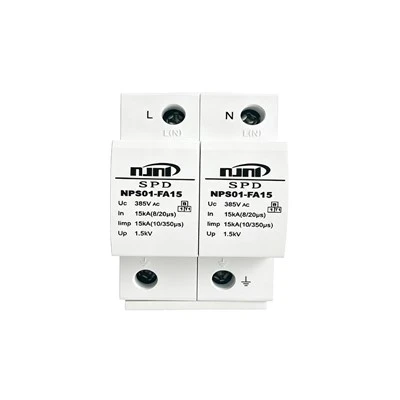
If you’re currently dealing with a failed T1 25KA SPD, or you need to replace an old one, or you want to make sure your current setup is working right, reach out to us. We can help you choose the right unit for your site, walk you through proper installation, or set up a maintenance plan to keep your surge protection in good shape. No jargon, no pressure, just real advice from someone who’s been in the field and knows the ins and outs of these units.
T1+T2 7KA Surge Protective Device References:
IEC 61643-11:2011, Low-voltage surge protective devices – Part 11: Surge protective devices connected to low-voltage power systems – Requirements and test methods
UL 1449, Standard for Surge Protective Devices
National Electrical Code (NEC) 2023, Article 280, Surge Protective Devices
Nanjing Ningpu Lightning Protection Equipment Manufacturing Co., Ltd.
As one of the most professional T1 25ka surge protective device manufacturers and suppliers in China, we’re featured by quality products and good price. Please rest assured to buy customized T1 25ka surge protective device made in China here from our factory. Also, pricelist is available.
Address: Building 1, No.20 Shengyuan Road, Lishui Economic Development Zone, Nanjing City, Jiangsu Province, China
E-mail: 3796023563@qq.com
WebSite: https://www.npspd.com/
