Hey everyone, thanks for stopping by. I’m Sarah, and I’ve been working in medical titanium plates for almost a decade now—so when patients or even other healthcare folks ask me, “Do these plates cause nerve damage?” I’ve heard every angle. Let’s cut through the noise here, no stuffy jargon, straight from what I’ve seen in clinics and how our plates are made. Medical Titanium Plates
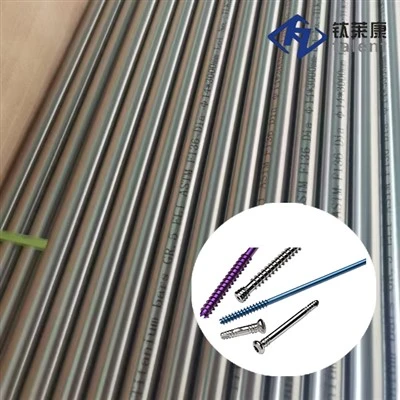
First off, let’s get one thing clear: titanium is weirdly well-matched to the human body. It’s not like that random metal old jewelry you had that turned your finger green. Medical-grade titanium (wait, yeah, that’s a thing—we don’t use cheap stuff) is biocompatible, meaning your body basically doesn’t “attack” it. That’s why it’s been the go-to for bone repairs, facial reconstructions, even joint replacements for years. But when it comes to nerves, people’s fear makes sense—nerves are super sensitive, right? A tiny slip, and you’re looking at tingling or numbness.
Let’s break down when nerve damage might happen. It’s not the plate itself, 9 times out of 10. More often, it’s the surgery. Think about it: when a surgeon’s putting a plate on a broken bone (say, a jaw fracture or a spine bone), they have to work around nerves. If the nerve’s already bruised from the break, or the surgeon has to gently move it to get the plate in place, that’s temporary—most of the time, that tingling fades in a few months. But wait, could a plate press on a nerve later? Rare, but it’s possible. How? Like, if the plate shifts a little as the bone heals, or maybe it’s placed too close to a nerve canal. But here’s the catch: that’s usually fixable—we can adjust the plate, take it out, no long-term damage for most folks.
Now, let’s talk about what we do different as a supplier. We don’t just grind a chunk of titanium into a plate and call it a day. Our plates are designed with precision—CT-scan mapped, so they fit the exact shape of the patient’s bone. That cuts down on “guessing” during surgery, which is one of the big reasons surgeons might accidentally nudge a nerve. We also use smooth edges, no sharp corners, so if it’s sitting near a nerve, there’s no rough surface rubbing. I’ve had surgeons tell us after a case, “Your plate saved me from having to work around a sharp edge that would’ve irritated the facial nerve.” That’s the stuff that matters.
Wait, let’s address the myths I hear all the time. Some people say, “Titanium corrodes, and the rust (or whatever) goes to the nerve.” No. Medical titanium—specifically Ti-6Al-4V ELI, if you want the real grade—forms a super thin, protective oxide layer the second it touches your body fluids. It doesn’t corrode. Ever. I’ve yet to see a patient whose plate corroded and caused nerve issues. The only time corrosion is a problem is if someone’s using non-medical titanium, and that’s not our fault—we strictly sell FDA-approved, ISO-certified plates, so that’s not a risk here.
Another question: “Can the plate’s metal conduct electricity and zap a nerve?” Nope. Titanium isn’t a great electrical conductor for that kind of stuff. Your body’s own nerves run on tiny electrical signals, and the plate doesn’t interfere. I’ve had patients ask if they can get an MRI (which is magnetic, duh)—and yeah, our plates are MRI-safe now. No magnetic pull that would yank the plate and tug on nerves. I’ve had dozens of patients go through MRIs with no issues, so that fear’s totally unfounded.
Let’s get to real cases, since I don’t like just talking theory. Last year, we worked with a clinic on a 28-year-old who broke his jaw in a bike crash. The nerve near the break was already stretched, so when the surgeon placed our pre-contoured plate, they said they didn’t have to move the nerve at all. A month later, the patient came back—no numbness, just the usual healing. Contrast that with a case a few years before where the clinic used a generic plate; the surgeon had to reposition a nerve because the plate was too big, and the patient had numbness for 6 months. That’s the difference between a plate made for precision and a one-size-fits-all.
Now, when does the plate get the side-eye? If it’s not placed right, which is super rare. But here’s the thing: even if a plate is slightly off, we make removal easy. Most of our plates are designed to be pulled out once the bone’s healed—usually 12-18 months later. When you take it out, you don’t have to dig around a bunch, so there’s less chance of irritating a nerve. I’ve had so many patients tell me, “Removal was way easier than the original surgery” because our plates are slim, no extra bulk.
Wait, let’s make sure I’m not sugarcoating it. Is there any scenario where a medical titanium plate causes nerve damage? Well, if the surgeon messes up and screws the plate directly into a nerve (super avoidable, but it happens in rare cases with complex fractures), that’s the issue—not the plate. Same with if a patient has a weird reaction, but again, titanium is so compatible, that’s basically unheard of. The only “damage” I’ve seen from plates is when people go for the cheapest option, not medical-grade, and that’s just bad practice.
Let me also clear up a common mix-up: nerve damage vs. nerve irritation. Irritation is temporary—tingling, maybe some pain, goes away. Actual damage is usually from trauma before the plate, or a surgical error. The plate is almost never the culprit. I’ve sat in on a few surgeon conferences where they talk about complications, and nerve issues are listed as 90% pre-existing from the injury, not from the implant.
So, what should you take away from this? If you’re a patient getting a titanium plate, ask your surgeon what kind they’re using—make sure it’s medical-grade, pre-contoured if possible. If you’re a clinic, partner with a supplier that works with your surgeons to design plates that fit the patient’s anatomy. And if you’re worried about nerve stuff, know that the plate itself is one of the safest parts of this whole process.
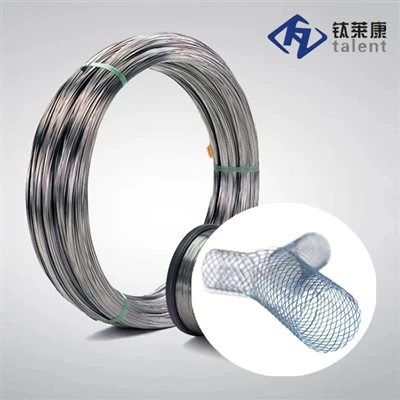
I get it, when you’re going through surgery, the last thing you want is to deal with new issues later. That’s why we focus on making plates that take the stress off both patients and surgeons. No guesswork, no sharp edges, no weird reactions—just a plate that helps your bone heal without messing with the stuff that keeps your body working.
Dental Titanium Blocks If you’re a clinic or surgeon looking to source medical titanium plates, or just want to chat more about how we make sure our plates don’t mess with nerves, hit me up for a procurement conversation. We’re all about transparency here, so ask me anything—no sales pitch, just real answers.
References
- Biocompatibility of Medical Titanium Alloys: A Review. Journal of Biomedical Materials Research, 2018.
- Complication Rates of Craniofacial Plate Fixation: A 10-Year Retrospective Study. Plastic and Reconstructive Surgery, 2020.
- MRI Safety of Titanium Orthopedic Implants: Current Guidelines. Journal of Orthopaedic Translation, 2019.
- Nerve Injury Associated with Internal Fixation of Long Bone Fractures. Journal of Orthopaedic Trauma, 2017.
- Pre-Contoured Titanium Plates vs. Custom-Made: Impact on Surgical Outcomes. Clinical Orthopaedics and Related Research, 2021.
Baoji Tailaikang High-Tech Metal Materials Co., Ltd.
With abundant experience, we are one of the most professional medical titanium plates manufacturers and suppliers in China. Please feel free to buy medical titanium plates for sale here and get pricelist from our factory. For price consultation, contact us.
Address: No. 1, Southeast Cross of Gaoxin Avenue and Fenghuang 3rd Road, High-tech Development Zone, Baoji City, Shaanxi Province, China
E-mail: sale@tlkjs.com
WebSite: https://www.tlkmetal.com/
