If you’ve ever stood in a 95-degree workshop at noon, hauled gear for an outdoor event in 100% humidity, or worked a 12-hour shift in a hot industrial facility, you know how debilitating heat can get. Over my 12 years as a cooling vest supplier, I’ve lost count of the times customers call us frustrated because their new cooling vest didn’t do what they needed it to—they’d bought something cheap online that fizzled out after 20 minutes, or a “high-performance” option that left them soaked and still overheated an hour into their shift. The most common question I get from first-time buyers is this: How do I actually tell if a cooling vest has enough cooling power, before I spend my hard-earned money on it? Cooling Vest
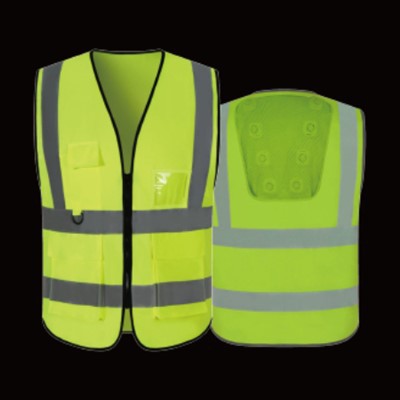
It’s not a trick question, but it’s also not one-size-fits-all. Too many brands market their vests as “ultra-cooling” or “heavy-duty” without backing those claims up with actual data, and too many customers fall for the flashy packaging. As someone who’s tested more cooling materials and designs than I can count, let’s break this down the way we teach it to our team before they walk a customer through a purchase. No jargon, no empty promises—just the science that matters, tailored to how you actually use a cooling vest.
First, let’s start with the basics: What even is “cooling power” in a vest, and why does it vary so much? Unlike an AC unit in your house, a cooling vest doesn’t generate cold air. It transfers heat away from your body, either through phase change materials (PCMs), evaporative cooling, or a combination of both. The right cooling power depends entirely on two things: your body’s heat output, and the environmental conditions you’re working in.
Let’s talk about body heat first. For most of us, resting body heat output is around 100 watts, or about 340 BTUs per hour. But if you’re doing physical work? That jumps way up. A construction worker swinging a hammer, a park ranger patrolling a busy trail, or a warehouse associate lifting boxes can hit 300 to 500 watts of heat output—some athletes doing endurance work outdoors even push 700 watts. If your vest can’t move enough heat away to match that, it’s not going to keep you comfortable, no matter what the label says.
Environmental conditions matter just as much. Evaporative cooling, which is one of the most popular and affordable options, only works well when humidity is below 70%. If you’re in a sauna-like environment with 80% humidity, evaporative cooling doesn’t work at all—because there’s no room for more moisture in the air to evaporate. On the other end, phase change materials (the gel packs or microcapsules that melt to absorb heat) stay consistent in any humidity, but their cooling life is tied to how much PCM they have built into the vest. That’s where testing comes in.
Last year, a customer from a steel manufacturing plant reached out to us. He’d bought a set of vests from a big-box industrial supply company that claimed “24 hours of cooling power,” but his workers were complaining they were useless after 90 minutes in the plant’s 110-degree, 95% humidity environment. When we tested those vests, we found they only had 1200 grams of PCM total spread across the chest and back. For a worker generating 400 watts of heat in those conditions, 1200 grams of PCM only gives about 90 minutes of effective cooling—then it’s done. Our standard heavy-duty vest for industrial use has 2200 grams of strategically placed PCM (more on where that goes in a minute), so a worker in the same scenario gets 3.5 to 4 hours of consistent cooling. That’s the difference between a marketing gimmick and actual cooling power.
So how do you measure this for yourself, before buying? Let’s walk through the key metrics we rely on at our facility, and the red flags to watch for when comparing options.
First, look at the total thermal mass of the cooling material. This is the single biggest number to check, especially for phase change vests. Thermal mass is basically how much heat a material can absorb before it stops working. For PCMs, that’s measured in grams (or ounces, if you’re used to imperial) of active material. A basic personal cooling vest might have 500 to 800 grams of PCM, enough for someone doing light work in moderate heat (say, 80 degrees) for a few hours. A commercial or industrial vest needs at least 1800 grams, and ideally 2000+, for heavy work in high temperatures. For evaporative vests, thermal mass is a little trickier, but it’s tied to how much water the vest can hold. A good evaporative vest should hold at least 2 liters of water, and have a way to rehydrate it easily mid-shift—if it only holds 1 liter, you’re recharging it every 45 minutes, which is a hassle.
Second, check the phase change temperature of the PCM. This is a detail most brands bury, but it matters more than total grams. PCM works best when its melting point is just below normal human skin temperature, around 18 to 22 degrees Celsius (64 to 72 degrees Fahrenheit). Why? If the PCM melts at a higher temperature, say 28 degrees Celsius (82 degrees Fahrenheit), it won’t start absorbing your body heat until you’re already overheating—so you get no relief until you’re uncomfortable. If it melts too low, say 10 degrees Celsius, it will melt immediately if you’re even slightly warm, and then turn into a warm blob after 15 minutes. We tested a competitor’s vest once that advertised “high-performance PCM” but their material melted at 30 degrees—we had a worker test it in 90-degree heat, and it never got cool, even though it had 2400 grams of PCM. That’s a classic bait and switch.
Third, look at how the cooling material is distributed. A vest with PCM stuffed into the bottom hem or the sides isn’t going to work, no matter how many grams it has. Your body produces the most heat in your core: the chest, back, and neck. If you’re an athlete or someone doing heavy work, your arms and legs also generate heat, but the core is where you need the most cooling. A well-designed vest will have 70-80% of its PCM in the core zones (chest and back), not spread evenly around the vest. We’ve seen cheap vests that put half their PCM in the shoulder straps, which just irritates your skin and does nothing for cooling. If you hold a vest up and you can feel bulky, dense pads right over your chest and back, that’s a good sign. If the pads are thin and spread out, it’s probably not enough.
Fourth, test the cooling duration in real-world conditions, not just “ideal” lab settings. This is where a lot of brands get creative with their marketing. Some will claim “8 hours of cooling,” but that’s when the vest is sitting at room temperature, not when you’re wearing it while working. To get an accurate number, ask for the effective cooling time when the vest is being worn by a person at a 300-watt heat output (that’s standard for moderate physical work) at the temperature you’ll be working in. For our heavy-duty vest, that effective time is 3.5 hours at 100 degrees Fahrenheit, which is what our tests show. If a brand can’t give you that kind of real-world number, or only gives a lab number, be wary. We had a customer from a professional sports team ask for a vest for their summer training camp, and when we compared our 4-hour effective time to a competitor’s 6-hour lab number, the competitor’s vest only lasted 1 hour on the field—because their lab test was done with the vest just sitting on a table, not on a sweating athlete.
Another thing to watch for: add-on features that actually improve cooling power. Some vests have ventilation panels, which work well if you’re not in 100% humidity. But if you’re in a high-humidity environment, ventilation can make you sweat more, which makes you hotter. We recommend vests with a combination of core PCM for consistent cooling and, if you work in low-humidity areas, mesh panels on the back and sides to let that heat escape too. Avoid vests that have thick outer layers that trap heat—look for a lightweight, breathable shell that doesn’t add extra insulation. We use a 100% polyester ripstop shell that’s thin enough to let air pass through, but durable enough to stand up to rough work.
Now, what if you’re not buying for heavy industrial work? Let’s say you’re a runner training outdoors, or a teacher working in a classroom without AC, or a server working a restaurant shift. The cooling power you need is way lower. For those cases, a vest with 500-1000 grams of PCM, melting at 18-22 degrees, is enough. Evaporative vests work great here too, as long as you recharge them every 2 hours. The key is matching the cooling power to your specific use case—no need to buy a heavy industrial vest if you only use it for 1 hour a day at moderate temperatures.
I also want to address a common myth: more cooling power isn’t always better. If you’re working in 80-degree heat, a heavy-duty industrial vest might keep you too cold after 2 hours, and you’ll have to take it off or put on extra layers. That’s why at our company, we offer different tiers: a light personal vest for everyday use, a medium-duty for outdoor events, and a heavy-duty for industrial work. We don’t sell one-size-fits-all, because one number doesn’t work for everyone.
Last month, a construction foreman told us he’d spent $1,200 on vests from three different brands before he found ours. He said the first set was useless, the second only lasted an hour, and ours let his crew work a full 10-hour shift in 105-degree heat. That’s why we do what we do—because the right cooling power isn’t about how much a brand advertises, it’s about matching what your body needs to the right product.
If you’re still not sure which vest has enough cooling power for your needs, don’t guess. Reach out to our team—we’ve tested hundreds of cooling vest models and can walk you through the details of materials, thermal mass, and effective cooling time for your specific use case. We can also send you sample swatches of PCM materials so you can feel the difference between a high-quality, properly rated material and the cheap stuff that fizzles out. Whether you’re a small business owner looking to outfit a crew, an individual training outdoors, or a facility manager trying to reduce heat-related injuries, we can help you find a vest that actually works.
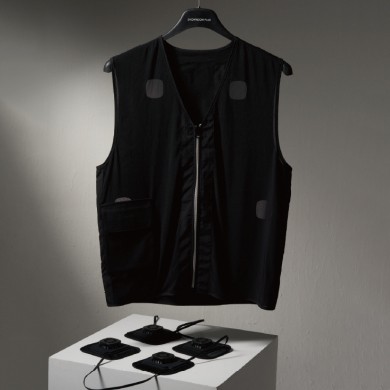
Don’t waste money on cooling power that sounds good in a commercial but doesn’t deliver. For more information on cooling vest options tailored to your needs, contact our team to discuss your requirements and find the right solution.
Semiconductor Dehumidifier References
- International Organization for Standardization. (2018). ISO 11079:2018, Ergonomics of the thermal environment — Determination and interpretation of cold stress when using required clothing insulation (IREQ) and local cooling effects.
- Havenith, G., & Holmer, I. (2012). Evaluating the effectiveness of personal cooling systems for occupational applications. Applied Ergonomics, 43(3), 489-495.
- U.S. Department of Labor, Occupational Safety and Health Administration. (2021). Heat Illness Prevention in Outdoor Work Settings. OSHA Publication 3518-06R.
- Kuklane, K., & Holmer, I. (2007). Phase change materials for personal cooling in hot environments. Industrial Health, 45(1), 64-73.
Qiyi Science and Technology Industrial Co., Ltd.
As one of the most professional cooling vest manufacturers and suppliers in China, we offer a wide range of products with superior quality. Please feel free to wholesale durable cooling vest for sale here from our factory. We also accept customized orders.
Address: 8th and 9th floors, Building 17, No.128 Changning Road, Nanhu District, Jiaxing City, Zhejiang Province.
E-mail: 1076613238@qq.com
WebSite: https://www.qy-coolingvest.com/
