Hey there, it’s Jake from the ASU team—you know, the guys who hook manufacturers and industrial operators up with air separation units (ASUs) that actually keep their production lines running, no hidden garbage. Lately I’ve been getting so many messages (same DMs, same LinkedIn questions, even a few random phone calls I didn’t expect) asking the same thing: “What does it actually cost to run a Type Of Air Separation Unit?” Not just the sticker price for the machine itself, but the monthly, annual stuff that doesn’t hit you till the first bill shows up. I get it—when you’re budgeting for an ASU, that upfront number’s easy to fixate on, but the operating costs? Those are the ones that’ll sink your profit margin if you don’t plan for ’em. Today we’re breaking that down like I would over a coffee with one of my regular clients, no fancy jargon, no stuffy whitepaper nonsense. Type Of Air Separation Unit
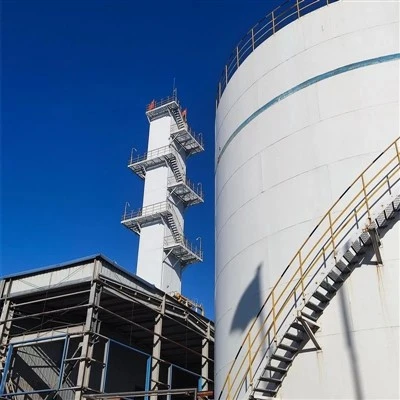
First off, let’s clarify: we’re not talking about tiny lab ASUs that fit on a desk here. We’re talking about the Type Of Air Separation Units our clients use—for food and beverage CO2, medical oxygen, industrial nitrogen for metal fabrication, even oil and gas operations that need high-purity gases. These are big, complex systems, so their operating costs aren’t one-size-fits-all. I’ve seen a 50-tons-per-day (TPD) ASU for a small craft brewery have totally different bills than a 500-TPD unit for a big steel mill. But there are core costs that apply to every single one, and a few wildcards that’ll make or break your long-term numbers. Let’s start with the biggest pig in the pen: energy.
Energy is like 60-80% of an ASU’s annual operating cost, no exaggeration. These units work by compressing air, cooling it, separating it into its components (nitrogen, oxygen, argon, etc.) via cryogenic distillation, right? Compressors run 24/7, 365 days a year—no weekends, no holidays, no “turn it off for the night” when you’re running a production line that never stops. The big variable here is electricity cost, which changes all over the place. Last year, a client in the Midwest told me their utility was charging $0.08 per kWh; another client in California was paying $0.22 per kWh for the same ASU size. That’s a massive gap. Let’s do quick math for a 100-TPD ASU: those units use roughly 0.5 kWh per standard cubic foot (SCF) of gas produced. So 100 TPD is about 85,000 SCF per hour, times 0.5 kWh? That’s 42,500 kWh per hour. Multiply by 24 hours, 365 days? That’s 372,600,000 kWh a year. At $0.08/kWh, that’s ~$29,800 a month, ~$357,000 a year. At $0.22/kWh? That’s $81,900 a month, almost a million bucks a year. Yikes. And that’s just the electricity for the main compressors—don’t forget the smaller fans, pumps, control systems, and refrigeration units that keep everything cool.
Now, if you’re running an ASU in an area with super high energy costs, there are workarounds. Some clients use on-site natural gas generators to power their units, or hook up to a local waste heat source (like excess heat from a nearby factory or refinery) to offset compressor needs. I had a chemical plant client in Texas that paired their 200-TPD ASU with a plant waste heat system and cut their energy bill by 40% in a year. That’s the kind of tip I don’t just post in a brochure—stuff I learn from working with operators every day.
Next up, consumables and regular maintenance. These are the costs that sneak up on you because they’re not monthly, they’re quarterly or annual, but they add up fast. ASUs have parts that wear out constantly: filters, valves, gaskets, and the molecular sieves that purify the air before it goes into the distillation column. Those sieves are like the gatekeepers—they catch water, carbon dioxide, and other impurities so they don’t mess up the separation. You have to replace them every 3-5 years, and for a 100-TPD unit, that’s a $50k-$75k bill right there. Filters and valves? Monthly or quarterly replacements—for that same size unit, that’s $5k-$10k a year just on those.
Maintenance isn’t just parts, either. ASUs are precision machines—one small misalignment in a compressor, or a tiny leak in the distillation column, and you’re losing gas, wasting energy, and risking downtime. Most operators contract with a third-party service team or have their own in-house techs, and those service calls aren’t cheap. For a full preventive maintenance (PM) check-up on a 100-TPD unit, you’re looking at $15k-$25k a year, plus emergency calls if something breaks. Last winter, a client in Ohio had a compressor go down during a cold snap (perfect timing, right?) and the emergency repair cost them $12k in parts and labor, on top of $50k in lost production because they had to shut down their line. That’s the stuff no one tells you about when you price an ASU—downtime costs are often way bigger than the repair itself.
Then there’s utilities and raw materials, beyond just electricity. Wait, hold on—when I say raw materials, I’m not talking about feeding some chemical into the ASU. The main “raw material” is air, which is free, but you’ve got water, right? ASUs need tons of water for cooling—both for the compressors and the distillation process. That means water usage, and sometimes wastewater treatment costs, depending on where you’re located. A 100-TPD unit uses roughly 500,000 gallons of water a year, give or take. In a place where water is expensive (like Arizona, where I’ve got a food client), that’s $2k-$3k a year in water bills, plus another $1k-$2k to treat the used water before you dump it. Also, if your ASU uses nitrogen or some other gas for backup or purging, that’s another monthly cost, though it’s usually way smaller than energy.
Now, here’s the big wildcard I mentioned earlier: purity and capacity. Wait, what? If you need higher-purity gases, that’s way more expensive to run. A medical-grade oxygen ASU (which needs 99.5% purity, minimum) uses 10-15% more energy than an industrial-grade oxygen unit, because you have to run the distillation process longer and at tighter temperatures to get that extra purity. And if you need variable capacity? Like, sometimes you need 50 TPD, sometimes 150 TPD because your production line is scaling up or down—wait, that also affects costs. I’ve had a few clients run their ASUs at 30% below their rated capacity just to “save energy,” but that’s actually a myth. ASUs are most energy-efficient when running at 80-90% of their rated capacity. Run them too low, and they’re wasting the same amount of base energy but producing less gas, so your per-gas cost goes up. That’s a mistake I see all the time—operators think they’re being thrifty by scaling back, but they’re actually losing money.
Also, location has a weird way of messing with costs. Let’s talk about temperature. ASUs run best in cool, dry climates. If you’re in a super humid, hot place like Florida? The air coming in is wetter and warmer, so the unit has to work harder to compress and cool it, which cranks up your energy bill by 10-20%. Another thing: regulatory stuff. Some areas have emissions rules that require you to install extra scrubbers or monitoring systems for your ASU’s exhaust. That’s upfront, but also adds to annual operating costs for maintaining that equipment. And in places with strict safety rules (think areas near residential zones or medical facilities), you have to do more frequent testing and inspections, which adds more maintenance costs.
Wait, let’s not forget labor. If you’re running an ASU, someone’s got to monitor it, right? Most modern ASUs have automated controls, so you don’t need a crew of people standing around 24/7, but you do need at least one full-time operator per shift to check alarms, fix small issues, and make sure everything’s running. The average salary for an industrial ASU operator in the US is around $60k a year, plus benefits, so for three shifts, that’s $180k-$200k a year in labor alone. I’ve had small business clients who tried to run their ASU with a part-time operator, and that’s when mistakes happen—missed alarms lead to downtime, wasted energy, even safety issues. Labor isn’t something you can skip, no matter how cheap you want to be.
Now, let’s put this all together with real numbers, so you can get a picture. Let’s take a mid-sized 100-TPD Type Of Air Separation Unit, running in the Midwest at $0.08/kWh, with average water costs, regular maintenance, and full-time labor. Annual energy cost: ~$357k. Consumables and parts: ~$20k a year (filters, valves, sieve replacements every 4 years, so ~$18.75k a year average). Maintenance (PM checks, emergency calls): ~$25k a year. Water and wastewater: ~$3k a year. Labor: ~$190k a year. Total annual operating cost: ~$600,000. That’s about $50,000 a month. If that same unit was in California at $0.22/kWh? Total annual cost jumps to ~$950,000, or ~$79k a month. That’s a massive difference, and it’s all stuff you have to plan for before you buy.
But here’s the thing—this doesn’t mean an ASU is always a money pit. A lot of operators choose ASUs because buying gases from a third-party supplier (like the big industrial gas companies) works out more expensive long-term. Let’s do that comparison: if that same 100 TPD unit needs to buy nitrogen, that’s roughly $0.10 per SCF, which is 85,000 SCF per hour, so $8,500 an hour, $204,000 a month. That’s way less than the $50k a month operating cost for an on-site ASU. So the tradeoff is the upfront cost of the unit vs. the long-term savings, plus the control you get over your gas supply (no more shortages or price hikes from big suppliers). But you can only make that call if you know the operating costs, right?
Now, what mistakes do I see operators make when calculating these costs? Oh, so many. First, they forget the “hidden” costs—like downtime, labor, and regulatory compliance. I had a metal fabrication client a few years ago who budgeted $300k a year for operating costs, but forgot labor and emergency maintenance, so they ended up $200k over budget in the first year. Second, they go for the cheapest ASU upfront, only to find out it’s less energy-efficient, so their operating costs are 25% higher every year. Cheaper parts mean more replacements, more downtime, more lost money. Third, they ignore scalability—if you’re planning to grow your production line in 2 years, buy an ASU that can handle that extra capacity now, even if it’s a little more upfront. Scaling later means retrofitting, which costs way more than overbuying a little at the start.
And hey, this is where I come in. At the end of the day, I’m not just selling ASUs—I’m helping you figure out what the actual cost will be for your specific operation, not a generic number from a manual. I’ll come check your facility, look at your utility rates, your production schedule, even the climate in your area, and break down exactly what your annual operating costs will be, no fine print, no surprise fees. I can also help you find energy-saving upgrades, like matching an ASU to your existing waste heat systems, so you can cut those big energy costs.
If you’re in the market for an ASU, or you’re looking to upgrade your current one to save on operating costs, hit me up to chat. We can walk through your numbers, answer all your questions, no sales pitch, just real talk about what works for your business. You don’t have to figure this out alone— that’s why I’m here.
Wait, one last thing to wrap this up, because I know I skipped over a few small costs, but we covered the big ones: energy, maintenance, consumables, water, labor, and the wildcard factors like purity and location. The key takeaway here is that operating an ASU isn’t just the electricity bill— it’s a mix of fixed and variable costs, all tied to your specific setup and situation. Don’t just look at the upfront sticker price, and don’t guess at operating costs, because that’s where most of the money goes.
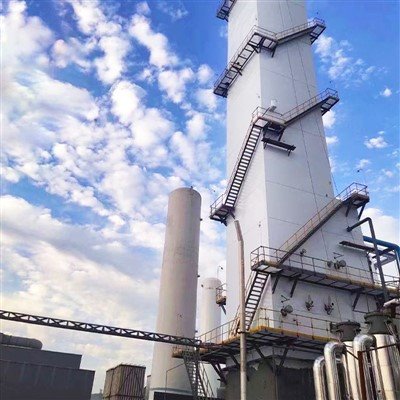
And for anyone who’s curious, yes, I’ve seen ASUs that run for 20+ years with minimal issues, as long as you do regular PM checks and plan for operating costs properly. I’ve also seen ones that crash and burn in 5 years because someone cut corners on maintenance or ignored energy efficiency. It all comes down to knowing the numbers, and that’s the part I’m good at.
Air Separation Unit Reference 1: Air Separation Unit Operating Cost Analysis, Industrial Energy Efficiency Center, 2022.
Reference 2: Cryogenic Air Separation Systems: Maintenance and Downtime Impacts, Process Safety Progress, 2021.
Reference 3: Regional Utility Cost Variations for Industrial Equipment, US Energy Information Administration, 2023.
Xinxiang Jiale Intelligent Equipment Co., Ltd.
As one of the most professional air separation unit manufacturers and suppliers in China, we’re featured by quality products and good service. Please rest assured to buy durable air separation unit for sale here from our factory. We also accept customized orders.
Address: No.3913, 9th Floor, Unit 3, East Commercial and Office Complex, Baolong City Plaza, Hongqi District, Xinxiang City, Henan Province, China
E-mail: cc2397410@gmail.com
WebSite: https://www.jiale-asu.com/
