Hey, if you’re running a snack biz or just thinking about breaking into that space, you’ve probably asked yourself: “Wait, what raw materials do I actually need to keep a snack food production line running?” Don’t worry— I’ve talked to hundreds of snack brand owners over the years, and way too many of them fumble this part. Some skimp on key ingredients and end up with off-flavors or inconsistent products, others buy the wrong type of raw material and blow their production line’s capacity. Since I’m a snack food production line supplier, I’ve seen what works (and what completely tanks), so let’s break this down like we’re geeking out over our favorite late-night chip run— no stuffy textbook jargon, promise. Snack Food Production Line

First, let’s start with the big one: base ingredients. This is the foundation of every single snack, right? And no, that’s not just “potatoes for chips”— I mean the core stuff that your production line actually processes. Let’s take the most popular snacks as examples because that’s what most folks are making: potato chips, tortilla chips, pretzels, puffed snacks, maybe even energy bars.
For potato chips, your base is raw potatoes. But it’s not just any potato— you need a specific variety that’s high in starch, low in sugar, so they don’t turn brown too fast when you fry ’em. Russet Burbanks or Idahos are the go-to here. If your line’s making tortilla chips, it’s nixtamalized corn masa— that’s corn that’s been soaked in lime water, then ground into dough. For puffed snacks (like cheese puffs or corn pops), it’s cornmeal, rice flour, or wheat flour— stuff that’s got the right protein and starch content to puff up perfectly in your extruder, which is a key part of the production line. And for baked snacks, like pretzels, you’ll use wheat flour, yeast, salt, and water as the base for the dough.
Wait, a quick pro tip from someone who installs these lines for a living: if you’re working with a lot of different base ingredients, make sure your line has interchangeable hoppers and mixing systems. I’ve had clients who bought a one-size-fits-all mixer, and they can’t switch from corn to potato without a 3-hour cleanup— that’s lost production time. Trust me, that’s the kind of small detail that makes or breaks a small-batch snack biz scaling up.
Next up, processing aids— these are the unsung heroes that keep your line running smoothly, even if most people don’t see them. Let’s be real: raw ingredients don’t just magically turn into your finished snack. Processing aids are the stuff that makes that happen without messing with the final product’s safety or taste. For example, when you’re frying chips, you need food-grade oil— but that’s also a raw material, right? Wait, I should split fats and oils into a separate category because they’re not just for frying. If you’re making chocolate-covered snacks, you need cocoa butter or vegetable oils. If you’re making baked goods, you might use butter or shortening. But here’s the thing: not all oils are equal. If your production line is high-volume, you’ll want oils with a high smoke point— like canola, sunflower, or palm oil (sustainable, obviously— no one wants to get called out on social media for bad oil choices). Low smoke point oils (like olive oil, if you’re making an artisanal line) are fine for small batches, but they’ll break down fast on a high-volume line, leading to off-flavors and wasted product.
Then there’s release agents. When your dough is going through the extruder or baking trays, it can stick to machinery, right? That’s where food-grade release agents come in— usually something like lecithin or mineral oil, safe for consumption. And don’t forget anti-caking agents, especially for powdery snacks like cheese powder for dusting. If your powder clumps up on the seasoning line, you’ll have unevenly seasoned chips, and no one wants a chip with 5x the cheese dust vs. a plain one.
Now, flavorings and seasonings— this is where you can make your snack stand out, but it’s also the part that trips up a lot of new snack makers. I’ve seen people buy cheap flavoring extracts that are way too strong, so a little goes a long way— which is great for cost, but if your line’s not calibrated to mix evenly, you’ll have a lot of waste. Or vice versa: they use super mild seasonings and end up with a snack that tastes like cardboard. Let’s break this down: dry seasonings (salt, cheese powder, paprika, garlic powder) are straightforward, but liquid flavorings (like chocolate, caramel, or flavored syrups for drizzles) need special handling. Your production line needs a liquid seasoning system with precise pumps— if the pump’s off by even 1%, you’ll end up with too much caramel drizzle that makes the snack soggy, or too little that no one notices.
Also, don’t skip natural vs. artificial flavors if that’s your brand. More and more consumers want clean labels, so if you’re marketing your snack as “all-natural,” you’ll need natural flavor extracts, not artificial ones. But here’s a tip from a guy who’s worked with snack lines for 12 years: natural flavors can be more expensive, so make sure your mixing system can handle the concentration so you don’t waste a drop. I had a client once who bought super expensive truffle oil for their chips, and their old line’s pump was dripping 2x as much as it should— they almost went out of business before they upgraded their seasoning system. That’s the kind of story that stays with you.
Then there’s additives and preservatives— wait, I know, preservatives sound scary, but they’re not all bad if you’re using them right, especially for a production line that’s shipping snacks cross-country. Let’s be real: a fresh batch of chips will go stale in a week if you don’t have something to extend their shelf life. But if you’re making artisanal snacks that ship locally, you can skip most preservatives. Common ones are things like ascorbic acid (vitamin C, which is a natural antioxidant) to prevent browning, or calcium propionate to keep mold out of baked goods. Emulsifiers are another big one— they keep ingredients from separating, like keeping chocolate and nuts mixed together in a granola bar, or keeping oil from separating in a dip (though dips are a separate snack category, same logic applies).
Wait, let’s not forget packaging materials! A lot of people forget that packaging is part of the raw materials for the production line— because your line has to seal and label the snacks, right? What’s the point of making perfect chips if you’re packaging them in a bag that lets air in, so they go stale on the shelf? You need the right packaging: for chips, it’s usually laminated plastic bags with a tear notch, maybe a nitrogen flush to keep them crispy. For energy bars, it’s wrappers that seal tightly to keep moisture out. If you’re making a line that switches between multiple packaging sizes (like 1oz snack packs and family-size bags), you need a packaging line that’s compatible with different bag types— that’s where modular lines come in, which I swear by for growing snack brands.
Now, let’s talk about the “hidden” raw materials that no one tells you about: water and energy. Wait, water? Yeah, because most base ingredients (dough, masa) use water, and your production line needs water for cleaning— which is super important for food safety. If your line’s not cleaned properly between runs, you’ll get cross-contamination (like a cheese-flavored chip line mixing with a peanut line, which is a disaster for allergy-prone consumers). And energy? Electricity, gas for frying, whatever— that’s a raw material too, because if your line doesn’t have consistent power, your puffed snacks won’t puff right, or your oven will have hot spots. I had a client in a rural area who tried to skimp on a backup generator, and one night the power went out mid-extrusion— they lost 500 lbs of corn puffs because they couldn’t finish the batch. That was a $20k mistake, all because of skipping a key “raw material” for the production line.
Wait, let’s circle back to what makes a snack food production line supplier’s advice different. Because I’m not just selling you a line— I’ve seen lines run with cheap vs. good raw materials, and I can tell you which ones pair best with your specific line. For example, if you have a small-scale fry line for potato chips, you don’t need industrial-grade oil filtration systems, but if you’re a high-volume line making 10,000 lbs of chips a day, filtration is non-negotiable to reuse oil and cut costs. That’s the stuff I don’t see in generic blog posts— because I’m actually out there working with snack makers every week.
Let’s also touch on food safety, because that’s non-negotiable for any snack biz. All these raw materials have to meet FDA (or whatever your local food authority’s) standards, right? So when you’re sourcing potatoes, make sure they’re free of pesticides, when you’re buying seasonings, check that they’re food-grade, not industrial. A lot of small snack makers accidentally buy non-food-grade ingredients because they’re cheaper, and that’s a quick way to get shut down. I always tell clients: don’t cut corners on raw material quality, because a recall will cost way more than the extra $0.10 per lb you saved on cheap ingredients.
Now, if you’re just starting out, or looking to upgrade your production line, here’s the biggest takeaway: don’t just buy raw materials based on cost. Match them to your line’s capacity and your brand’s goals. If you’re a small-batch craft brand, you can use specialty potatoes and natural flavors, but if you’re scaling to grocery store shelves, you need consistent, high-volume raw materials that your line can process efficiently.
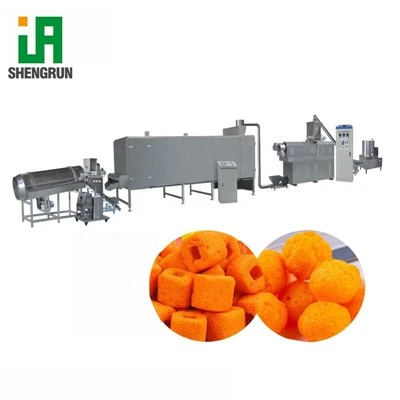
At the end of the day, the raw materials are only half the battle— having a production line that can handle those materials without waste, downtime, or safety issues is the other half. If you’re in the snack biz, and you’re tired of dealing with inconsistent raw materials or a line that can’t keep up with demand, let’s talk. We can walk through exactly what raw materials pair best with your line, what upgrades you might need, and how to cut down on waste. No sales pitches, just straight talk from someone who’s been in this game long enough to know what works.
Fried Snacks Processing Machine References:
- U.S. Food and Drug Administration. (2023). Food Additives and Ingredients: Raw Materials for Snack Production.
- Snack Food Association. (2022). Raw Material Guidelines for Commercial Snack Production Lines.
- Global Food Safety Initiative. (2021). Safety Standards for Snack Production Raw Materials and Processing Aids.
Jinan Shengrun Machinery Co., Ltd.
We are one of the most professional snack food production line manufacturers and suppliers in China, featured by quality products and good price. Please rest assured to buy durable snack food production line for sale here from our factory. Contact us for more details.
Address: 1817 Rongce Center, No.3179 Qilu Avenue, Xingfu Street, Huaiyin District, Jinan City, Shandong Province
E-mail: sales@foodgm.cn
WebSite: https://www.food-gm.com/
