If you’ve ever worked in a call center, you know the job is way more than just talking on phones all day. For 8 hours, 10 hours, even longer—you’re hunched over a desk, leaning in to type notes, twisting to reach a folder, or craning your neck to hear a customer over background noise. I’ve talked to dozens of call center team leads, agents, and HR folks over the years, and their biggest complaint? Not bad scripts or difficult customers—it’s the office chair. The one they’re stuck with hurts their back, makes their legs fall asleep, and by the end of a shift, they’re counting down the minutes to sit on their couch. Office Chair

As an office chair supplier, this is the part that matters most to me. Generic, one-size-fits-all chairs don’t cut it here. Call center work has specific, repetitive stresses that a regular desk chair never sees. I’m not just here to sell you a chair— I’m here to tell you what actually works, based on years of listening to the people who use them every single day. Let’s break down exactly what to look for, and which chairs check all the boxes for call center teams.
First, let’s get real about why call center chairs are different. Most of us sit wrong without even noticing. But call center agents are sitting for 8+ hours straight, often in positions that are less than ideal: slouching because it’s easier to lean into their headset, sitting on the edge of their seat to reach their keyboard, or crossing their legs for 20 minutes at a time while on hold. These small, constant bad postures add up fast—neck pain, lower back stiffness, hip tightness, even carpal tunnel from hunching over their workstations. A good call center chair has to prevent those issues, not just “look office appropriate.”
Let’s start with the non-negotiables. First: adjustability. Not the kind where you crank a lever once and it’s set forever, but adjustability that lets you tweak your chair mid-shift. Agents might switch from typing to taking notes on a tablet, so they need to move their arms and back without straining. The best chairs have at least four key adjustments: seat height (to get your feet flat on the floor, not dangling), seat depth (so your thighs have 2-3 inches of space between the front of the seat and the back of your knees—no more numb legs), armrest height (they should line up with your desk so your elbows are at 90 degrees, not hovering or dropping), and backrest tilt. Tilt is huge for call centers: sometimes you need to sit upright for taking a call, sometimes you can lean back a little while on hold. A tilt lock that lets you choose your preferred position is a must.
Next, lumbar support. I can’t stress this enough. Lower back pain is the number one complaint from call center agents, and cheap chairs skip proper lumbar support entirely. That little plastic lumbar pad in some $50 desk chairs? It doesn’t adjust. Good call center chairs have dynamic lumbar support—meaning it curves in to match your spine, not just a hard bump. Some even let you adjust the depth of the lumbar support, so a taller agent can have it further back and a shorter agent can move it up. I’ve seen teams cut down on back-related sick days by 30% just from switching to chairs with this feature.
Then there’s the seat and back material. Call centers run 12-hour shifts, sometimes with multiple people using the same chair if it’s a hot-desk setup (super common in smaller teams). You need something breathable—no vinyl that traps heat and makes you sweat through your shirt by lunch. Mesh backrests are way better here. They let air circulate, so your back stays cool even on hot days. For the seat, a high-density foam cushion with a mesh top or a fabric that’s stretchy but durable is perfect. It doesn’t flatten out after a few months like cheap foam, and it’s soft enough that you don’t feel like you’re sitting on a board, but firm enough to support your weight.
Wait, what about headsets? A lot of people forget that call center agents wear headphones all day. The chair’s backrest shouldn’t be too high or too stiff that it presses into the back of your headset. Some chairs have a slightly curved top edge to make space for headsets, which is a tiny detail but makes a huge difference for comfort. No more adjusting your headset every 10 minutes because it’s digging into the hard plastic of the chair.
Now, let’s talk about the chairs that actually nail all these points, based on what our customers (call centers big and small) have bought and loved over the years.
First up: The Ergonomic Mesh Task Chair. This is our best-seller for call centers, and for good reason. It has 6 adjustment points—way more than the average desk chair. You can adjust the seat height, seat depth, armrests (they even pivot in and out, which is great if you need to type close to your desk), lumbar support depth, and backrest tilt tension. The mesh back is super breathable, and the seat is 2 inches thicker than standard, so it doesn’t flatten even after 10+ hours of sitting. Our customers tell us that agents who used to come in with neck and back pain every Monday now say they barely feel their chairs by the end of a shift. It’s also durable—we’ve had call centers with this chair running 12 hours a day, 6 days a week, and the average lifespan is 5+ years. That’s a big win for budgets, because you don’t have to replace chairs every year.
Wait, what about teams on a tighter budget? We also have a mid-range task chair that’s perfect for small call centers or home agents (a lot of call centers let agents work from home now, right?). It has all the key adjustability—seat height, armrests, basic lumbar support, and a tilt function. The only thing it skips is the pivot armrests and adjustable lumbar depth, but for the price, it’s way better than the generic chairs most home agents use. We just sold 40 of these to a remote call center team, and their feedback was that it’s way more comfortable than the $100 chairs they had before.
Then there’s the heavy-duty option. Some call centers have agents over 250 lbs, and standard chairs don’t hold up. Our heavy-duty ergonomic chair has a reinforced frame, a seat that’s an inch wider and 3 inches thicker, and adjustable support that doesn’t buckle under weight. We had a 200-agent call center with a lot of bigger agents, and they went through 3 heavy-duty chairs a year before switching to ours. Now they replace half as often, and agents say they don’t feel like their chairs are going to give out mid-shift.
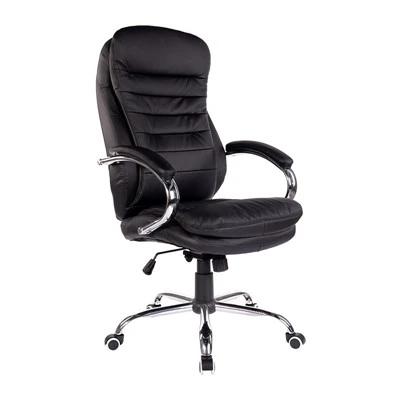
A common mistake call centers make is buying chairs just for looks, not for function. We had a client a few years back who ordered a bunch of executive-style chairs for their call center—you know, the ones with the high leather backs and wide seats. The problem? Those chairs are built for short meetings, not 10-hour shifts. The leather traps heat, so agents were sweating through their shirts, and the fixed lumbar support didn’t match their spine, so they were complaining about back pain within a month. They ended up returning half of them and ordering our mesh task chairs instead, and they haven’t looked back.
Another thing to consider: mobility. Call center floors are busy, agents are rolling back and forth to grab papers, get water, help teammates. The chair’s casters need to work on carpet (most call centers have low-pile carpet) and hard floors. Our chairs come with dual-wheel casters that roll smoothly on both, no scraping, no getting stuck in carpet fibers. Cheap single-wheel casters break all the time, and replacing them adds up. We include free casters for your floor type, so you don’t have to guess.
What about remote call center agents? A lot of companies are shifting to hybrid models, so agents are working from home. The same rules apply—they need a chair that supports their posture, not a folding chair from the garage or a dining room chair. We have a line of smaller, portable ergonomic chairs that are perfect for home setups, with the same adjustability and support as our office models. We just ran a promotion for a call center that offered a $100 stipend for agents to buy a chair, and 70% of them bought our home ergonomic chairs. Their survey after said 90% of agents had less back pain, and productivity went up a little too—no more mid-shift breaks just because their chair hurt.
Now, let’s talk about ROI. I know what you’re thinking: “These chairs are more expensive than the cheap ones online.” But let’s do the math. A cheap $80 desk chair lasts 1-2 years, and you have to replace it every year. Our task chair is $250, lasts 5+ years. Over 5 years, that’s $400 for the cheap chairs vs $250 for ours. Plus, the cost of sick days. If one agent calls out sick every month because of back pain, that’s 12 days a year, or 3% of their time. If you have 10 agents, that’s 120 days of lost work. A good chair cuts that by at least half, so you’re not paying for overtime to cover shifts or lost productivity. That’s a way bigger cost saving than the difference in chair prices.
Wait, I should mention a few things to test before you buy. If you’re ordering a bunch of chairs for your team, have a few different agents sit in them for a week before ordering the whole lot. Some people prefer softer seats, some firmer. Some are taller, some shorter. Our chairs have swappable seat cushions and lumbar pads, so you can adjust per agent. That way, no one ends up with a chair that doesn’t fit their body. We also offer free sample chairs for teams—you can test one in your office for 2 weeks, see how agents like it, before you commit to a big order. That’s way better than guessing online.
I’ve been in this business for 15 years, and the number one thing I hear from call center managers is that they want their team to feel supported. When agents are comfortable, they’re happier, they stay longer, and they take better care of customers. A bad chair isn’t a small issue—it affects morale, retention, and even customer satisfaction. I’ve seen teams with high turnover because agents were leaving for other jobs that gave them better chairs, and switching to our chairs cut turnover by 20% in the first year. That’s a huge win for HR and management.
So if you’re a call center manager, HR lead, or business owner looking to upgrade your team’s chairs, don’t just go for the cheapest option or the one that looks good in a photo. Look for adjustability, dynamic lumbar support, breathable material, and durability. The chairs I mentioned check all those boxes, and we’ve worked with hundreds of call centers of all sizes to get the right fit.
Now, I don’t want to ramble too long, but let’s make this clear: if you’re ready to talk about upgrading your call center’s office chairs, we’re here to help. We can answer questions, send samples, work with your budget, and make sure you get chairs that work for your specific team. No pushy sales pitches, no hidden fees—just solid advice from someone who’s worked with call centers for years and knows exactly what they need. Reach out to us to start the conversation, and we’ll help you figure out the best chairs for your agents, your floor, and your budget.
Leather Chair References:
- Bureau of Labor Statistics. (2023). Occupational Health Outcomes for Customer Service Representatives.
- American Chiropractic Association. (2022). Posture and Ergonomics in the Workplace.
- Journal of Occupational and Environmental Hygiene. (2021). Cost-Benefit Analysis of Ergonomic Office Chair Upgrades for Call Center Teams.
- National Business Furniture. (2023). 2024 Call Center Office Chair Survey Results.
- Ergonomics Society. (2022). Dynamic Lumbar Support and Long-Term Musculoskeletal Pain Reduction.
ALB Partner Limited
With abundant experience, we are one of the most professional office chair manufacturers and suppliers in Anji, China. Please feel free to wholesale OEM office chair at competitive price from our factory. Contact us for more cheap products.
Address: TIANHUANGPING INDUSTRIAL PARK, ANJI, ZHEJIANG PROVINCE, P.R.CHINA
E-mail: sales@albpartner.com
WebSite: https://www.alb-partner.com/
