If you’re an industrial facility manager, electrical contractor, or even a fellow industrial cables supplier, you’ve probably stared at a spool of heavy-duty power cable and thought, “Does this meet NEC requirements?” The National Electrical Code (NEC) isn’t just a set of random rules—it’s the backbone of safe electrical installations in North American industrial spaces, where a single miswire can lead to downtime, fires, or even serious injuries. For me, as someone who’s been supplying industrial cables out of a warehouse in the Midwest for 12 years, answering this question comes up at least once a week, and it’s never a one-size-fits-all answer. Let’s break down what the NEC actually says about industrial cables, how it applies to real-world jobs, and why it matters to anyone sourcing these products. Industrial Cables
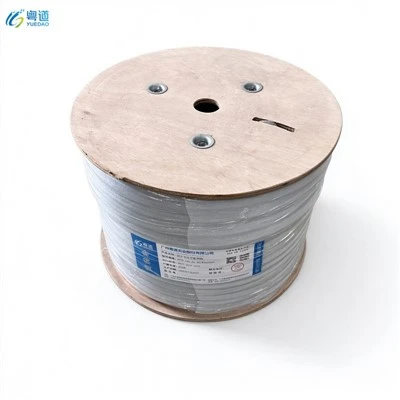
First, let’s set the basics: the NEC is published every three years by the National Fire Protection Association (NFPA), and it’s adopted in 49 U.S. states (only Texas has its own state-level electrical code, though it aligns closely with NEC standards). When we talk about “industrial cables” in the NEC, we’re not talking about the thin Romex cable running to a home’s outlet. We’re referring to cables used in factories, refineries, warehouses, mining operations, and large commercial facilities—think 600V and higher, designed to handle heavy loads, harsh environments, or both. The NEC organizes these requirements into several articles, and two are the most critical for our industry: Article 396 for Messenger-Supported Cables, and Article 400 for Flexible Cords and Cables, but wait—no, actually, the big one for hard-use industrial power and control cables is Article 356, which covers Metal-Clad Cables (Type MC), and Article 336 for Medium-Voltage Power Cables. Wait, let’s correct that early mix-up: a lot of suppliers and installers mix up Article 336 (Power and Control Cables for General Substation, Industrial, and Similar Applications) with Article 392 (Cable Trays), which is another common point of confusion. The key here is that industrial cables aren’t a single product, so their NEC classification depends on what they’re being used for.
Let’s start with power cables, because that’s where most of the risk lies. NEC Article 336 specifically addresses industrial power and control cables, and it lays out two core requirements: construction standards and installation rules. For construction, Type MV (Medium-Voltage) cables, which run from 2,001V up to 35,000V, must have insulation rated for their voltage, and that insulation has to be rated for the ambient temperature of the installation site. If you’re installing a cable in a foundry where the surrounding air is 50°C (122°F), you can’t use a 90°C-rated insulation cable and just call it good—NEC Article 336.60 requires that the cable’s ampacity (current-carrying capacity) be derated to match the ambient temperature. That’s a rule I see violated all the time: installers buy a cheaper 90°C cable, skip the derating calculation, and end up with a cable that overheats, melts insulation, and causes a fire. As a supplier, I always flag this for my clients—when they tell me the installation environment, I not only sell them the right cable but also pass along the NEC calculation to make sure they’re compliant.
Then there’s the use of flexible cables for industrial applications, which falls under Article 400 of the NEC. A lot of factories use flexible cords for things like crane connections, portable tools, or machine extensions. Article 400.10 says that these flexible cables have to be “hard-service” rated for industrial use—you can’t use a standard extension cord designed for a home lawnmower for a crane, for example. Hard-service rated cables have thicker insulation, more durable jackets, and are tested to withstand repeated bending, oil, and moisture, all of which are common in industrial settings. Last year, I had a small fabrication shop come to me after their previous supplier sold them standard SJT cords for their overhead cranes. The cords frayed within three months, almost causing a crane to drop a steel beam. I explained that NEC Article 400.22 limits where flexible cords can be used, and cranes fall under the “severe locations” category that requires hard-service Type W (weather-resistant) cables, not standard cords. That’s the kind of real-world problem that the NEC solves, and it’s why our team doesn’t just sell cables—we explain the code that makes them safe.
Another common point of confusion is cable tray installations, which are super common in big factories because they let you route multiple cables neatly along walls or ceilings. NEC Article 392 governs cable trays, and it has two big rules here. First, the fill ratio: you can’t pack more than 20% of the cable tray’s cross-sectional area with cables if you’re using nonmetallic trays, and 40% if you’re using metal trays. I’ve had clients try to cram twice as many cables into a tray to save space, but that violates Article 392.22, which leads to overheating because the cables can’t dissipate heat. Second, if you’re running power cables and control cables in the same tray, Article 392.80 requires that they be separated by a barrier if the power cables are over 2,000V. That’s a rule to prevent electromagnetic interference, which can mess up control signals for things like assembly line robots. Last quarter, a food processing plant reached out because their robot control system was glitching every time a conveyor belt turned on. We worked with their electrician to separate their 480V power cables from their 24V control cables in the tray, in compliance with NEC 392.80, and the glitches stopped. It’s a small detail, but it’s one that makes the whole system work reliably.
Now, let’s talk about grounding, because that’s where a lot of industrial installations go wrong, and the NEC is very specific here. For industrial cables, grounding isn’t just a recommendation—it’s a requirement. Article 250 of the NEC, which covers grounding and bonding, applies to all electrical systems, and there are specific add-ons for industrial cables. For Type MC metal-clad cables, which have a metal sheath, NEC Article 356.10 requires that the metal sheath be used as the equipment grounding conductor, but only if it’s continuous and intact. Wait, no—actually, 356.12 says that you can use the metal sheath as the equipment ground, but you have to make sure it’s properly terminated at both ends. If the cable is cut, the sheath has to be connected to the grounding busbar with a appropriate lug, not just twisted together. For non-metallic industrial cables, like some control cables, you have to run a separate grounding conductor, per Article 336.60’s grounding requirements. I can’t tell you how many times we’ve supplied a control cable and included extra grounding lugs, because we know installers often skip that step and end up with a non-compliant system. There’s a myth that “industrial cables are all safe by design” but that’s only true if they’re installed according to NEC rules. I’ve seen a $2 million conveyor system put out of service because an installer didn’t ground the cable correctly—they had to pull the entire cable run and redo the grounding, costing the plant thousands in downtime.
One area that’s often overlooked is hazardous industrial locations, like oil refineries, chemical plants, or grain elevators. The NEC has a whole section, Article 500, for hazardous (classified) locations, which applies to industrial cables used in these spaces. If you’re installing a cable in a Class I, Division 1 location (where flammable gases are present 24/7), the cable has to be listed for that specific location—you can’t use a standard power cable. Article 501.10 says that the cable’s jacket and insulation have to be flame-resistant, and the cable can’t have any exposed conductors that could spark. A few months ago, a refinery contractor came to me looking for power cables for their pump station, and they tried to order standard Type THHN cables. I had to explain that their pump station is a Class I, Division 2 location, so they need Type MC-HL (industrial machine tool) cables that are rated for hazardous locations, per Article 500.120. That’s a critical distinction—using the wrong cable in a hazardous location isn’t just a code violation, it’s a safety hazard that could cause an explosion.
Now, let’s address a question I get all the time: “Does the NEC apply to every industrial cable I use?” The short answer is yes, but with a few caveats. The NEC is a safety standard, not a product specification, but most industrial cables sold in North America are designed to meet NEC requirements because that’s what installers and inspectors demand. That said, there are “general use” industrial cables that don’t have to meet specific NEC rules, but they’re only allowed in non-critical, non-hazardous applications. For example, a small control cable running to a sensor on a non-critical machine in a dry warehouse might be a general-use cable, but if that same sensor is in a wet location or a machine that’s part of a production line with 480V power, it has to meet NEC Article 336 standards. As a supplier, we label every cable we sell with its NEC classification—like Type MV-90 or Type W-hard service—so clients don’t have to guess if it’s compliant.
Why does all this matter to you, whether you’re a plant manager, electrician, or someone sourcing industrial cables? The NEC isn’t just a set of rules to check off for inspections—its purpose is to prevent fires, electrical shocks, and downtime. A non-compliant cable installation might pass a quick visual check, but it will fail an inspection, get shut down, or cause a failure that costs you money. Last year, a warehouse in Ohio had a NEC violation on their new lighting system, and the inspector shut them down for two days. They had to replace 100 feet of cable that wasn’t rated for the ambient temperature, costing them $15,000 in lost production. That’s the kind of cost we help our clients avoid by making sure we supply cables that are already rated for their specific application, and by walking them through the relevant NEC rules so they can install correctly the first time.
At the end of the day, industrial cables are the unsung heroes of manufacturing, warehousing, and industrial operations. They run power to machines, control signals to robots, and keep entire facilities running. The NEC sets the standard for making sure those cables are safe, reliable, and compliant. If you’re not sure if your current cables meet NEC requirements, or if you’re sourcing new cables and want to make sure you’re not wasting money on products that won’t pass inspection, our team is here to help. We’ve been in the industrial cables business for over a decade, and we know the code inside and out—we can help you select the right cable for your specific application, walk you through the installation rules, and make sure you stay compliant with every NEC article that applies.
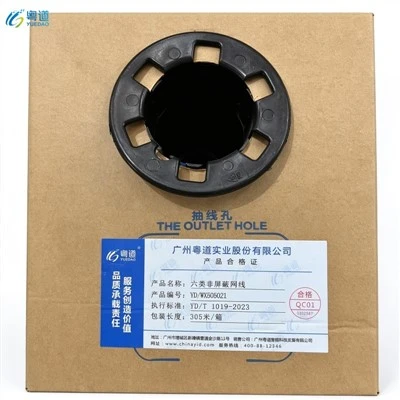
If you have questions about NEC requirements for your industrial cables, need a quote for a compliant product, or want to discuss your next project, reach out to our team to connect for a procurement conversation. We’re here to make sure your cables are safe, your installations are compliant, and your operations run smoothly.
Industrial Control Cables References
National Fire Protection Association. (2023). National Electrical Code (NFPA 70).
Guangzhou Yuedao Industrial Co., Ltd.
Guangzhou Yuedao Industrial Co., Ltd. is one of the most experienced industrial cables manufacturers and suppliers in China, featured by quality products and good price. Please rest assured to buy premium industrial cables in stock here and get free sample from our factory. We also accept customized orders.
Address: Room 401, 3‑4/F, No.13 Guandao Jinsha Road, Xintang Town, ZengCheng District, Guangzhou
E-mail: yuedao2026@gmail.com
WebSite: https://www.yidcable.com/
