As a long – standing supplier in the world of knit and woven outerwear, I’ve witnessed firsthand the unique characteristics and processes that distinguish these two types of garments. In the following blog, I’ll delve into the detailed differences between how knit and woven outerwear are made, which will not only enhance your understanding of the apparel industry but also help you make more informed decisions when sourcing outerwear. Knit And Woven Garments

Material Selection
When it comes to material selection, knit and woven outerwear start to show significant differences. For woven outerwear, fabrics such as cotton, linen, wool, and synthetic blends are commonly used. Cotton is a popular choice due to its breathability and comfort. Linen, known for its natural and lightweight feel, is suitable for summer outerwear. Wool, on the other hand, provides excellent warmth and insulation, making it ideal for winter coats. Synthetic materials, often blended with natural fibers, can add properties like wrinkle – resistance and durability.
In the case of knit outerwear, materials include wool, cotton, acrylic, and polyester. Wool knits are soft, warm, and have good elasticity. Cotton knits are comfortable and breathable, perfect for everyday wear. Acrylic and polyester are often used to create less expensive and more lightweight knits, and they can also have moisture – wicking properties, which is beneficial for active – wear outer layers.
The selection of materials is also influenced by the intended use of the outerwear. For example, if the outerwear is for high – end fashion, natural fibers like pure wool or silk blends may be preferred for both knit and woven pieces due to their luxurious look and feel. However, for sports or outdoor activities, synthetic – rich fabrics are more likely to be chosen because of their functional properties.
Yarn Preparation
In the making of woven outerwear, yarns are prepared in a way to meet the requirements of the weaving process. First, the fibers are spun into yarns. This spinning process can be either ring – spinning, which produces strong and smooth yarns, or open – end spinning, which is faster and more cost – effective but may result in a slightly coarser yarn. After spinning, the yarns may go through processes such as sizing. Sizing is a coating process that adds strength and smoothness to the yarns, allowing them to withstand the stress of the weaving machine.
For knit outerwear, yarn preparation also involves spinning fibers into yarns. However, the yarns for knitting need to have good elasticity and flexibility. Special spinning techniques may be used to ensure the yarns can be easily looped and interlocked during the knitting process. For instance, some fine – gauge knitting requires very thin and even yarns, which calls for a more precise spinning and quality – control process. Additionally, the twist of the yarn is important in knitting. A lower twist yarn is often used for soft and drapey knits, while a higher twist yarn can make the knit more structured.
Manufacturing Processes
Weaving Process
The weaving process is a complex yet fascinating one. It involves two sets of yarns: the warp and the weft. The warp yarns run lengthwise on the loom, and they are held under high tension. The weft yarns are inserted horizontally through the warp yarns. There are different types of weaving patterns, such as plain weave, twill weave, and satin weave.
In a plain weave, the weft yarn passes over one warp yarn and then under the next, creating a simple and balanced fabric. This type of weave is strong and durable, often used in denim and some basic cotton outerwear. Twill weave has a distinctive diagonal pattern. The weft yarn passes over two or more warp yarns in a regular pattern, which gives the fabric more drape and a stronger appearance. Suits and some winter outerwear are commonly made with twill – woven fabrics. Satin weave creates a smooth and shiny surface. The weft yarn floats over several warp yarns, resulting in a fabric that has a luxurious look but may be less durable in high – friction areas.
The weaving machine is a crucial piece of equipment. Traditional shuttle looms are slow but can produce high – quality and complex weaving patterns. Modern rapier looms and air – jet looms are much faster and more efficient, capable of producing large quantities of fabric in a short time. After the fabric is woven, it may go through finishing processes such as washing, dyeing, and printing.
Knitting Process
The knitting process is centered around creating loops of yarn and interlocking them. There are two main types of knitting: warp knitting and weft knitting. In warp knitting, multiple yarns are fed into the machine lengthwise, and each yarn forms its own set of loops. Warp knitting is fast and can produce fabrics with different stretch and stability properties. It is often used to make sportswear outer layers and some technical fabrics.
Weft knitting, on the other hand, uses a single or a few yarns that move horizontally across the machine. The yarn is formed into loops one after another, and adjacent loops are interlocked. Weft knitting can create a wide range of fabrics, from very stretchy jersey knits to more structured rib knits. Hand – knitting is a form of weft knitting, but in the industrial production of knit outerwear, knitting machines are used. Circular knitting machines can produce seamless tubular fabrics, which are commonly used for sweaters and some types of jackets. Flat knitting machines are used for creating flat pieces that can be sewn together to form the final garment.
After knitting, the fabric may also undergo finishing processes. These can include washing to shrink and set the fabric, dyeing to add color, and adding special treatments like anti – pilling or water – repellent finishes.
Design and Pattern Making
Design and pattern – making for knit and woven outerwear also have their own characteristics. For woven outerwear, patterns are usually more structured and geometric. Since woven fabrics have less stretch, the pattern pieces need to be cut and sewn precisely to fit the body shape. Designers need to consider the grain of the fabric, which is the direction of the warp and weft yarns. Cutting the fabric against the grain can lead to distortion and unevenness in the finished garment.
In knit outerwear, the stretchy nature of the fabric allows for more fluid and organic designs. Patterns can be simpler and may require less precise cutting because the fabric can conform to the body more easily. However, designers still need to take into account the stretch direction of the knit fabric. For example, a sweater may be designed to have more stretch in the horizontal direction for a better fit around the torso.
Pattern – making for both types of outerwear involves creating a sample garment, making adjustments, and then grading the pattern to different sizes. However, the technical requirements and the way adjustments are made can vary significantly between the two.
Quality Control
Quality control plays a vital role in the production of both knit and woven outerwear. In woven outerwear, inspections focus on the fabric’s weave quality, such as the evenness of the weave, the absence of holes or slubs in the yarns, and the colorfastness of dyeing. The seams also need to be carefully checked for strength and neatness. Since woven fabrics are less stretchy, any misalignment in cutting or sewing can lead to a poorly fitting garment.
For knit outerwear, quality control emphasizes the integrity of the knit structure. Pilling, which is the formation of small balls of fiber on the fabric surface, is a common issue in knits and needs to be closely monitored. The elasticity and stretch recovery of the fabric are also important factors. If the knit loses its stretch or does not recover properly after being stretched, the garment will not fit well and may look distorted.
In addition, both types of outerwear need to pass safety and environmental – compliance tests, such as testing for harmful chemicals in dyes and finishes.
Cost and Production Time
From a cost perspective, woven outerwear can be more expensive to produce in some cases. The weaving process, especially for complex patterns and high – quality fabrics, requires more sophisticated machinery and skilled labor. The material cost for woven fabrics, especially those made of natural fibers, can also be relatively high. However, once the production is set up on a large – scale weaving machine, the unit cost can decrease significantly.
Knit outerwear can be more cost – effective in terms of production. The knitting process is generally faster, and the machinery is often less expensive. The flexibility of knit fabrics also allows for more efficient use of materials, reducing waste. However, for high – end knit materials like cashmere or fine merino wool, the raw material cost can be very high.
In terms of production time, woven outerwear usually takes longer to produce. The weaving process itself is slower compared to knitting, especially for traditional or complex weaving patterns. Adding the time for fabric finishing, cutting, and sewing, the overall production cycle can be several weeks. Knit outerwear can be produced relatively quickly. The knitting process can be completed in a shorter time, and with modern knitting technology, large quantities of fabric can be produced in a matter of days.
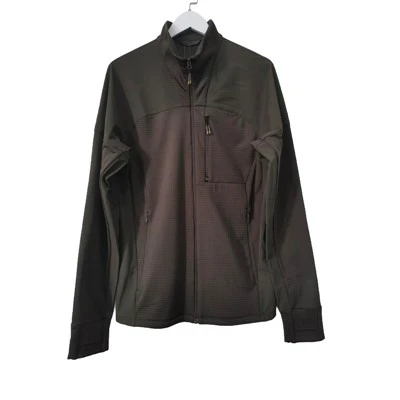
As a supplier of knit and woven garments, I understand the importance of these differences in the manufacturing process. Whether you are looking for high – quality woven coats for a winter collection or stretchy knit jackets for a sportswear line, I can provide you with the most suitable products. Our team has years of experience in selecting the right materials, controlling the production process, and ensuring the highest quality of the finished garments.
Sun Protective Clothing If you are interested in sourcing knit or woven outerwear, we would be delighted to have a discussion with you. Our experts can offer in – depth advice on material selection, design, and production to meet your specific requirements. Feel free to reach out to us for a detailed consultation and to start the procurement process.
References
- "Textiles: Science and Technology" by John R. Price
- "The Handbook of Knitting Technology" by David J. Spencer
- "Woven Fabrics: Construction, Design, and Applications" by J. E. Booth
Yancheng Dezhiwang Garments Co., Ltd.
As one of the most professional knit and woven garments manufacturers and suppliers in China, we also support customized service. We warmly welcome you to wholesale bulk high quality knit and woven garments in stock here from our factory. For price consultation, contact us.
Address: No. 1, Xinglong Road, Xinqiao Village, Fucheng Subdistrict, Funing County, Yancheng City, Jiangsu Province, China
E-mail: ntchenguangxi@163.com
WebSite: https://www.dzwoutdoor.com/
