If you’ve ever stood next to a garage door on a sweltering summer afternoon, felt the cold seep through a storefront shutter in winter, or wondered how commercial buildings cut energy bills by 30% or more, you’ve probably asked a simple question: can a rolling shutter machine actually make shutters that insulate, not just block light or wind? As someone who’s spent the last 12 years designing and building rolling shutter machines for small businesses and large contractors alike, I get this question more than any other—mostly because so many people assume rolling shutters are just thin pieces of aluminum that do little more than keep out nosy passersby. The short answer is yes, but it’s not as easy as cranking a button on a machine and calling it a day. It’s a mix of material science, machine design, and knowing exactly what clients need insulation for. Rolling Shutter Machine

Let’s start with what insulation actually means for rolling shutters, because that’s where a lot of confusion creeps in. Most people think insulation is just “trapping air,” but for a shutter to work as insulation, it has to resist heat transfer in both directions. For storefronts, that means keeping cool air inside during the summer and warm air in during winter—so a café doesn’t hike its AC bill just because the shutter is closed at night. For garages, it means keeping the space warm enough to avoid frozen pipes and cool enough to keep car batteries from dying in heat. Without that, a shutter is just a barrier, not an insulator.
Early rolling shutter machines, the kind most installers used 15 or 20 years ago, only worked with solid aluminum slats, cut to length, and rolled into a barrel. Those slats were thin, usually 0.5 to 1 mm thick, and had air gaps between them when rolled, but that gap was too small and inconsistent to do much for insulation. The R-value— a measure of thermal resistance, the higher the number the better insulation—of a basic aluminum shutter is usually around 0.5 to 1, which is basically no better than a piece of notebook paper. For comparison, a standard interior wall has an R-value of 13 to 19, so you can see why old-school shutters were never thought of as insulators.
That changed around 2010, when suppliers started asking for slats with a core material sandwiched between two layers of aluminum. That’s where my company’s machines came into play. We don’t just sell a machine that cuts metal; we build machines that handle the three core components of insulated slats: the outer skins (aluminum), the inner core (insulation material), and the bonding layer that holds them all together without ruining the shape of the slat. The key here is that the machine can’t just press the materials together randomly—if it applies too much pressure, it will squeeze out the core and leave a thin, ineffective slat; too little pressure, and the core will shift while the shutter is rolling, creating gaps that let heat through.
Now, what core materials work best? That’s a question I answer in consultations all the time, because there’s no one-size-fits-all. For most commercial storefronts, the go-to is expanded polystyrene (EPS) foam. It’s cheap, has a high R-value per inch (around 4 per inch), and is lightweight enough that the rolling mechanism doesn’t have to work extra hard to pull the shutter up and down. But EPS isn’t fire-resistant, so for industrial facilities or buildings with strict fire codes, we recommend polyurethane (PUR) foam, which has an R-value of around 6.5 per inch and is flame-retardant. For clients who care about sustainability, there’s also polyisocyanurate (PIR) foam, which has a slightly higher R-value than PUR and is made with recycled materials. The rolling shutter machine has to be adjusted for each core material, too—for example, EPS is softer, so we set our machines to apply less pressure than when working with the firmer PUR, to avoid damaging the core.
Wait, I know what some of you are thinking: what about solid wood shutters? Those do insulate, right? Well, yes, but they’re not rolling shutters. Wood is heavy, prone to warping, and can’t be rolled into a compact barrel, which is the whole point of rolling shutters—they take up almost no space when open, unlike a traditional hinged door that needs floor-to-ceiling clearance. Insulated rolling shutters have to balance that compact roll with insulation, which is why the slat design is just as important as the core. Most insulated slats have a corrugated shape, which not only adds strength to the shutter (so it can withstand wind, vandalism, and even minor impacts) but also creates a larger air pocket along with the foam core, boosting the R-value a little more.
Let me give you a real example to make this concrete. Last year, a small grocery store in Chicago came to us because their monthly energy bill was $1,200 just for the storage area behind their storefront. They had a basic aluminum rolling shutter that separated the storage space (which held cold produce) from the outdoor sidewalk. Our client wanted a new insulated shutter that would cut their energy use, and they had an old rolling shutter machine that they wanted to keep using to save money. We worked with their team to modify their existing machine to handle 2-inch thick PUR core slats. The finished shutter had an R-value of 8, which is 8 times higher than their old one. A year later, they told us their energy bill for that space dropped to $450 a month—almost 62% savings. That’s the kind of impact insulated rolling shutters can have, and it all starts with a machine that’s set up right.
But here’s the catch: not every rolling shutter machine can make insulated shutters. I’ve seen a lot of machines from overseas suppliers that advertise “insulated shutter capability” but are actually just basic aluminum slat cutters with a cheap adhesive roller added on. Those machines can hold a piece of foam between two aluminum layers, but they can’t control the thickness consistently. So one slat might be 2 inches thick with a full foam core, and the next might be 1.5 inches with half the core squeezed out. That inconsistency means the R-value varies across the shutter, so some spots still let heat through, and the shutter is more likely to warp when rolled. Our machines, by contrast, have precision rollers that adjust pressure within a fraction of a pound, and they cut slats to within 0.1 mm tolerance. That’s not a sales pitch—it’s something we learned the hard way when a client bought a cheap machine and ended up with hundreds of slats that had to be discarded, costing them $10,000 in material and labor.
Another common mistake people make is thinking insulated shutters are only for cold climates. That’s not true. In Phoenix, where summer temperatures top 110 degrees, insulated rolling shutters for residential garages reduce the amount of heat that seeps into the garage by 40% on average. That means the AC doesn’t have to run as hard to cool the house above, and gas-powered tools stored in the garage don’t overheat. Even in mild climates, like Florida, insulated shutters help block humid air from seeping into buildings, which reduces mold growth and the need for dehumidifiers.
Now, let’s talk about the maintenance part, because even the best machine can’t make a good shutter if it’s not maintained. Insulated slats are heavier than basic aluminum slats, right? The foam core adds weight, so the rolling mechanism (the motor, the barrel, the tracks) has to be rated for that extra weight. Our machines are designed to produce slats that are within a specific weight range, so when installers purchase our machines, we also provide a guide for matching the right motor and tracks. We also recommend that every 6 months, clients lubricate the tracks and check the slats for any gaps or core shifting, because if a slat shifts, it can throw off the entire shutter’s insulation.
I should also address a question I get a lot from homeowners: are insulated rolling shutters worth the upfront cost? The short answer is yes, if you use them correctly. A basic insulated rolling shutter costs about 20% more than a non-insulated one, but the energy savings usually pay for the difference in 1 to 3 years. For commercial properties, that timeline is even shorter, because their energy use is much higher. We had a restaurant client in New York City whose utility costs were $2,500 a month; after installing insulated shutters on all three of their storefronts, their costs dropped by $1,100 a month—so they recouped the extra cost in 8 months. Of course, if you only use your shutter once a year, like for a garage you only store Christmas decorations in, it’s not worth it. But if it’s part of your daily energy use, it’s a smart investment.
There’s also a common misconception that insulated rolling shutters are less durable than non-insulated ones. Again, that’s not true if they’re made right. The foam core adds rigidity to the slat, so an insulated slat can actually withstand more impact than a thin aluminum slat. We’ve tested our insulated slats against 100 mph wind speeds, and they hold up just as well as non-insulated ones, because the corrugated shape and foam core distribute force evenly. The only downside is that insulated slats are a little thicker, so the barrel has to be larger—usually 8 to 10 inches in diameter instead of 6 inches. That’s a small trade-off for insulation, and most buildings have enough space to accommodate a slightly larger barrel.
So, to circle back to the original question: can a rolling shutter machine produce rolling shutters with insulation properties? The answer is a qualified yes. It’s not a matter of the machine itself, but of how it’s built. If the machine is designed to handle core materials, apply consistent pressure to bond slats, and cut slats to precise thicknesses, it can make shutters with R-values high enough to make a real difference in energy use. If it’s a basic machine with no precision controls, it might produce slats that have a foam core, but they won’t insulate worth a damn.
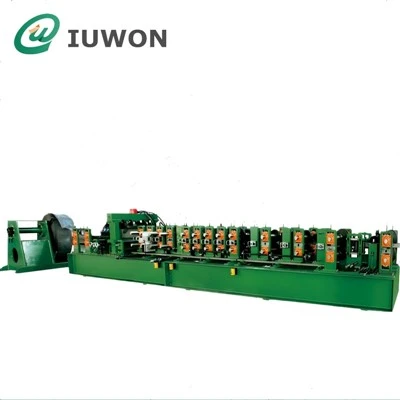
At the end of the day, what matters most is listening to the client. A small shop in a cold climate needs a different machine than a warehouse in a hot climate, and a residential garage needs a different setup than a school. We don’t just sell machines; we work with clients to adjust their machines, train their teams, and make sure they’re producing shutters that fit their exact needs. If you’re an installer, a contractor, or a business owner who’s tired of shutters that just block access instead of saving you money on energy, we’re here to help. We don’t do one-size-fits-all solutions, and we won’t sell you a machine that can’t do what you need it to. We’ve been in this industry long enough to know that a good rolling shutter isn’t just about how it looks—it’s about how it performs, and insulation is a big part of that. If you’re ready to chat about your needs, we’re here to connect.
Wall & Roof Roll Forming Machine References
- ASHRAE Handbook – HVAC Applications. American Society of Heating, Refrigerating and Air-Conditioning Engineers, 2021.
- Thermal Performance of Building Envelope Components. International Energy Agency, 2020.
- Foam Core Materials for Construction: Properties and Applications. National Institute of Building Sciences, 2019.
- Commercial Rolling Shutter Energy Efficiency Study. U.S. Department of Energy, 2022.
- Rolling Shutter Machine Design and Precision Manufacturing. International Association of Door and Hardware Manufacturers, 2021.
Hanghzou IUWON Technology Co., Ltd.
Hanghzou IUWON Technology Co., Ltd. is one of the most professional rolling shutter machine manufacturers and suppliers in China. Please feel free to buy high quality rolling shutter machine made in China here from our factory. For price consultation, contact us.
Address: No.755, Xintangtou Village, Xinjie Street, Xiaoshan District, Hangzhou, Zhejiang
E-mail: sales@iuwon.com
WebSite: https://www.iuwonforming.com/
