Hey there, let’s cut right to the chase if you’ve been staring at your top-loading washer, wondering if that spare washer hose you’ve got lying around (or the one you’re eyeing from my supply) will actually work—no jargon, just real talk from someone who’s been in the washer hose game for years. I’ve talked to hundreds of homeowners, handymen, even apartment managers who’ve asked this exact question, and the short answer is… it’s not as straightforward as you might think. Let’s break it down, no fluff, and make sure you don’t mess up your setup (or your walls, trust me). Washer Hose
First off, let’s get clear on what we’re talking about here. A standard washer hose is that flexible, usually rubber-coated line that connects your washer to both the hot and cold water lines in your home. Top-loading washers, unlike front-loaders, have their water inlet ports usually on the TOP BACK of the unit, right? Wait, no—wait, actually, let me double that. Most top-loaders have inlet ports on the BACK, but some compact ones might tuck them a little higher, but that’s not the big difference. The real thing that matters is the hose’s length, the fittings, and how pressure works with top-loaders vs front-loaders. Let’s start with the basics: can you physically hook a standard washer hose to a top-loader? Yeah, probably. But does that mean you should? That’s where it gets tricky.
Here’s the thing I see all the time: people grab a random washer hose from their garage left over from a front-loader install and try to force it on a top-loader. Front-loaders usually have longer hoses, right? Because you can move them around a bit more, and their inlet ports are lower. Top-loaders? They don’t need super long hoses because they sit closer to the wall (wait, no—actually, some people set them back, but most top-loaders are placed with the back 2-3 inches from the wall, vs front-loaders which might need more space for the door). But the length: if you use a 6-foot hose on a top-loader, that’s just extra slack coiled up behind the unit. Slack = kinks. Kinks = restricted water flow. When you’re doing a load, a top-loader needs consistent water pressure to fill the tub quickly, especially for large loads. A kinked hose will slow that way down, make your washer take twice as long, and even cause the pressure to spike back at your water lines, which could lead to leaks or pipe damage over time. That’s a problem.
Now, the fittings. This is non-negotiable. Both top-loaders and front-loaders use standard 3/4-inch garden hose thread (GHT) fittings for their water inlets, right? Wait, is that true for all? Let me confirm—yes, in the US, at least, almost all residential washers, top or front, use 3/4-inch GHT. So the male and female ends should thread together just fine. But here’s the catch: some cheap no-name hoses have wonky threads that don’t seal right, especially when you tighten them too much (which everyone does, because they’re scared of leaks). A bad seal = water dripping, which can mold behind your washer, or even cause water damage to your floor. That’s why as a washer hose supplier, I always tell people to check the fitting’s brass core—brass is way more durable than plastic, so it doesn’t strip or crack when you’re twisting it to tighten. A lot of off-brand hoses use plastic fittings, which is a huge red flag, especially for top-loaders that don’t move around much, so the hose isn’t as likely to get jostled, but a bad fitting still leaks.
Wait, another point: top-loaders don’t have the same amount of water pressure demand as front-loaders? No, actually, they’re pretty similar—both require 20-120 PSI for proper operation. But the hose’s burst rating? That’s the amount of pressure the hose can handle before it bursts. A lot of generic hoses have a burst rating of 150 PSI, which is okay, but I supply hoses with a 400 PSI burst rating because top-loaders, when they’re filling, can have sudden pressure surges when the inlet valve shuts off. Those surges are what make cheap hoses fail. I’ve seen way too many calls from people who had a cheap hose blow, water flooding their laundry room, because the surge was more than the hose could take. So that’s a big one—don’t skimp on the burst rating just because it’s a top-loader.
Now, let’s talk about when it does work, and when it doesn’t. If your top-loader’s inlet ports are located such that a standard 4-foot washer hose (the most common size I supply) reaches easily, no slack, no kinks, and the fittings seal tight, then yeah, it works. But if you’re in a spot where you need a longer hose—say, your water lines are on the opposite side of the wall from where you want to put your top-loader—then you need a hose that’s designed for extended length, not just a 6-foot generic one. Wait, can you use a longer hose with a top-loader? Let’s think: longer hoses have more internal surface area, which can cause a tiny bit of pressure loss, but if the hose is rated for that length, it’s not a big deal. But the key is no kinks. I always advise people to avoid coiling hoses behind the washer—keep them straight, or at least in a loose, flat loop. If you can’t do that, you might need a shorter hose that fits exactly, so there’s no slack.
Wait, what about apartment settings? A lot of renters have top-loaders in their apartments, and sometimes the water lines are in weird spots. I’ve had customers come to me saying their landlord only has a certain hookup location, and they need a washer hose that works with their top-loader without drilling into walls or anything. That’s where a flexible, crush-resistant hose comes in—my hoses are made with a reinforced inner core, so they don’t get crushed if the washer is pushed a little too hard against the wall. A lot of cheap hoses will collapse if the washer is pressed against them, which blocks water flow. That’s another thing most people don’t think about: top-loaders are heavy, so if you accidentally push the washer back too far, it can squash a thin hose flat. Mine are thicker, so that’s not an issue.
Now, let’s address a common myth: some people say top-loaders use different hoses because they “flood” more. Wait, no—top-loaders fill to a certain water level, but the inlet valve still shuts off once that level is reached, same as front-loaders. The difference is that top-loaders have a larger tub, so they use more total water, but that doesn’t change the hose requirement. The myth comes from old, low-quality hoses that would leak under the higher volume, but modern hoses (especially the good ones) handle that fine.
Wait, what about old top-loaders? Like, the ones that are 20+ years old? Do they use different fittings? For the most part, no—even old top-loaders use 3/4-inch GHT, so the fittings should still work. But sometimes older washers have metal inlets that are a little corroded, so you might need to use a thread seal tape, or even a new washer on the hose’s fitting to get a good seal. I always include a small roll of thread seal tape with every hose I supply, just to cover that—you never know when you’ll need it, and it’s a cheap fix for a leak.
Now, let’s get into the mistakes people make. First, using a hose that’s too long, leading to kinks. Second, using a plastic fitting hose, which strips or leaks. Third, not checking the burst rating, leading to a burst hose. Fourth, not securing the hose to the wall with a hose clamp—wait, should you use a hose clamp? I know some people say you don’t need them, but I’d rather be safe than sorry. Even a tight thread can work loose over time, especially with vibration from the washer when it’s spinning. A small hose clamp (I include those too, with every hose) keeps the connection tight, no leaks. That’s a pro tip I always share, because I’ve seen so many leaks from loose fittings, and a clamp is like a $0.50 insurance policy.
Wait, here’s a question I get all the time: can I use a hot water hose for a top-loader’s cold inlet? Or vice versa? Short answer: yeah, as long as it’s a standard washer hose. Hot water hoses are usually made with a heat-resistant rubber, cold water hoses are a little cheaper, but they both work for either line. I usually tell people to mark their hoses (hot = red, cold = blue) so they don’t mix them up, but there’s no functional difference. That’s another thing a lot of suppliers will charge extra for, but I don’t—all my hoses work for both hot and cold, no extra cost.
Now, when should you not use a washer hose with a top-loader? Let’s say your top-loader has an inlet port that’s smaller than 3/4-inch GHT. Wait, is that a thing? I’ve only seen that in super small, portable top-loaders, like the ones you use in RVs or small apartments with limited space. Those sometimes use 1/2-inch fittings. If that’s the case, then a standard 3/4-inch hose won’t work—you need a hose with 1/2-inch fittings. I actually carry those too, for portable top-loaders, because I know a lot of people have those now. But for full-size top-loaders, it’s 99% 3/4-inch, so standard hoses work.
Another case: if you’re putting your top-loader in a basement where the water pressure is way higher than normal—like, over 120 PSI. Then you need a hose with a higher burst rating, which again, is what I supply. A lot of generic hoses can’t handle that high pressure, so they’ll burst. I always recommend getting a pressure gauge (super cheap, like $5 at any hardware store) to check your water pressure before you buy a hose. If it’s over 100 PSI, go for the 400 PSI burst hose. That’s a easy step that saves you from a huge mess.
Now, let’s wrap this up with real advice, not just the “it depends” stuff. If you’re asking “can I use a washer hose with a top-loading washer?” here’s your step-by-step checklist: 1. Check your inlet ports: are they 3/4-inch GHT? For full-size top-loaders, yes. 2. Measure the distance between the inlet port and your water line: that’s how long your hose needs to be, with no slack (so add 2-3 inches for movement, not feet). 3. Look for a hose with brass fittings, reinforced core, and at least 200 PSI burst rating (400 is better, especially if you have high pressure). 4. Use thread seal tape and hose clamps for both ends, every time. 5. Avoid coiling the hose behind the washer—keep it straight or in a loose loop to prevent kinks.
Wait, and let’s be real—most people don’t want to do a bunch of measuring. That’s why I make hoses in standard sizes (4ft, 5ft, 6ft) that fit most full-size top-loaders. I also sell adapters if you need a different length, but again, measuring is key. I’ve had customers who just grabbed a 6ft hose and it was too long, leading to kinks, and they came back saying “your hose didn’t work!” but it was just the length. That’s why I always encourage checking the distance first.
Now, here’s the part where I talk about why this matters for you, the customer (and why I’m the guy you should talk to if you need a washer hose for your top-loader). A lot of big-box store hoses are cheap, made with plastic fittings and thin rubber, and they don’t last more than a year or two. I’ve been supplying washer hoses for over 10 years, and my customers tell me my hoses last 5+ years, no leaks, no bursts. That’s because I test every hose before it leaves my warehouse, to make sure the fittings seal, the pressure rating is correct, and there’s no defects. I don’t cut corners on materials, because I’ve seen the damage that a bad hose can do—water damage to floors, mold, ruined laundry. I want to make sure you don’t have that problem.
If you’re still unsure, or you need help picking the right hose for your specific top-loader—whether it’s a standard full-size, a portable one, or even an older model—don’t hesitate to reach out. I’m here to help, no pushy sales stuff, just honest advice. I’ve helped hundreds of people pick the right hose for their top-loader, and I’m happy to help you too. Just get in touch if you have questions, want to confirm a size, or need to place an order.
Now, I should add a quick note about safety: never use a hose that’s cracked, frayed, or has damaged fittings. Even if it fits, if the rubber is brittle from age, it can burst. If your hose is more than 5 years old, it’s probably time to replace it anyway, especially if you’re using it with a top-loader (since they use a lot of water). Don’t wait for a leak or a burst—replace it proactively.
Wait, let’s make sure I didn’t miss anything. Can you use a washer hose with a top-loader? The answer is: yes, 9 times out of 10, as long as you pick the right hose for your setup. The key is size, fittings, and build quality—don’t just grab any hose off the shelf. That’s the mistake most people make, and it’s an easy one to avoid.
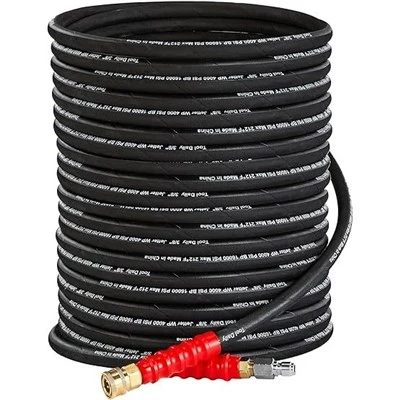
If you’re in the market for a washer hose for your top-loader, I’ve got you covered. I carry a range of sizes, all with brass reinforced fittings, high burst ratings, and they work for both hot and cold water lines. Whether you’re a homeowner, a renter, or a small apartment manager, I can get you the right hose at a fair price, no hassle. Just reach out to me directly to discuss your needs, and I’ll make sure you get exactly what you need, no guesswork.
High Pressure Washer Gun References:
- U.S. Consumer Product Safety Commission. (2022). Water Heater and Washer Hose Safety. Retrieved from official CPSC guidelines for home appliance connections.
- International Residential Code (IRC). (2021). Plumbing Requirements for Household Appliances, Section P2903: Washer Connections.
- Washer Hose Manufacturing Industry Standards. (2023). ASTM International F2095-19: Standard Specification for Rubber Washing Machine Hoses.
- Home Improvement Research Institute. (2022). Common Laundry Room Plumbing Mistakes and Solutions.
Zhejiang GTM Hi-Tech Intelligent Equipment Co., Ltd.
As one of the most professional washer hose manufacturers and suppliers in China, we also support customized service. With abundant experience, we warmly welcome you to buy discount washer hose for sale here from our factory. For price consultation, contact us.
Address: No.5 of Changjiang Road, 2nd Economic Development Zone of Wenling, Zhejiang, China
E-mail: yehuanting1@hongyemfg.com
WebSite: https://www.gtm-plungerpump.com/
