If you’ve ever stood on a high-speed metro that glides almost silently into a station, or moved a piece of precision manufacturing equipment with millimetre-level accuracy, chances are you’ve interacted with a linear motor — and right at the heart of that motor are pole coils. As someone who’s supplied these core components to motor manufacturers for over a decade, I get asked all the time: how do these small, seemingly simple coils do what they do? It’s not magic, but it’s a balance of electromagnetic physics, precision engineering, and a deep understanding of how linear motion differs from the rotary motion most of us are used to. Pole Coils
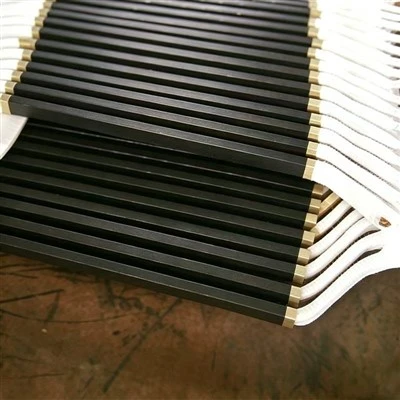
Let’s start with the basics to set the stage. Most motors you know are rotary — they spin a shaft, whether that’s turning a car wheel or a washing machine drum. Linear motors are different: instead of spinning motion, they produce force along a straight line. To do that, they have two main parts: a primary side and a secondary side. The secondary is usually a long, stationary track (think of a rail, like a metro’s track), and the primary is the moving part that sits on top of it. Pole coils are the key elements of that moving primary side, or sometimes the stationary one, depending on the motor design.
At their core, pole coils are electromagnetic coils wrapped around a magnetic core, usually made of laminated silicon steel. That steel isn’t solid — it’s made of thin layers stacked together, and that’s not a random choice. Solid steel would cause eddy currents, which waste energy as heat and reduce the motor’s efficiency. Laminating the core disrupts those currents, so almost all the electrical energy we put into the coil goes into generating the magnetic field, not just warming up the motor. The copper wire we use for the coils is also special: it’s high-purity, often with a thin insulation coating that can withstand high temperatures without breaking down, because pole coils get warm when they’re under load.
Now, how do these coils create linear motion? Let’s break down the physics step by step. When you run an electric current through a copper wire, it creates a small magnetic field around that wire. Wrap that wire into a coil, and the magnetic fields from each loop add together, creating a much stronger, focused magnetic field. The laminated steel core acts as a guide for that magnetic field, shaping it so it’s strong in one direction and concentrated at the face of the coil that faces the secondary track. That secondary track has its own magnetic properties — usually permanent magnets arranged in alternating north and south poles along its length.
Here’s where it comes to life. If you have just one pole coil, it will create a magnetic field that either attracts or repels the permanent magnets on the secondary track. Attraction would pull the coil toward the magnet, and repulsion would push it away. But if you only have one coil, it can only move a short distance before it runs out of magnets to interact with. That’s why linear motors use multiple pole coils arranged in a sequence, each controlled by a separate power supply.
The secret is in the timing and phasing of the current sent to each coil. We divide the coils into groups, usually three groups, matched to the three-phase AC power that most industrial motors use. Think of it like a relay race. First, you send current to the first coil in the sequence: it creates a magnetic field that attracts the nearest permanent magnet on the track, pulling the motor forward. As soon as that next step is almost done, you switch off the current to the first coil and send it to the second coil, which is now perfectly positioned to pull the next magnet. You keep this sequence going, switching current to the next coil in line at exactly the right time — a process called commutation — and the result is smooth, continuous linear motion. It’s a lot like how your windshield wipers move: each blade is like a pole coil, and the timing of their movement creates steady, linear travel, just on a much larger and more precise scale.
But pole coils do more than just pull the motor forward. They also control how much force the motor generates, and they allow for very precise speed control. If you send more current through the coils, you create a stronger magnetic field, so the motor pulls harder. That’s why linear motors can handle heavy loads — from 10-tonne metal stamping presses to tiny semiconductor manufacturing stages — just by adjusting the current. If you vary the frequency of the AC power, you change how often we switch between coils, which changes the speed of the motor. Want the metro to go fast? Increase the frequency. Want it to glide smoothly into the station? Slow the frequency right down.
I’ve seen a lot of misconceptions about pole coils over the years. Some people think they’re just “wires in a metal block,” but that couldn’t be further from the truth. The smallest details make all the difference in how they perform. For example, the gap between the pole coil and the permanent magnet track — called the air gap — has to be held within a fraction of a millimetre. If the gap is too big, the magnetic field weakens, and you lose force. If it’s too small, the coil might touch the track, causing friction and wear. That’s why when we manufacture pole coils, we have to make sure the coil’s face is perfectly flat and aligned. We also use special insulation materials that can withstand the vibration that comes with constant motion — over time, vibration can break down standard insulation, leading to short circuits, so we test every coil for durability under real operating conditions.
Another common question I get is why linear motors use pole coils instead of other types of actuators, like ball screws or hydraulic cylinders. The answer boils down to performance. Ball screws have moving parts that wear out, they can only move in one direction, and they have backlash — that small amount of play that makes them less precise. Hydraulics are powerful but messy, and they’re hard to control accurately at low speeds. Linear motors with pole coils have no contact between the moving and stationary parts (most of the time), so there’s almost no wear, and they can achieve precision down to a few micrometres. That’s why they’re used in things like laser cutting machines, where a deviation of even a hair’s width can ruin a part, and in medical equipment like MRI scanners, where smooth, vibration-free motion is critical for patient safety.
Of course, pole coils don’t work in isolation. They need a control system that tells them when to switch current, how much power to send, and adjusts for changes in load or speed. But even the best control system is useless without high-quality pole coils. If the coils don’t generate a consistent magnetic field, or if they overheat and lose their strength, the whole motor will underperform. That’s why at our company, we spend as much time testing pole coils as we do manufacturing them. We run them for thousands of hours under full load to check for insulation failure, we measure their magnetic field strength with precision tools, and we adjust the winding pattern to make sure the field is as uniform as possible along the length of the coil.
I’ve seen first-hand how a small flaw in a pole coil can cause big problems. A few years ago, we supplied a set of coils to a manufacturer of high-speed packaging lines. They had been using a cheaper, lower-quality coil supplier, and their lines kept stopping unexpectedly, costing them thousands of dollars in downtime. When they switched to our coils, the downtime dropped by over 90%. The difference? We use higher-grade copper wire and a more precise winding process that creates a more consistent magnetic field, so the current switching was smoother and there were no unexpected gaps in force. That’s the kind of impact pole coils have — they’re not just a component, they’re the backbone of the whole system’s performance.
Now, if you’re working with linear motors, whether you’re designing a new machine or troubleshooting an existing one, you know how important it is to have reliable, custom pole coils. Not all linear motors are the same, so not all pole coils should be the same. Some motors are small, for medical devices, so we make our coils compact and lightweight. Others are for 10-metre long metro systems, so we make our coils long and sturdy, able to withstand constant exposure to weather. We also work with clients to adjust the winding number, core material, and insulation type to match their specific needs — whether that’s high temperature resistance for industrial furnaces, or low magnetic interference for near medical equipment.
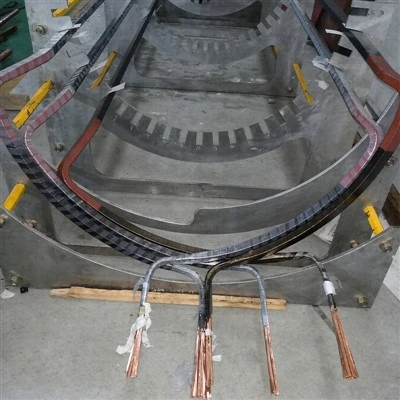
If you’re reading this and you’re involved in motor manufacturing, or you’re part of a business that relies on linear motion, you probably know that the quality of your components makes or breaks your final product. Pole coils are one of those components that’s easy to overlook, but impossible to ignore when they don’t work right. That’s why we’ve built our business on being more than just a supplier — we’re a partner. We work with clients from the initial design phase, helping them choose the right coil specifications, adjust the design to improve performance, and provide support every step of the way. Whether you need a small batch of custom coils for a prototype, or a large volume for mass production, we have the expertise and the manufacturing capacity to deliver.
Coil Machinery If you’re looking to upgrade your linear motor’s performance, or if you’re having issues with consistent force, precision, or durability in your system, I’d encourage you to reach out to our team for a consultation. We can discuss your specific requirements, answer any questions you have about how pole coils work, and provide samples or custom quotes tailored to your needs. Don’t let subpar components hold back your next project — the right pole coils can make all the difference in how your linear motor performs, how long it lasts, and how much value it brings to your business.
References
- Boldea, I., & Nasar, S. A. (1999). Linear Motion Electromagnetic Devices. CRC Press.
- Sudhoff, S. D. (2014). Electromagnetic Energy Conversion and Electric Machines. John Wiley & Sons.
- Lin, F. J., & Chen, S. Y. (2006). Linear Motor Drives: Recent Advances and Future Trends. IEEE Transactions on Industrial Electronics.
Hangzhou Purun Science & Technology Co., Ltd.
As one of the most professional pole coils manufacturers and suppliers in China, we have world-leading production equipment and strong manufacturing capabilities. Please rest assured to wholesale customized pole coils made in China here from our factory. Welcome to contact us for pricelist.
Address:
E-mail: Purun_sci_tech@163.com
WebSite: https://www.puruncoil.com/
