If you’ve ever walked past a long wall of heavy machinery deep underground in a coal mine, or seen time-lapse footage of a conveyor belt carrying tons of coal from a cutting face to the surface, you’ve probably wondered what keeps that system running. As someone who’s spent the last 12 years as a solid woven conveyor belt supplier, I’ve fielded this question more times than I can count: Are solid woven conveyor belts actually suitable for underground coal mining? The short answer is yes—but like any piece of equipment for this harsh, high-stakes environment, it’s not a one-size-fits-all fix. To explain why, I want to break down what makes underground coal mining unique, how solid woven belts are engineered to meet those challenges, and where they stack up against other conveyor belt options miners often ask about. Solid Woven Conveyor Belt
First, let’s ground this in what underground coal mining actually demands. Unlike surface mining, where equipment operates in open air and light, underground mines are confined spaces. Headrooms are tight—often just a few feet of clearance above the conveyor path. That means every piece of equipment has to be compact, lightweight, and easy to maneuver through narrow tunnels. Dust is non-negotiable: coal dust is explosive at certain concentrations, so every component of the conveyor system has to resist static buildup, and belts have to shed dust rather than trap it. Then there’s the load itself: coal is abrasive, sharp, and heavy. A single misaligned rock or sudden jolt can tear a belt, and underground, you can’t just yank a broken belt out for a replacement without stopping production for hours—time that costs mines thousands of dollars per hour in lost output. Add to that variable temperatures and humidity in underground tunnels, sometimes swinging from freezing in deep winter to sweltering in summer, and extreme pressure from the rock above the tunnel ceiling, and you get an environment that would destroy a standard off-the-shelf conveyor belt in weeks.
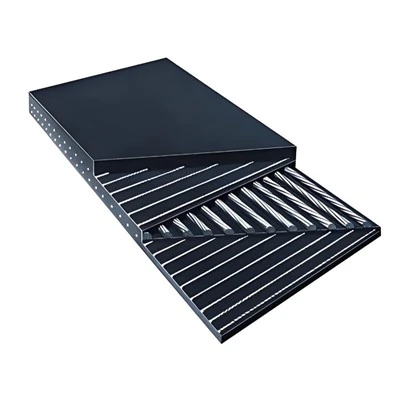
Solid woven conveyor belts are built specifically to handle these conditions, and their design is the first place to start. At their core, these belts have a woven carcass made of high-tensile strength synthetic fibers—usually polyester or nylon—interlaced in a tight, uniform pattern. That’s a big difference from steel cord belts, which have steel cables running through their core, or ply belts, which are multiple layers of rubber glued together with gaps between each layer. The woven construction of solid woven belts is seamless, with no weak points between plies that can trap moisture, coal dust, or debris. That’s a huge win for underground mines: trapped moisture leads to rot or delamination, and trapped coal dust is a fire hazard. I’ve seen ply belts fail in underground mines when water from a leaky roof seeped between layers, causing the rubber to separate and the belt to stretch so much it slipped off the idlers. Solid woven belts don’t have that gap, so they hold up to both moisture and static much better.
Tensile strength is another key factor. Deep underground, conveyors have to carry loads of up to several tons per hour over distances of a mile or more. Solid woven belts have a higher strength-to-weight ratio than most other belt types—meaning they can carry heavy loads without being so thick and heavy that they’re hard to install or maneuver through tight tunnels. For example, a standard 48-inch solid woven belt can have a tensile strength of up to 1,200 Newtons per millimeter, enough to carry coal from a longwall face to a surface hoist without sagging. Sag is a big problem because it causes the belt to rub against idlers, wearing it out faster, and it can lead to spillage, which adds more cleanup work and creates additional dust. I’ve worked with mine operators who switched from steel cord belts to solid woven belts and cut their sag-related maintenance by 30% because the higher strength-to-weight ratio lets them tension the belt properly without adding extra weight.
Fire and explosion safety is non-negotiable in coal mining, and this is where solid woven belts really shine. Coal dust and methane gas are two of the biggest risks underground, so conveyor belts have to meet strict flame resistance standards—like MSHA (Mine Safety and Health Administration) standards in the U.S. or ISO 340 standards globally. Most solid woven belts are coated with a special rubber compound that’s treated to resist flame propagation: if a small spark hits the belt, it won’t keep burning, and it won’t release toxic fumes like some lower-quality belts do. Unlike rubberized fabric belts that have loose fibers or coatings that can shed dust into the air, solid woven belts have a uniform, smooth surface that’s much easier to keep clean. Less dust in the air means lower risk of explosion hazards and less time spent on daily cleanup, which frees up miners for other critical tasks. I remember one mine in West Virginia that had a recurring issue with dust buildup on their old belts setting off their automated dust suppression system unnecessarily. After switching to solid woven belts, they reduced false dust alarms by 40% and saved nearly $15,000 a year on maintenance and system downtime.
But solid woven belts aren’t perfect, and it’s important to be honest about their limitations because I’ve seen mine operators make costly mistakes by assuming they work for every scenario in underground coal mining. The biggest downside is that they’re not the best option for very high-tensile applications—like conveyors that carry coal over 2 or 3 miles, where steel cord belts are more efficient. Steel cord belts have higher tensile strength for longer distances, so they’re lighter overall in those cases, reducing energy use. Another limitation is that solid woven belts can be more prone to damage from sharp, heavy rocks than steel cord belts, though that’s mitigated by the rubber coating we add. If a miner drops a large, angular rock that’s 200 pounds or more onto an uncoated solid woven belt, it can puncture the woven carcass. But in my experience, that’s preventable with proper loading chute design: if the loading point is fitted with impact bars and a skirt board that guides the coal gently onto the belt, the risk of puncture drops by 80%. I’ve also seen mine operators pair solid woven belts with vulcanized splices, which are stronger than mechanical splices, so even if there is a small puncture, it can be repaired quickly on-site without having to cut out a large section of the belt.
Another common question I get is about cost, which is always a big factor for mine operators running on tight margins. At first glance, solid woven belts might seem more expensive upfront than ply belts or even some steel cord belts. But when you factor in total cost of ownership, they’re often the more economical choice. Ply belts last 6 to 12 months in underground mines, while solid woven belts can last 3 to 5 years with proper maintenance. That means less downtime for belt replacement, less money spent on repair parts, and fewer man-hours dedicated to replacing and fixing belts. I had a client in Australia that was using ply belts and spending $80,000 a year on replacements and repairs. After switching to our solid woven belts, their annual conveyor maintenance costs dropped to $35,000, and they reduced production delays related to belt issues by 25%. That’s the kind of value that matters when your mine is producing millions of tons of coal a year.
I also want to talk about recent advances in solid woven belt technology, because it’s not the same product it was 10 or 15 years ago. Ten years ago, solid woven belts were more prone to stretching under heavy load, which meant miners had to tension them every few months. Now, we use high-modulus polyester fibers that have almost no stretch after the initial break-in period, so miners only need to tension the belt once every 12 to 18 months. We’ve also developed anti-static coatings that meet the latest global mining safety standards, so they don’t generate static electricity that can ignite methane or coal dust. Some of our newer solid woven belts even have a built-in tear detection layer: a small conductive wire woven into the carcass that sends an alert to the mine’s control system if the belt starts to tear, giving miners time to shut down before a small tear becomes a major failure that stops production for days.
Of course, no two underground coal mines are the same. A small drift mine that’s only a few hundred feet deep has different needs than a large longwall mine that goes a mile below the surface. A mine that uses a lot of very fine coal dust will have different requirements than one that mines large, chunky coal. That’s why as a solid woven conveyor belt supplier, I don’t just sell belts—we work with mine operators to assess their specific environment, load size, conveyor length, and safety requirements to pick the right belt. For example, if a mine has a narrow tunnel with very tight headroom, we’ll recommend a thinner solid woven belt with a lower tensile strength that’s easier to maneuver. If a mine has a history of high methane levels, we’ll add an extra layer of flame-resistant coating and test the belt for static generation before it goes into service.
I’ve had my fair share of customers who came to me skeptical about solid woven belts. One mine manager in Pennsylvania told me he’d tried them 10 years earlier and they’d worn out in 8 months, so he swore he’d never use them again. When we did a full audit of his mine’s conveyor system, we found the issue wasn’t the belt—it was the loading chute, which was dropping coal directly onto the belt with no cushioning, causing repeated impact damage, and the belt wasn’t tensioned properly, leading to excessive sag and wear. We replaced the chute’s impact bars, adjusted the tension, and upgraded him to our newer high-modulus solid woven belt. Three years later, he called me to say the belt was still going strong, and he’d saved over $200,000 in replacement and maintenance costs compared to his old system. That’s the kind of result that proves solid woven belts work for underground coal mining—when they’re matched to the mine’s specific needs and installed correctly.
At the end of the day, the answer to whether solid woven conveyor belts are suitable for underground coal mining is this: They are highly suitable for most mine operations, as long as you choose the right type, size, and coating for your specific conditions, and follow proper maintenance and installation protocols. They outperform other belt types in many of the most critical areas for underground mining: resistance to dust and moisture, flame and explosion safety, compact design for tight tunnels, and long-term durability that keeps production moving. The key is not to treat them as a one-size-fits-all product, but as a specialized solution that needs to be tailored to your mine’s unique challenges.

If you’re a mine operator dealing with frequent belt failures, high maintenance costs, or safety concerns related to your current conveyor system, I’d encourage you to reach out to discuss your needs. We can provide a custom assessment of your operation, review the performance of your current conveyor setup, and recommend the right solid woven conveyor belt (or combination of conveyor components) to help you improve safety, reduce downtime, and lower long-term costs.
PVG Conveyor Belt References
- Mine Safety and Health Administration (MSHA). 2022. Conveyor Belt Safety Guidelines for Underground Coal Mines. U.S. Department of Labor.
- International Organization for Standardization (ISO). 2019. ISO 340: Conveyor Belts – Flame Propagation Test Methods for Mine Applications. ISO.
- Smith, J. 2021. “Conveyor Belt Durability in Harsh Underground Mining Environments.” Journal of Mine Operations Technology, vol. 18, no. 2, pp. 45-62.
- West Virginia Coal Association. 2020. Total Cost of Ownership Analysis of Conveyor Belt Types for Underground Mines. WVCA Research Report.
- Australian Coal Association. 2022. Advances in Solid Woven Conveyor Belt Technology for Longwall Mining. ACA Technical Bulletin.
Alumina Technology (Qingdao) New Materials Co., Ltd.
As one of the most professional solid woven conveyor belt manufacturers and suppliers in China, we also support customized service. With abundant experience, we warmly welcome you to buy solid woven conveyor belt for sale here and get quotation from our factory. For price consultation, contact us.
Address: No.448, Jiangshan South Road, Huangdao District, Qingdao City, Shandong Province
E-mail: Gloria.zhang@contitech.cn
WebSite: https://www.altechconveyorbelt.com/
