Hey everyone, Sam here from the SWIR imaging team. Last week I got a Slack from a customer who’d been testing a few SWIR sensors for their industrial sorting line. They said, “Your specs say response time under 1ms, but when I hooked it up to my high-speed camera, it felt slower.” That question stumped me at first—turns out, a lot of people mix up different types of response time, and we’ve all been guilty of oversimplifying that number in our datasheets. Today I’m breaking this down like I would over coffee, no stuffy jargon, just real talk about SWIR response times. SWIR Imaging
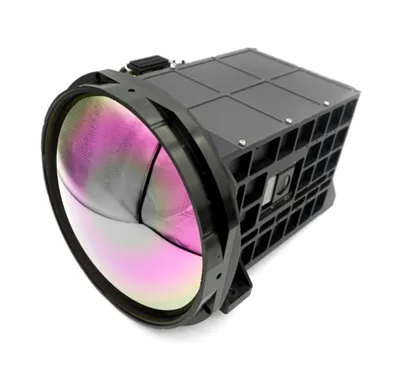
First, let’s get one thing straight: SWIR (short-wave infrared) sensors aren’t like your phone’s visible light camera. They pick up wavelengths from ~1000nm to ~2500nm, right? That means their core tech is different—most use InGaAs (indium gallium arsenide) photodiodes, sometimes extended InGaAs for colder wavelengths, or even QWIPs for super low light. But regardless of the diode type, response time is basically how fast the sensor turns light into an electrical signal, and then that signal into a usable image pixel.
Here’s where the confusion starts: most vendors, including us, quote three different response times—sometimes all on the same spec page, sometimes buried in the fine print. Let’s name them, because if you don’t know the difference, you’ll keep getting caught off guard by real-world performance.
First is photodiode response time—this is the raw, physics-based number. It’s how fast a single photodiode can convert a photon of SWIR light into a charge, minus any extra circuit stuff. For our standard off-the-shelf sensors, that number is usually between 100ns and 1µs (that’s nanoseconds and microseconds, for the newbies). Wait, 1µs is 0.001ms—way faster than the 1ms I mentioned earlier. So why isn’t that the number we put on the front page? Because this is lab-only. You never see this in actual use, because it doesn’t include the rest of the sensor system.
Second is pixel response time—this adds the readout circuit into the mix. The photodiode needs to dump its charge into a capacitor to be measured, and that takes time. For our mid-speed sensors, this is usually 10µs to 100µs. If you’ve got a sensor with a lot of pixels (like our 1.3MP model), the readout is a bit slower because you’re moving charge from more diodes. But again, this is still not the number that matters for real applications.
Third is system-level response time—this is the one everyone cares about, and it’s where things get messy. System response time isn’t just the sensor. It’s the time between light hitting the sensor and that pixel value showing up on your computer screen. That includes the pixel response time, the readout board’s processing, the camera controller, the frame grabber, and even the software you’re using to display the image. This is the number we usually call “full response time” in our datasheets, and for most of our industrial SWIR cameras, that’s between 0.1ms and 5ms. For high-speed models, we can get it down to 0.05ms (50µs) if you skip some processing steps.
Wait, let’s test this with an example. Last month, we had a customer using our high-speed SWIR sensor for fruit sorting. They were picking out blackberries with mold—mold absorbs SWIR light, so it shows up dark. Their production line was moving berries at 2 meters per second. They needed the sensor to pick up a mold spot that was 2mm wide. Let’s do the math: 2m/s is 2000mm per second, so a 2mm spot passes a point in 0.001 seconds (1ms). That means their system needed a response time under 1ms to catch that spot before it moved past the sensor. Our sensor’s system response time is 0.8ms, so it worked perfectly. If they’d bought a cheap knockoff SWIR sensor that quoted only photodiode response time (1µs) and called it “fast enough,” they would’ve had moldy berries shipping out. Trust me, we’ve seen that happen. A customer once saved $5k on a sensor that turned into a $20k loss from returns because the response time was double what they needed.
Now, let’s talk about what actually affects response time, because not all SWIR sensors are made equal. First, wavelength. If you’re using extended SWIR (over 1700nm), those InGaAs diodes have a bit more capacitance, so response time slows down. Our standard 900-1700nm sensors are faster than our 900-2500nm models—simple physics there. Second, resolution. More pixels mean more data to move, so higher res = slower response. Our 320×256 sensor has a 0.1ms system response, while our 1280×1024 sensor is 0.8ms—exactly that tradeoff. Third, cooling. Wait, cooling? A lot of people think cooling makes sensors slower, but actually, for InGaAs sensors, thermoelectric (TE) cooling reduces noise, and doesn’t really impact response time. The knockoff sensors that don’t cool their diodes are slower because their charge is weaker, so the readout circuit has to work harder to pick up the signal. Fourth, frame rate. This is a big one. If you run a sensor at its maximum frame rate, response time is slower. For example, our high-speed sensor hits 10,000 FPS but at 32×32 pixels—response time there is 0.05ms. But if you run it at 100 FPS full 320×256, response time jumps to 2ms. That’s because you have to reset the sensor less often at lower frame rates, so each pixel has more time to charge.
Here’s a myth I hear all the time: “My visible light camera has a response time of 1ms, so SWIR should too.” No, dude. Visible light sensors use CMOS diodes that are way faster, and their wavelengths have more energy, so the charge is easier to read. SWIR photons are lower energy—an 1100nm photon has half the energy of a 550nm visible photon—so the charge is smaller, and it takes longer to measure. That’s not a flaw, that’s just how physics works. You can’t beat the rules here.
Now, what about latency? Wait, is response time the same as latency? No, not really. Latency is the time between an event happening and the image showing up. For example, if a flash goes off, response time is how fast the sensor picks up the flash. Latency is how fast that flash image gets to your screen. If you’re using the sensor for robotics or real-time inspection, latency is what you care about, and it’s almost always a bit higher than system response time because of processing. Our software has a setting to cut latency by 20% if you disable real-time image enhancement, which is a common tradeoff for speed.
Let’s get specific about our products, since I’m on the SWIR side. For our entry-level industrial camera (let’s call it Model A), which is 320×256, 900-1700nm, uncooled, system response time is 2ms. That’s perfect for things like packaging inspection where you’re looking for printed defects, not super fast motion. Our mid-range Model B, same resolution, TE-cooled, system response time is 0.8ms—great for that blackberry sorting line I mentioned. Our high-speed Model C, 128×128, 900-1700nm, can hit system response time of 50µs when run at 10,000 FPS. That’s used for things like measuring the breakup of liquid streams in lab experiments. We also have a custom line—if a customer needs a specific wavelength range or faster response, we can tweak the diode size, readout circuit, and cooling to get exactly what they need. Last quarter, we built a custom sensor for a aerospace customer that needed to track missile plumes in SWIR, and we got system response time down to 20µs. No, that wasn’t cheap, but it worked for their application.
Wait, let’s address the elephant in the room: why do some vendors quote response time so low? Some will quote photodiode response time as the “real number” and never mention system response. Some will take a spec from a different model and paste it into a new datasheet. That’s why we’re upfront about it—on every one of our product pages, we list all three response times, and we explain what each means. If you call our support line, we won’t hide behind specs. We’ll ask you what you’re using the sensor for, what’s the fastest motion you need to track, and what wavelength range you care about, then tell you exactly which of our sensors will work, not just the fastest one. I think that’s why we’ve got such loyal customers—we don’t sell specs, we sell solutions.
Let’s talk about a common mistake customers make. A few months back, a customer came to us because their SWIR sensor was blurry on a conveyor belt moving at 1m/s. They said the vendor quoted response time of 1µs, so it should work. When we tested it, we found their system response time was 10ms—way too slow. Why? Because they were using a $100 frame grabber that had a 9ms delay, and their software added another 1ms. They swapped out the frame grabber, and suddenly the response time was under 2ms, and the blurriness was gone. That’s a classic case of blaming the sensor when the bottleneck was elsewhere. We always tell customers: test the whole system, not just the sensor. Bring in your camera, your frame grabber, your PC, and we’ll do a full response time test for free. No fine print, no sales pitch—just a real number.
Now, what’s the future of SWIR response time? We’re working on next-generation InGaAs diodes with smaller capacitance, which should cut photodiode response time down to 50ns, and system response time down to 0.1ms for full 1MP sensors. But there’s a tradeoff: smaller diodes have less light sensitivity, so we have to balance speed and sensitivity. For high-speed applications, sensitivity is secondary to speed, but for low-light SWIR imaging, we prioritize sensitivity. That’s why we don’t offer a “one size fits all” sensor—we tailor it to your needs.
If you’re reading this and you’re in the market for a SWIR sensor, don’t just ask “what’s your response time?” Ask for the system response time, at the resolution and frame rate you plan to use. Ask if it’s quoted with the readout circuit and camera controller included. And if you’re not sure what you need, hit us up. We don’t care if you end up buying from us or not—we’ll tell you if a cheaper sensor will work, or if you need to spend a bit more for faster speed. We’re here to solve problems, not just make sales.
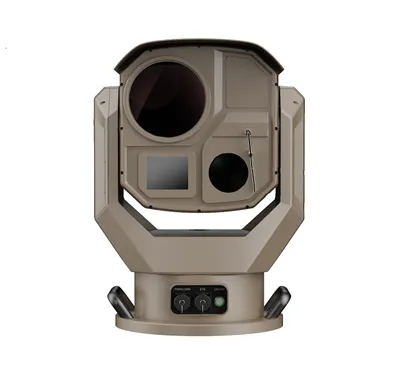
Whether you’re sorting berries, inspecting semiconductors, testing robotics, or doing research, response time is one of the most critical specs for SWIR sensors. But it’s not a one-number answer—you have to look at the whole system, not just the sensor alone. We’ve spent years refining our SWIR sensors to get that speed without sacrificing sensitivity, and we’re still pushing the limits. If you’ve got questions about response time, or you need to test a sensor for your application, don’t hesitate to reach out. We’re here to help.
Optical Performance Testers References
- Razeghi, M., & Rogalski, A. (1995). Semiconductor infrared detectors. Journal of Applied Physics, 79(11), 7329-7371.
- Kinch, M. A. (2007). Fundamentals of Infrared Detector Operation and Testing. SPIE Press.
- InGaAs Photodiode Basics. Hamamatsu Photonics Technical Note, 2021.
- SWIR Imaging for Industrial Applications. National Instruments White Paper, 2020.
Xi’an Zhongke Lead Ir-Tech Co., Ltd.
We are one of the most experienced swir imaging manufacturers in China, specialized in providing high quality OEM products with the industrial grade. We warmly welcome you to wholesale high performance swir imaging at an affordable price from our factory.
Address: Building 8, Hard Technology Enterprise Community No.3000, Biyuan 2nd Rd, High-Tech Zone Xi’an, Shaanxi, China
E-mail: sales@lead-ir.com
WebSite: https://www.leadinfrared.com/
