Hey there, let’s cut through the jargon for a sec — if you’ve ever been around industries that deal with flammable stuff, you’ve probably heard the term “explosion-proof motor” thrown around. But when you’re shopping around, you might’ve also noticed a lot of folks hyping “IEC explosion-proof motors” lately. So what exactly is that, and why does it matter more than your run-of-the-mill motor? I’m Jake, part of the team at our IEC motor supply company, and I’ve fielded way too many confused calls from folks asking this, so let’s break it down straight. IEC Motor
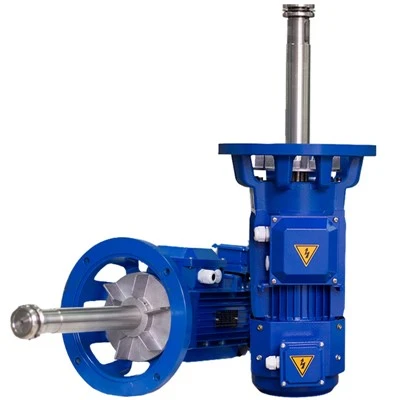
First off, “IEC” stands for International Electrotechnical Commission — think of ’em as the global rulebook for electrical gear. They set standards that keep millions of installations safe, no matter which country you’re in. An IEC explosion-proof motor isn’t just a beefed-up regular motor; it’s built to handle the worst-case scenario: a small spark inside the motor that could ignite nearby gas, dust, or vapor. Here’s the key part: it’s not that it prevents sparks — motor parts wear, wires fray, that’s normal — it’s that it contains that spark so it never gets out. If a tiny explosion happens inside the motor, the heavy, sealed casing absorbs it, and any hot gas that escapes cools down enough to not ignite the flammable stuff outside. That’s a huge difference from a standard motor, which would blow up or catch fire the second a spark hits a dirty air unit in a refinery, a grain silo’s dust cloud, or a chemical plant’s solvent fumes.
Let’s get specific about the construction, ’cause that’s where the magic happens. IEC 60079 is the main standard here, right? It’s got different “protection types” for different environments, but the most common one you’ll see is Ex d — that’s the “flameproof” casing I mentioned. The casing is made from cast iron or stainless steel, not the cheap aluminum you see on your porch fan. The joints between the casing halves aren’t just screwed tight; they have what’s called “flame paths” — super tight, narrow gaps between the parts. Any flame or hot gas from an internal explosion has to squeeze through those gaps. By the time it gets out, it’s cooled below the ignition temp of whatever’s around the motor. How narrow are we talking? Like, a few millimeters max — tiny, but it works. There’s also Ex t for dust environments, ’cause gas isn’t the only risk. If you’re working with grain, sugar, or wood dust, it’s way more likely to ignite than gas, so IEC’s got extra rules to seal the motor’s internal parts so dust can’t get in and build up, which keeps the motor running cooler too.
Now, why does an IEC-rated one beat, say, a locally rated motor from a random supplier? Let’s use an example: a guy who runs a small chemical plant in Mexico once hit me up, saying a local motor he bought kept tripping — turns out the local standard only required a loose test for flame containment, but when he hooked it up to his 480V line, the casing cracked on the first spark. IEC motors go through way stricter testing: they have to pass internal explosion tests where the casing is actually charged with a flammable mixture, then ignited, and the test lab checks if anything outside catches fire. No cutting corners here — every motor’s serial number matches a test log, so you know you’re not getting a knockoff. And for folks who work across borders, IEC is universal. If you’re moving equipment between the US, Europe, Asia, or the Middle East, an IEC-rated motor won’t hold up customs or safety inspections. A lot of regions accept other standards (NEC in the US, ATEX in EU), but IEC is the base that most of ’em align with now — so it’s not just a “global” standard, it’s a practical one that saves you hassle.
Wait, let’s clear up a common myth: people think “explosion-proof” means the motor won’t ever break. Nah, it just means if it does have a fault, it won’t blow up the whole facility. I still get calls from people trying to skimp on maintenance — don’t do that. If the flame paths get caked with grease or dust, that breaks their cooling ability, so the motor can’t do its job. But when you buy a proper IEC motor and follow maintenance, it’s way more reliable than a standard motor in high-risk areas. We’ve had customers run the same IEC explosion-proof motor for 12 years in a grain silo — the only maintenance was changing the bearings, which is standard. That’s way better than replacing a motor every two years that couldn’t handle the dust.
What kinds of industries actually use these motors? Let’s list the big ones: oil and gas (pumps, compressors on rigs), chemical processing (mixers, conveyors that handle solvents), grain and agriculture (silos, elevators), mining (ventilation fans, conveyor drives), and even food and beverage — yeah, places where sugar dust or flour dust builds up. Standard motors would’ve blown up in those spots in the past, but IEC motors are built to handle that.
Let’s talk about what makes our IEC motors different from, say, a big brand’s generic IEC motor. I don’t want to brag, but we customize a lot. A refinery customer might need a motor with a specific voltage (480V, 60Hz, or 230V, 50Hz) that fits their existing pump — we don’t just sell off-the-shelf units. We also have options for different temperature classes: if your environment is super hot (like a desert oil field), we can get a motor with a higher temperature class so it doesn’t overheat. And we work with our customers to size ’em right — way too many people buy a motor that’s too small, which runs hotter and increases risk. Our team will walk you through calculating the right horsepower for your load, no sales pressure.
Another thing folks don’t know: IEC explosion-proof motors also have better electrical protection. They’re built with thicker insulation for wires, so they’re less likely to have a short circuit that sparks. That’s a side benefit that saves you downtime too — it’s not just safety, it’s productivity. I had a customer in Saudi Arabia who used a standard motor on their fertilizer conveyor; it shorted every 3 months, cost ’em $20k in downtime each time. Switched to our IEC-rated motor, and they haven’t had a short in 3 years. That’s the real value, not just the safety label.
Wait, what about the cost? I know that’s a big one. IEC motors are a bit more expensive upfront than standard motors, but when you factor in downtime, safety compliance, and replacement costs, they pay for themselves fast. The NFPA (National Fire Protection Association) estimates that industrial fires from electrical faults cost over $1.5 billion a year in the US alone — a lot of those could be prevented with proper explosion-proof motors. Our customers usually say they recoup the extra cost in 6-12 months, depending on their usage. It’s not a “cost” — it’s an investment in not losing your facility, your employees, or your bottom line.
Let’s wrap this up: an IEC explosion-proof motor is a globally standardized, safety-tested electrical motor built to contain internal sparks and explosions in environments with flammable gases, vapors, or dust. It’s not a gimmick, it’s a lifeline for high-risk industries. And if you’re in the market, don’t just buy any motor — make sure it’s certified to IEC 60079, not just labeled. We’ve seen too many knockoff motors that say “explosion-proof” but don’t have the certification, so always ask for the test documentation.
If you’re not sure what you need, or you want to chat about sizing, custom options, or pricing, hit up our team to connect and talk through your requirements. We’re here to make sure you get the right motor for your space, no fancy sales talk, just straight answers. If you’re tired of dealing with motors that don’t hold up in your environment, let’s make that change.
Vacuum Motor References
- International Electrotechnical Commission. IEC 60079: Explosive Atmospheres.
- National Fire Protection Association. NFPA 70: National Electrical Code.
- Occupational Safety and Health Administration (OSHA). Electrical Equipment in Flammable Atmospheres.
- Society of Automotive Engineers (SAE). Guidelines for Industrial Motor Safety.
Dongguan Xingya Mechanical and Electrical Equipment Co., Ltd.
As one of the most experienced iec motor manufacturers in China, we have world-leading production equipment and strong manufacturing capabilities. Please feel free to buy bulk customized iec motor made in China here from our factory.
Address: 1st Floor, Building 14, Morgan Industrial Park, No.328 Zhenhua Road, Dongguan City, Guangdong Province,China.
E-mail: gldzsm@outlook.com
WebSite: https://www.xingyamotor.com/
