If you’ve ever worked in heavy industry—whether in construction, mining, agriculture, or even oil and gas—chances are you’ve used a Bauer coupling. These quick-disconnect, air-operated couplings are workhorses, designed to cut down on connection time, prevent fluid spillage, and keep high-pressure lines running smoothly. But if you’ve stared at the little etchings or numbers on the side of a Bauer coupling and thought, “What do those markings even mean?” you’re not alone. As a Bauer coupling supplier, I talk to customers every week who take these markings for granted, only to run into problems later because they didn’t decode them. Today, let’s break down what every line, number, and symbol on a Bauer coupling is for, and why ignoring them can cost you time, money, and even safety. Bauer Coupling
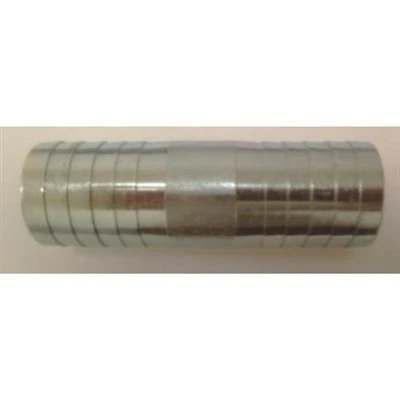
First, let’s get one thing straight: Bauer couplings aren’t generic. Every marking is intentional, baked into their design by the manufacturers to make sure they work exactly as intended for their specific use case. I’ve seen brand-new couplings installed wrong because a worker misread a marking, and used couplings rejected by inspectors because a marking was worn away. That’s why taking two minutes to understand these bits of text can save you hours of downtime on the job.
Let’s start with the most obvious marking: the size designation. You’ll usually see it printed in large, bold numbers near the coupling’s outer sleeve, like “1”½”, “2”, or “3”. This isn’t just a random label—it refers to the nominal inner diameter of the hose the coupling is made to fit. For example, a 2” Bauer coupling is designed to connect to a 2-inch interior diameter hose, right? Well, almost. The nominal size is standardized across all Bauer-compliant couplings, which is key because that’s what makes them interchangeable with other Bauer-style parts. I always tell my team to double-check this with the hose end they’re using before installing—once I had a customer try to connect a 2” coupling to a 1¾” hose, and it leaked so bad they lost 50 gallons of water mid-pump. That mistake could’ve been avoided just by reading the size marking.
Next up, pressure ratings. This is one of the most critical markings, and it’s often the smallest on the coupling, so easy to miss. You’ll see something like “150 PSI”, “300 PSI”, or “450 PSI” etched near the size. That number tells you the maximum working pressure the coupling can handle without failing. Working pressure is different from burst pressure—burst pressure is much higher, but working pressure is what matters for regular use. A lot of people try to save money by using a lower-pressure coupling for a high-pressure job, or vice versa, but that’s a safety risk. Last year, a mining client came to me with a failed coupling that had burst mid-operation. Turns out they’d used a 150 PSI coupling on a line that was running at 250 PSI. The casing split, and they had to shut down operations for three days to fix it. The pressure marking isn’t just a suggestion—it’s a non-negotiable spec that keeps people on the job safe.
Then there’s the valve type marking. Bauer couplings come in two main valve styles: non-valved and valved. Non-valved couplings, which you’ll see marked with a “NV” or “NC” (short for Non-Valved), are used for lines where you want the fluid or air to flow freely when connected, with no internal valve restricting movement. They’re common in water transfer or general pneumatic lines where full flow is a priority. Valved couplings, marked with a “V” or “VC” (Valved), have an internal check valve that stops flow when you disconnect the coupling, preventing spillage. I always explain to customers that valved couplings are non-negotiable for hazardous fluids—like chemical additives or fuel—because a spilled gallon of diesel or corrosive fluid isn’t just a cleanup job, it’s an environmental risk and a liability. I had a small landscaping company come to me last spring because they’d used non-valved couplings for fertilizer; when they disconnected, fertilizer sprayed all over a neighbor’s vegetable garden, and they had to pay for cleanup and replacement. That’s the kind of mistake that the valve type marking is there to prevent.
Another common marking is the material spec. You’ll see this as a code, like “BRZ” for brass, “DI” for ductile iron, “SS” for stainless steel, or even “PL” for plastic. This tells you what the coupling is made of, which is crucial for compatibility. Brass couplings are lightweight and corrosion-resistant for freshwater or non-corrosive use, but they can’t handle highly acidic fluids. Ductile iron is strong and good for high-pressure, heavy-duty jobs like mining or construction, but it’s prone to rust if used in saltwater. Stainless steel is for harsh chemical environments, but it’s more expensive. The material marking is there so you don’t mix and match parts that will corrode or break down with the fluid you’re moving. Just last month, an agricultural supplier brought in couplings that had been marked “SS” but were actually made of brass—they were using them for liquid fertilizer, and within a week the brass had pitted and leaked. The material marking is a quick check to make sure your coupling matches your application.
Wait a second, what about those little letters or numbers on the coupling’s sleeve, like “A” or “B” or “08”? Those are gender markings. Bauer couplings are either male or female, right? The male end has a protruding spigot, and the female end has a socket. The gender marking—usually “M” for male, “F” for female, or just a letter—tells you which end is which. You’d think that would be obvious from the shape, but when couplings get dirty, coated in mud or oil or concrete, it’s hard to tell at a glance. I’ve had a construction crew try to connect a male coupling to another male coupling because they couldn’t see the marking under all the grime, and they ended up snapping the sleeve of the coupling. That’s an easy fix, but it’s avoidable if you take a second to look for the gender marking.
What about older, used couplings? I get asked all the time if markings on used Bauer couplings are still valid. The short answer is: mostly, but with a caveat. If the marking is worn off, faded, or scratched, you can’t be sure it’s accurate. A used coupling that’s lost its pressure marking might have hidden damage from past use—like a cracked valve or a worn seal—that means it can’t handle the rated pressure anymore. That’s why I always recommend new couplings for critical jobs; you never know what a used coupling has been through. I’ve had a customer try to reuse an old coupling for a water transfer job, and it failed because the internal valve was worn from years of being opened and closed. The old marking said 150 PSI, but in reality it was only good for 100 PSI. Don’t risk it—if the marking is gone, that coupling is unreliable.
Now, let’s talk about common myths I hear as a supplier. A lot of people think that all Bauer couplings are the same, so markings don’t matter. That’s simply not true. There are different series of Bauer couplings, too—you might see a marking like “Series 200” or “Series 300”. These series refer to the design specifications: Series 200 is for general-purpose use, Series 300 is for high-pressure applications, and so on. A 2-inch Series 200 coupling is not the same as a 2-inch Series 300 coupling, even if they look identical at first glance. The Series marking tells you about the internal components, like the strength of the valve springs or the thickness of the sleeve walls. Mixing series can lead to underperformance or failure, so that’s another marking to look for.
Another myth: markings on the coupling are just for show, added by the manufacturer to make it look official. No. Every marking on a Bauer coupling is standardized by the Bauer Coupling Manufacturers Association (BCMA), a group that sets global standards for these parts to ensure compatibility and safety. I’ve worked with the BCMA for years, and every marking is regulated so that if you see a 2” 300 PSI valved brass coupling, you know exactly what it is, no matter where you buy it. That standardization is one of the reasons Bauer couplings are so popular—they work across different brands, as long as you read the markings.
So what happens if you ignore these markings? Let’s recap the real-world examples I’ve seen: spilled fluids, burst lines, downtime, safety risks, environmental fines. All of that adds up to lost money. I had a client in the oil and gas industry last year who got fined $15,000 when a coupling failed because they used the wrong pressure rating, spilling crude oil into a wetland. They didn’t read the pressure marking, and they didn’t know the material marking for the coupling didn’t match crude oil. That’s a huge cost, all because of a few etchings people thought were unimportant.
Now, I know what some of you are thinking: “I’ve used Bauer couplings for 10 years and never had a problem.” That might be true, but luck runs out. One day, that worn coupling without a marking will fail at the worst possible time—mid-pump on a hot construction site, mid-fertilizer application on a farm, mid-pipe replacement in a mine. The markings are there to remove that luck and give you concrete, actionable information about the part you’re using.
As a Bauer coupling supplier, my job isn’t just to sell you couplings—it’s to make sure you use them correctly. That’s why I make it a point to walk new customers through the markings when they order, and I post a quick guide on our website that breaks down every common marking. I even offer free inspections for customers who are unsure about their existing couplings—take a picture of the markings, send it over, and I can tell you exactly what that part is rated for.
At the end of the day, Bauer couplings are designed to make your job easier, not harder. The markings are a key part of that design, meant to reduce mistakes and keep operations running smoothly. Next time you pick up a Bauer coupling, take 10 seconds to look at the etchings: check the size, the pressure rating, the valve type, the material, and the gender. It might seem like a small step, but it can save you from big problems down the line.

If you need help identifying a Bauer coupling, finding the right one for your application, or have questions about markings on your existing parts, reach out to discuss your requirements.
Camlock Coupling References
- Bauer Coupling Manufacturers Association. (2021). Standard Specifications for Quick-Disconnect Bauer Couplings.
- American National Standards Institute. (2020). Compressed Gas Coupling Safety Standards.
- Occupational Safety and Health Administration. (2019). Hydraulic and Pneumatic Tool Safety Guidelines for Construction.
Suzhou Fuyikang Metal Industrial Co., Ltd.
As one of the most professional bauer coupling manufacturers and suppliers in China, we have world-leading production equipment and strong manufacturing capabilities. We warmly welcome you to buy bulk high quality bauer coupling for sale here from our factory.
Address: No.26.Mudong Rd,Mudu Town, Wuzhong Distric, Suzhou City,Jiangsu Province,China
E-mail: SZFYK@SZFUYIKANG-COUPLING.COM
WebSite: https://www.fyk-coupling.com/
