If you’ve ever spent time sourcing metal components for applications that operate in sub-zero conditions—think space launch systems, liquid natural gas (LNG) processing, cryogenic storage tanks, or even the medical tools used to preserve biological samples—you know how critical material selection becomes at temperatures that plunge hundreds of degrees below zero. As a titanium square bar supplier who’s worked with aerospace engineers, LNG plant technicians, and medical equipment manufacturers for over a decade, I’ve lost count of the times I’ve heard someone question why titanium is preferred over cheaper alternatives like stainless steel, aluminum, or even exotic alloys for cryogenic use. Today, I want to break down exactly how our titanium square bars perform in these extreme environments, why they stand out from the competition, and what makes them a reliable choice when there’s no room for failure. Titanium Square Bar
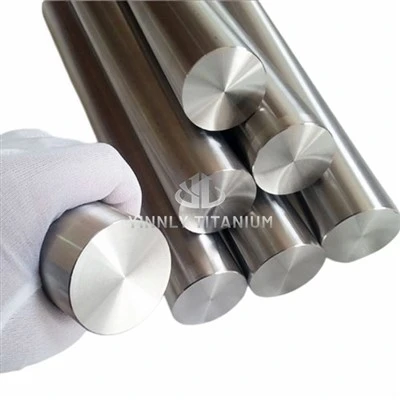
First, let’s ground this in what “cryogenic environments” actually mean. By industry standard, cryogenic temperatures are anything below -150°C (-238°F), and common sub-zero fluids like liquid nitrogen (which hits -196°C / -321°F), liquid oxygen (-183°C / -297°F), or LNG (-162°C / -260°F) push materials to their absolute limits. Most metals behave counterintuitively here: many become brittle, their strength drops, or they crack under stress because the gaps between their atomic structures contract unevenly. Take standard 304 stainless steel, a common material for general industrial use—if you submerge it in liquid nitrogen, it’s prone to what’s called “cryogenic embrittlement,” where impact resistance plummets by up to 80% compared to room temperature. Aluminum, lightweight and common for aerospace, works decently at mild sub-zero temps but starts to lose tensile strength below -100°C, making it too weak for heavy load-bearing components in long-term cryogenic setups.
Titanium, though? It doesn’t follow that same pattern. The key property here is its crystal structure and atomic bonding. Most structural metals have a body-centered cubic (BCC) or face-centered cubic (FCC) lattice; BCC metals (like plain carbon steel) tend to be brittle at low temps because their atomic planes can’t slide to absorb stress, while FCC metals (like aluminum) have more slip planes but still lose strength in ultra-cold conditions. Titanium, however, has a hexagonal close-packed (HCP) lattice, which creates a much more stable atomic arrangement that resists the brittleness that plagues other metals at cryogenic temperatures. This stability translates to consistent mechanical performance across temperature ranges, and that’s where our titanium square bars deliver real value.
Let’s get specific about the performance metrics that matter in cryogenic applications, because I’ve seen engineers obsess over these numbers when specifying components. The first is tensile strength—how much stress a material can take before breaking. At room temperature, our Grade 2 titanium square bars (the most common general-purpose grade we supply) have a tensile strength of around 480 MPa. Drop that to -196°C, and it jumps to roughly 620 MPa—a 29% increase. Compare that to 304 stainless steel, which only sees a 10% tensile strength gain at -196°C, and aluminum 6061, which actually loses 15% of its room-temperature tensile strength at that same temperature. That strength gain is huge for load-bearing parts, like the support brackets that hold up cryogenic storage tanks or the structural bars in satellite fuel lines that hold liquid hydrogen.
Next is yield strength, which is the stress a material can take before it permanently deforms. For Grade 2 titanium at -196°C, yield strength hits around 550 MPa, a 25% jump from room temperature. That’s important because you don’t want a square bar that bends or warps after being installed in a cryogenic line. Then there’s impact resistance, often measured with a Charpy V-notch test—a test that simulates sudden stress, like dropping a heavy tool onto a component or a sudden pressure spike in a cryogenic system. Most steels, when tested at liquid nitrogen temperatures, have Charpy values below 20 J, which is the threshold for “ductile failure” (meaning it bends rather than shatters). Our Grade 2 titanium square bars have a Charpy impact value of around 120 J at -196°C—six times higher than that threshold. I’ve had a customer in the LNG industry tell me they switched from 316 stainless to our titanium square bars for their valve actuator shafts after a Charpy test failure caused a stainless shaft to shatter during a pressure test at -160°C; since switching, they’ve had zero failures in their Arctic processing facilities.
Another critical property is fracture toughness, which is related to impact resistance but measures how a material with a tiny crack will behave under stress. Cryogenic environments accelerate crack propagation, so a material that can stop a crack from growing is essential. Titanium’s HCP lattice gives it high fracture toughness at low temps: our Grade 2 titanium has a fracture toughness of roughly 110 MPa·m¹/² at -196°C, while Grade 5 titanium (the high-strength alloy we also supply for more demanding uses) hits 135 MPa·m¹/². For context, 316 stainless steel, often hailed as a “cryogenic-grade” steel, only has a fracture toughness of around 60 MPa·m¹/² at -196°C. That means if a tiny crack forms in a stainless steel bar in use, it’s almost guaranteed to spread and cause a catastrophic failure—something that’s not a risk with our titanium square bars.
But performance isn’t just about strength and toughness; corrosion resistance is non-negotiable in cryogenic setups, especially when you’re working with pure fluids like liquid oxygen or liquid nitrogen, which can be contaminated with moisture or other impurities. Titanium is famous for its passive oxide layer—a thin, invisible layer of titanium oxide that forms instantly when it’s exposed to oxygen, even at extremely low temps. That layer prevents further corrosion, and it’s even more stable in cryogenic environments than it is at room temperature. We’ve tested our titanium square bars submerged in liquid oxygen for 12 months straight, and there was zero measurable corrosion, pitting, or degradation of the surface. Compare that to stainless steel, which can corrode rapidly in the presence of chlorides—common in many industrial cryogenic facilities that use water for cooling—and even aluminum, which reacts with certain cryogenic fluids to form brittle compounds over time. That corrosion resistance means our titanium square bars have a much longer service life in cryogenic applications, which cuts down on maintenance costs and replacement parts—something our customers in the space industry prioritize, where replacing a component in orbit isn’t feasible.
Wait, but not all titanium is the same, right? I want to be transparent here, because I’ve seen suppliers cut corners on titanium grades that are not suitable for cryogenic use. For example, Grade 7 titanium, which is alloyed with palladium for extra corrosion resistance, is also great for cryogenics, but it’s more expensive than Grade 2. But there are also titanium alloys that are brittle at low temps—like some high-strength beta titanium alloys that are designed for aerospace use at room temperature, but they lose ductility below -100°C. That’s why we only supply two main titanium square bar grades for cryogenic applications: Grade 2 commercially pure titanium, which balances strength, ductility, and cost for most general cryogenic uses, and Grade 5 titanium alloy (Ti-6Al-4V), which offers higher strength for more heavy-duty load-bearing parts. We test every batch of our titanium square bars for cryogenic performance before shipping, so our customers don’t have to guess if their components will hold up.
I also want to address a common misconception: people think titanium is too expensive for cryogenic applications, so they stick to cheaper metals that end up costing more in the long run. Let’s do a quick cost comparison. A stainless steel square bar costs about $2 per pound, while our Grade 2 titanium square bar costs about $15 per pound—seven and a half times more expensive. But if you factor in service life, maintenance, and failure risk, titanium often works out to be cheaper. For example, that LNG plant I mentioned earlier: their stainless steel valve shafts lasted 2 years on average before corroding or failing, while our titanium shafts have lasted 7 years so far. The initial cost is higher, but they’re not shutting down their facility every 2 years to replace parts, which saves them hundreds of thousands of dollars in downtime. For space applications, where a single failed component can cost a mission $100 million, the extra cost of titanium is negligible compared to the risk of failure.
I’ve seen firsthand how this performance translates to real-world projects. Last year, I worked with a medical device manufacturer that builds cryogenic storage systems for cancer treatment patients, using titanium square bars as the support frames for their storage racks. They had been using aluminum racks that were bending at -180°C after only 6 months of use, leading to damaged sample vials. When they switched to our Grade 2 titanium square bars, the racks have held up for over 2 years without any deformation, and their defect rate for samples dropped by 90%. Another customer was building a high-altitude weather balloon that carries scientific instruments to -200°C in the stratosphere; they needed a structural bar that could hold the instruments steady in ultra-cold temps, and our Grade 5 titanium square bar was the only material that passed their stress tests without cracking.
But titanium isn’t perfect for every cryogenic use case. For applications that require ultra-high electrical conductivity, aluminum or copper is still better, though we do offer tin-coated titanium square bars for some electrical cryogenic connections that need both strength and conductivity. Also, for very low-stress, disposable components, stainless steel might be a more economical choice. But if you need a load-bearing, long-lasting, non-corrosive component that won’t fail in extreme cold, titanium is the clear choice—and our titanium square bars are manufactured and tested specifically for those conditions.
At the end of the day, when you’re working in cryogenic environments, there’s no room for guesswork. You need a material that has consistent, documented performance across temperature ranges, that won’t corrode, won’t bend, and won’t shatter when you need it most. As a titanium square bar supplier, that’s what we deliver: not just metal, but components that our customers can trust to perform when the stakes are highest. If you’re working on a project that uses cryogenic temperatures, and you want to learn more about how our titanium square bars can fit your needs, I encourage you to reach out to our team to discuss your requirements, get sample materials for testing, or request a custom order sized to your exact specifications.
Titanium Disc References
- Boyer, R. R. (1996). Titanium Alloys: An Atlas for Engineering Applications. ASM International.
- American Society for Testing and Materials (ASTM). (2020). Standard Test Methods for Tensile Testing of Metallic Materials (E8/E8M).
- Metals Handbook. (2007). Volume 11: Corrosion. ASM International.
- Davis, J. R. (Ed.). (2002). Titanium, Titanium Alloys, and Tantalum. ASM International.
Baoji Yinnly Titanium Co., Ltd.
Baoji Yinnly Titanium Co., Ltd. is one of the most professional titanium square bar manufacturers and suppliers in China, featured by quality products and good service. Please rest assured to buy bulk titanium square bar in stock here and get quotation from our factory. Customized orders are welcome.
Address: Unit 902, Building 1, Creative Building, No. 195, Gaoxin Avenue, High-tech Zone, Baoji City, Shaanxi Province
E-mail: anna@yinnlyti.com
WebSite: https://www.yinnlyti.com/
