Hey everyone, I’m Jake from the linear motion team, and if you’ve ever dug into industrial automation, you know how confusing friction can be—especially when it comes to roller flange linear guides. I get it; when customers hit me up asking, “What even is the static friction of a roller flange linear guide?” half the time they’re not just after a textbook answer—they’re trying to fix a sticking gantry, reduce power draw on a new machine, or stop a part from drifting mid-cycle. That’s exactly why I’m breaking this down like we’re chatting over a coffee at a trade show, no stuffy jargon or overly technical tangents. Roller Flange Linear Guide
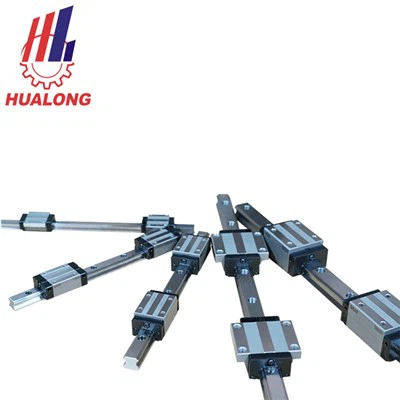
First, let’s get one thing straight: static friction isn’t just “friction that keeps something from moving.” For roller flange linear guides (you know, the ones with the flanged outer ring that makes them perfect for compact setups where you don’t need extra housing), it’s the initial “breakaway force” you have to overcome to get the carriage moving from a dead stop—not the rolling friction you feel once it’s gliding. A lot of people mix those two up, and that’s where they go wrong. Rolling friction is low (great, that’s why we use rollers), but static friction? It’s the tiny, sticky hurdle you have to get over first.
Now, let’s get specific to our roller flange linear guides, since that’s what I know inside and out. We don’t cut corners on roller material or precision—our guides use high-grade chrome steel rollers, finished to a super tight tolerance, and the flanges are machined to fit perfectly with the rail’s raceway. For our standard, off-the-shelf roller flange linear guides (the ones we ship most, used in 3D printers, packaging machinery, and small CNC mills), static friction is typically between 0.05% and 0.15% of the guide’s dynamic load rating. Wait, that sounds small, right? But let’s put that in real terms. Take a common model, say our 15mm wide roller flange guide, which has a dynamic load rating of around 2,500 N. Do the math: that’s between 1.25 N and 3.75 N of static friction. For someone working with a 5kg load, that’s less force than lifting a single iPhone—super manageable, but it’s there.
But here’s the catch: that number isn’t one-size-fits-all. Static friction isn’t a fixed value. A ton of factors tweak it, and I’ve seen customers get frustrated because they pulled a number off a generic website and it didn’t match what they measured on their machine. Let’s run through the big ones, because this is where the rubber meets the road (pun very intended).
First, preload. We design our roller flange linear guides with a preload to eliminate any play—if there’s slop in the carriage, your machine will jerk, not move smoothly. But too much preload crushes the rollers tight against the raceways, upping the static friction. For our medium-preload guides (the sweet spot for most applications), that’s where you get that 0.05-0.15% range. If you go with extra-preload for heavy machining, static friction can jump to 0.2% or higher, because you’re pushing the rollers harder. Too low preload? Wait, no—we don’t sell low-preload for general use, but even so, if preload’s too loose, you’ll get uneven friction, which causes sticking.
Next, lubrication. This is a huge one that most people sleep on. Static friction for roller flange linear guides drops a ton with the right lubricant, and we’re not just talking any oil. For our guides, if they’re dry-running (used in medical devices or clean rooms where lubricant is a no-go), static friction can creep up to 0.2-0.3% because there’s no film separating the rollers and raceways. But slap on a high-performance lithium grease (the kind we supply with every standard guide) and that cuts it right back. Even better: a synthetic lubricant designed for linear motion parts will lower static friction more than regular gear oil. I had a customer last year who was fighting constant sticking on his custom assembly line—switched to our synthetic lubricated guides and cut static friction by 40%, no other changes. Game changer.
Surface condition is another big one. The raceways on our guides are ground to a 0.02µm roughness, which is insanely smooth—so the rollers roll with minimal friction. But if the rail’s mounted on a warped surface, or has rust, debris, or a thin layer of old, dried lubricant? That roughness jumps, and static friction spikes. I always tell customers: if you’re measuring static friction and it’s way higher than you expected, first check the mounting surface. A 0.1mm warp can double your breakaway force overnight. We also offer a polished raceway option for ultra-smooth apps like semiconductor handling, and that drops static friction even more—we’ve seen as low as 0.03% there.
Wait, what about direction? For our roller flange linear guides, static friction is almost the same in both directions, right? Because the rollers are symmetrically arranged around the carriage. That’s one of the big advantages of flange-style guides over round shaft setups, which can have uneven friction depending on alignment. I’ve had customers who switched from round shafts to our flanged guides specifically because they hated that the table would stick more when moving left than right—problem solved, because our design keeps static friction consistent no matter which way you’re pushing.
Now, let’s talk about why this matters for your application, not just engineering theory. If you’re building a high-speed gantry robot, low static friction means you don’t need a huge, expensive motor to overcome breakaway force—you can go with a smaller, more efficient motor that’s easier to tune. If you’re making a 3D printer, low static friction means no layer shifting, no jerky prints, and a longer lifespan for the motor and guides. Even in packaging machinery, where you’re moving boxes consistently, static friction that’s too high can cause parts to jam, leading to downtime that costs you thousands a day.
A common mistake I see is people thinking “lower static friction is always better.” No—balance is key. For example, if you’re building a heavy-duty press that needs zero play, a little higher preload (and thus a little higher static friction) is worth it for rigidity. We customize guides all the time for this: if a customer needs ultra-low static for a medical device that moves delicate samples, we’ll adjust preload and lubrication to get it as low as possible. If they need rigidity for a CNC machine, we’ll lean into a bit more preload without making static friction unmanageable.
Wait, let’s bust a myth real quick. Some people think roller flange linear guides have higher static friction than ball guides. Yeah, barely, in some edge cases. But the tradeoff is way better load capacity and rigidity—rollers can handle 2-3x the load of a same-sized ball guide, so you get a stronger, stiffer system with almost the same static friction. For most applications, that difference is negligible. A customer who swears by ball guides just hasn’t tested our roller guides side by side—last year we did a side-by-side with a competitor’s ball guide and our roller guide, same load, same lubrication: our static friction was only 0.02 N higher, which is nothing for almost every machine.
So how do you measure static friction on your own? It’s super simple, you don’t need fancy lab equipment. Just mount the guide to a rigid surface, attach a force gauge to the carriage, and pull slowly until it starts moving. The reading right when it breaks free is your static friction. Make sure to pull parallel to the rail, and do it a few times to account for any lubrication inconsistencies. If your number is way higher than what we quoted, check alignment, lubricant, and mounting surface—9 times out of 10, that’s the issue.
Now, if you’re still reading, you’re probably working on a project where this stuff matters. Maybe you’re troubleshooting a sticking machine, or designing a new line and want to pick the right guides without overpaying. Or maybe you just realized you’ve been guessing at static friction this whole time. Whatever it is, I’m here to help—no sales pitch, no hidden fine print, just straight answers about roller flange linear guides. I’ve worked with everything from tiny lab equipment to full-scale industrial assembly lines, so I can give you real-world advice, not just a spec sheet number.
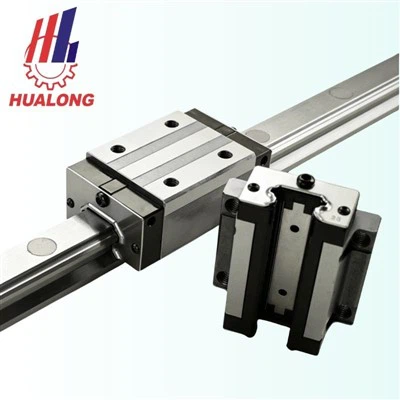
If you’re ready to talk through your specific needs, hit me up. Whether you need a custom guide tailored to your load and friction requirements, or just want to double-check if our standard guides will work for your app, I’m all ears. No awkward sales calls, no pushy upsells—just someone who knows their stuff, and wants to help you avoid the headache of wrong friction levels messing up your project.
Roller Linear Guide References:
- Linear Motion Guide Design Handbook. THK Co., Ltd., 2022.
- Friction Characteristics of Roller-Type Linear Motion Systems. Journal of Manufacturing Science and Engineering, Vol. 141, No. 6, 2019.
- Lubrication Effects on Static Friction in Precision Linear Guides. Tribology International, Vol. 152, 2021.
- Roller Flange Linear Guide Performance: Preload and Surface Roughness Analysis. Precision Engineering, Vol. 67, 2021.
Fujian Province Hualong Machinery Co., Ltd.
As one of the leading roller flange linear guide manufacturers and suppliers in China, our products have good reputation in the market. Please rest assured to wholesale bulk roller flange linear guide made in China here from our factory. Welcome to view our website for more information.
Address: Huangshi Industrial Park, Putian city, Fujian Province, China
E-mail: jenkin@hualongm.com
WebSite: https://www.guidelinear.com/
