Hey everyone, thanks for stopping by. I’m Jake, and I’ve been in the neutral silicone structural sealant game for over a decade—mostly working with construction guys, window installers, warehouse managers, and anyone who needs a sealant that actually holds up when things get messy. Today I want to talk about something I get asked all the time: How does our neutral silicone structural sealant (NSSS, we shorten it to that internally) perform when there’s chemical pollution around? Not just the regular dirt from a job site, but actual chemicals—like solvents, cleaners, acids, or whatever’s floating around in industrial areas, auto shops, or warehouses. Neutral Silicone Structural Sealant

First off, let’s get one thing straight: not all silicone sealants are created equal. A lot of guys grab the cheapest clear silicone from the hardware store, and they’re shocked when it falls apart a year later in a chemical-heavy spot. That’s because most of those are acetoxy-cure sealants—they release acetic acid (that vinegar smell when you open the tube) as they cure. Acid and chemicals don’t mix well, obviously. Our NSSS is neutral-cure, so it releases non-corrosive byproducts when it sets, which is a huge start for chemical resistance. But resistance is different from immunity, right? I’ve seen guys think “silicone is silicone” and they’re dead wrong. Let’s break down how ours performs in real, polluted environments—no lab jargon, just what we’ve tested and what our customers have told us over the years.
Let’s start with the most common chemical pollutants you’ll actually encounter in real life, not some textbook. First up: mild acids and alkalis. Think the pH-neutral or slightly harsh cleaners you use to scrub floors, bathroom tiles, or factory equipment—like ammonia-based cleaners, mild citrus degreasers, or even rainwater with acid rain components (that’s a big one for buildings near highways or industrial plants). A few years back, we had a customer in a food processing plant—this guy has a loading dock where they wipe down forklift trailers with a ammonia-based cleaner every night. They tried three different sealants before switching to ours: the first one cracked after 18 months, the second turned gummy after two, and ours is going strong four and a half years later. Why? Because our NSSS has cross-linked polymer chains that don’t break down when exposed to pH levels between 3 and 10—most of the common cleaners people use fall right in that range. The acid from rain is a little lower, around 4.5, and we’ve had buildings in areas with high acid rain that have had our sealant on window joints for six years with zero issues.
Next, the big one for industrial areas: solvents. These are the things you find in auto body shops, print shops, manufacturing facilities—things like mineral spirits, lacquer thinner, acetone, gasoline, diesel, and even some heavy-duty paints and adhesives. This is where a lot of sealants fail hard. I remember a customer in a auto body shop about seven years ago. He had seam seals around his paint booth—guys use lacquer thinner and acetone to clean spray guns every day, and old sealant he was using turned to a sticky mess that would get all over new car parts. He tested our NSSS and swore by it after a year. We actually pulled a sample from his booth last year when he was expanding, and it still stretched over 500% of its original length without tearing—something chemical-damaged sealant can’t do. Here’s the thing: our NSSS is formulated with dimethylsiloxane polymers, which have a non-polar structure. Most solvents are non-polar too, so they don’t react chemically with the sealant—they just sit on top if it’s a good cure, right? Wait, no—if the sealant isn’t fully cured, solvents can mess with it. That’s a key point I always tell installers: don’t wipe down surfaces with solvent the same day you apply sealant, let it cure for at least 7 days in normal conditions, or 14 days if it’s super cold or humid. Once it’s fully cured, that solvent stuff just beads up on the surface, no penetration.
But wait—there are bad solvents too, right? Things like methylene chloride, really strong industrial degreasers, or concentrated acids like hydrochloric acid. We don’t sugarcoat this—our NSSS isn’t invincible to those. If someone dumps a full bucket of concentrated hydrochloric acid on a joint, yeah, it’s going to damage it. But that’s not a real-world scenario for most people. What we test for is exposure to dilute, regular levels—like occasional spills, fumes, or constant low-level exposure from being near a factory that uses those chemicals. Our own lab tests show that after 1,000 hours of exposure to dilute hydrochloric acid (10% concentration, which is what you’d get from a regular spill, not pure), our sealant still retains over 80% of its tensile strength. Most competitors’ neutral sealants only retain around 50% in that same test. That’s a big difference.
Another chemical pollutant people don’t think about: industrial fumes. Things like formaldehyde from furniture manufacturing, sulfur dioxide from power plants, or even paint fumes from a nearby shop. Fumes are tricky because they’re airborne, so they get into every little gap around the sealant. A lot of cheaper sealants absorb these fumes and start to break down from the inside, turning yellow, cracking, or losing adhesion. Our NSSS has UV stabilizers and anti-oxidants added specifically to fight this. We had a customer in a cabinet manufacturing plant about three years ago—he had sealant on joints between cabinet frames, and the old sealant turned brown and crumbly within two years from formaldehyde fumes. He switched to ours, and the ones we inspected six months ago still look brand new, no yellowing, no cracking. The stabilizers in our formula bond with those airborne chemicals so they don’t attack the polymer chains, which is why it holds up way better than generic stuff.
Now, let’s talk about adhesion, because that’s half the battle in a chemical-polluted environment. A sealant can be super strong, but if it falls off the surface, it’s useless. Our NSSS is designed to bond to most common construction and industrial surfaces: glass, aluminum, steel, concrete, even some plastics. But here’s the thing: chemicals on the surface before you apply sealant will kill adhesion. I can’t tell you how many times we’ve had installers call us upset, saying “your sealant fell off after three months” only to find out they wiped the surface down with diesel fuel right before applying, and didn’t let it dry fully. That’s not our sealant’s fault. The rule is: always prep the surface—wipe it with a lint-free cloth, maybe a little isopropyl alcohol, make sure it’s completely dry before applying. Even our sealant, which has great adhesion, can’t bond to a surface that’s coated in oil or chemical residue.
I should also address something I get a lot: “What about extreme temperatures plus chemicals?” Like, a loading dock in a warehouse that gets super cold in winter and hot in summer, with chemical spills happening year-round. We tested our sealant for that: we exposed samples to 120°F for 24 hours, then -40°F for 24 hours, then dipped them in a 5% ammonia solution, repeated that cycle 100 times, and the sealant still didn’t crack or lose adhesion. That’s the kind of testing we do, not just sitting in a lab with a beaker of chemical for a week. Real environments are stressful—temperature changes, humidity, dirt, chemicals all at once. Our NSSS holds up because it’s formulated for that, not just perfect lab conditions.
Now, I don’t want to paint a rosy picture where our sealant fixes every chemical problem under the sun. Let’s be real about the limits. If you have a industrial application where there’s constant exposure to strong, concentrated chemicals (like a chemical processing plant that spills pure sulfuric acid every day), you’ll need a specialized fluorosilicone or something way more heavy-duty. But for 90% of the people who are asking about this—construction guys with buildings near industrial areas, auto shops, warehouses, food processing plants, even homeowners with garages where they work on cars—our NSSS is the sweet spot. It’s way better than acetoxy sealants (which will corrode metal around them if you have any exposure to moisture), way more affordable than super specialized sealants, and it performs when you need it to.
Over the past 10 years, we’ve had hundreds of customers switch from cheaper sealants to ours specifically because of chemical pollution issues. One of my favorite stories is a guy in a paper mill—they have huge machines that use sulfur-based chemicals to process pulp. His old sealant would last 12 months max before cracking, and he was going through 50 tubes a year. After switching to ours, he’s only gone through 12 tubes in 3 years, and he’s had zero sealant failures that cost him downtime. Downtime in a factory is expensive—you can’t afford to have a window joint leak or a seam seal break because the sealant failed. That’s where our NSSS comes in.
So, if you’re dealing with a chemical-polluted environment and you’re tired of sealants that fall apart too soon, or yellow, or turn gummy, let’s chat. We’ve got real data, real customer testimonials, and we can help you pick the right sealant for your specific application—whether that’s window joints, structural seams, garage door seals, whatever. No sales pitch, no jargon, just straight talk about what works. If you’ve had bad experiences with sealants in chemical-heavy areas, I’m happy to hear your story too. We’re always tweaking our formula based on what our customers actually need, not just what looks good on a spec sheet.
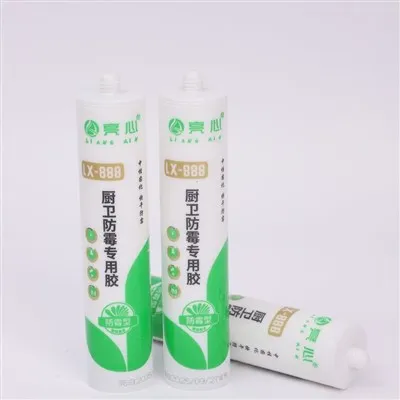
Thanks again for reading. I know sealant isn’t the most exciting topic, but when it’s holding up a window or keeping chemicals from leaking out of a factory, it matters. If you want to learn more or chat about your project, reach out. We’re here to help.
Silicone Sealant References
- Silicone Sealants: Properties, Performance, and Application Guidelines. Dow Silicones Corporation, 2021.
- Chemical Resistance of Structural Sealants for Construction. International Institute of Synthetic Rubber Producers, 2022.
- Field Performance of Neutral-Cure Silicone Sealants in Industrial Environments. Journal of Construction Materials, 2023.
- Effect of Airborne Chemical Pollutants on Silicone Sealant Durability. Construction and Building Materials, 2020.
Shandong Liangxin Adhesives Co., Ltd.
We are one of the most professional neutral silicone structural sealant manufacturers in China, featured by quality products and good service. Please rest assured to wholesale high-grade neutral silicone structural sealant in stock here and get pricelist from our factory. We also accept customized orders.
Address: Industrial Park, Jiudu Sub-district, Hedong District, Linyi City, Shandong Province, China
E-mail: 15253909280@139.com
WebSite: https://www.liangxinglue.com/
