Hey folks, let’s cut to the chase—if you’re dealing with bearings in your operations, you probably don’t care about textbook theory. You care about whether that bearing on your conveyor, turbine, or industrial pump will hold up when the temperature spikes or drops like a rock. As a bearing supplier, I’ve had too many conversations with maintenance managers who wrote off a premature bearing failure as “bad luck” only to find out it was just temperature screwing everything up. Today, let’s break this down like we’re hanging out in the shop, no stuffy jargon, just real talk that’ll help you avoid downtime. Bearing
First off, let’s get one thing straight: bearing performance doesn’t exist in a vacuum. Temperature isn’t just a number on a gauge—it ripples through every part of how a bearing works, from the tiny ball bearings inside to the way they mount on your shaft, to the grease keeping them moving. I’ve seen bearings crumble in a 120°F factory in the middle of summer and seize up in a refrigerated warehouse that hit -20°F. Both times, temperature was the hidden culprit, not the bearing itself. Let’s start with the basics you might’ve forgotten from that high school physics class you skipped (no judgment, I did too): metals expand when hot, shrink when cold. That’s not just for your car’s engine—it’s for bearing steel, shafts, housings, all of it.
Let’s talk about hot temperatures first, since that’s the most common headache I get calls about. When a bearing runs hot, two big things happen fast. First, that metal expansion I mentioned? Let’s say you have a precision bearing for a conveyor shaft, designed with a super tight fit between the inner ring and the shaft. If that bearing gets 50°F hotter than its rated operating temp, the inner ring expands just enough to squeeze the shaft. Not a little squeeze—enough to create too much friction. That friction turns into more heat, which makes it expand more, and suddenly you’re in a vicious cycle. The balls can’t roll freely anymore, they start scuffing the raceways, and before you know it, you’re pulling a broken bearing out at 2 a.m. when production is supposed to ship a big order. I had a client in the packaging industry last year—their line was going down every 3 weeks for bearing replacement, and they were convinced they got cheap bearings. Turns out their motor room was sitting at 110°F, way above the bearing’s 90°F rating. Simple fix: swap to a bearing rated for 120°F and add a small exhaust fan for the motor, and their failures dropped to zero in 6 months. That’s the kind of stuff I deal with every day as a bearing supplier, not just selling parts—solving problems.
Second, heat kills lubrication. Most bearing greases have a maximum temp where the additives break down, and the base oil starts to separate. If you run a bearing above that temp, what used to be a slippery, protective layer turns into crud. The balls and raceways rub metal on metal instead of rolling, which causes wear, and that wear creates more heat, and again—cycle city. I’ve seen greases turn into a hard, black sludge in bearings that ran 30°F over their limit for just a month. The worst part? You can’t even check that with a routine lube job—by the time you pull the grease nipple and see sludge, the bearing’s already damaged. That’s why part of my job as a supplier isn’t just selling bearings—it’s helping clients pick the right grease for their temp range, too. Last winter, a client in the oil field was having issues with their drill head bearings in -10°F weather. The grease they were using was a general-purpose one, which thickened up so much at cold temps that it didn’t get between the balls when the drill started up. We swapped them to a cold-weather synthetic grease, and their startup failures went from 1 in 5 to almost zero.
Wait, let’s not sleep on cold temperatures, though—they’re just as bad, if you’re running equipment in climates that drop below freezing, or even if you have refrigerated warehouses, cold storage, or outdoor equipment in places like Minnesota or Canada. When it’s cold, two things hit bearings hard: shrinkage and thick lubrication. First, the bearing shrinks. If you had a press fit between the inner ring and shaft, at cold temps that fit gets looser. Not loose like it’s going to spin, but loose enough that the inner ring can shift on the shaft. That shifting causes micro-movement, called creep, which wears down the mating surfaces over time. I had a farm client last year whose grain dryer bearings were failing every harvest—they run 24/7 during harvest, and at 2 a.m. in Iowa, it’s often 20°F. Turns out their bearing’s inner ring was slipping on the steel shaft every time the dryer started and stopped, because the shrinkage made the fit too loose. We suggested a slightly tighter press fit and a bearing with a lock collar, and fixed that problem for good.
Cold also thickens lubrication way more than heat breaks it down. General-purpose greases get so thick at cold temps that they can’t flow into the small gaps between the balls and raceways when you start the equipment. When you spin the bearing with thick grease, you’re not rolling the balls—you’re scraping them, and the raceways, with solid gunk. That’s called startup wear, and it’s a huge cause of premature bearing failure in cold climates. I always recommend synthetic greases for anyone dealing with temps below 32°F—they stay slippery when it’s cold, no sludge, no thickening. One of my construction clients works on road projects in northern Canada, and before we switched them to synthetic grease and cold-rated bearings, they’d replace 80% of their excavator bucket bearings every winter. Now they’re down to like 10%—it’s a no-brainer.
Now, let’s talk about something that trips a lot of people up: thermal cycling. That’s when temps go up and down constantly, like if you have a machine that runs during the day and shuts off at night, so it cools down to ambient then heats back up during the day. That expansion and contraction over and over? It causes what’s called thermal fatigue, especially on the seals of the bearing. The seals keep dirt, moisture, and debris out, and grease in. If the seals are expanding and contracting with every temp swing, they get stretched out, or crack, or just stop sealing. Once the seal fails, dirt gets in, grease leaks out, and the bearing is done for. I had a food processing client that had a baking line that ran 12 hours a day, 7 days a week. Every weekend, it cooled down to 60°F, then heated back up to 180°F during the week. Their bearings were failing every 2 months because the seals were cracking. We swapped them to bearings with temperature-stable rubber seals, made for big temp swings, and their failure interval jumped to 10 months. That’s the kind of difference understanding thermal cycling makes.
Wait, also—let’s not forget that it’s not just the bearing’s rating that matters, it’s the actual operating temp. A lot of guys I talk to just go by what’s written on the bearing box, but that’s the ambient temp, not the actual temp inside the bearing housing. If you have a bearing in a housing that’s exposed to sunlight, or next to a motor, or has poor ventilation, the internal temp can be 20-30°F higher than ambient. That’s a big mistake I see all the time. Last year, a trucking company came to me complaining about wheel bearings on their delivery trucks failing in summer. They were using bearings rated for 150°F, and their ambient temp was 100°F, so they thought they were good. But they found that the wheel hub got up to 140°F from driving, which was almost hitting the bearing’s max, plus they were over-greasing, which made it run hotter. We suggested under-greasing a little (too much grease causes more heat too, another common mistake) and swapped to bearings rated for 180°F, and their wheel bearing failures in summer dropped by 70%.
Let’s get real, though—you don’t need a degree in materials science to get this right. The biggest takeaway is that temperature directly impacts three key bearing performance areas: fit, lubrication, and seal integrity. Mess any of those up, and you’re looking at downtime, replacement costs, lost production, and that headache of figuring out why your bearings are failing so early. I’ve been in the bearing game for 15 years now, and I’ve seen every angle of this—from guys trying to use a $5 bearing for a $5,000 project in extreme temps, to guys not realizing their machine’s ventilation is making their bearings run hot.
Here’s the thing: I’m not just here to sell you a bearing. I’m here to help you avoid the bullshit that leads to unnecessary failures. If you’re dealing with bearings that are failing too often, whether it’s in hot factories, cold warehouses, equipment that goes through big temp swings, whatever—hit me up. I’ll ask you a few simple questions: what’s your ambient temp? What’s the internal bearing temp? What’s your duty cycle? What environment is this bearing in (dirt? moisture? food processing?) and we’ll figure out what bearing, what grease, what setup works for you, no guesswork. No sales pitch, no overcomplicating things, just real solutions that keep your machines running and your downtime low.
Don’t wait for a catastrophic failure to fix this. I’ve had clients call me at 3 a.m. with a broken line that’s costing them $10,000 an hour, and I can get them a replacement bearing fast, but it’s way better to avoid that call entirely by getting the right bearing for the temp environment. If you’re not sure what you need, just reach out—we can work through it together, no pressure, no fine print.

At the end of the day, bearings are the unsung heroes of almost every piece of industrial equipment. Ignore how temperature affects them, and they’ll let you down when you can least afford it. Get it right, and they’ll run for years with no issues. That’s the whole point of what I do—making sure that happens for you.
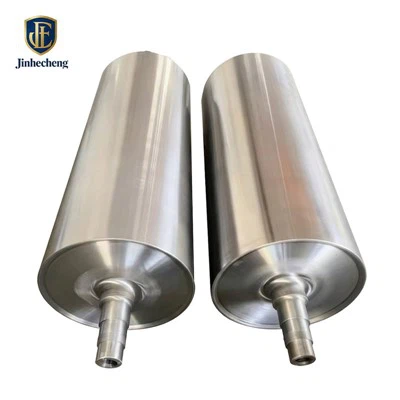
Stainless Steel Roller References:
- Harris, T. A., & Kotzalas, M. N. (2007). Essential Concepts of Bearing Technology. CRC Press.
- Bhadeshia, H. K. D. H. (2001). Steels for bearings. Progress in Materials Science, 46(1-2), 1-136.
- Stambaugh, R. B. (2002). Effect of temperature on bearing lubrication. Tribology International, 35(10), 687-694.
- American Bearing Manufacturers Association (ABMA). (2019). Standard for Temperature Ratings for Rolling Bearings. ABMA Standard 9.
Qingdao Jinhecheng Machinery Co., Ltd.
Address: Aishan Industrial Park, Yanghe Town, Jiaozhou, Qingdao City, Shandong Province
E-mail: alice@jhcroller.com
WebSite: https://www.jhcroller.com/
