If you’re in construction, you’ve probably heard the term “3 ply shuttering panel” thrown around on job sites, but have you ever stopped to ask what makes these panels so tough—like, actually tough enough to survive multiple concrete pours, rough handling, and the chaos of a busy worksite? As a 3 ply shuttering panel supplier, I get asked this question all the time, and it’s not just a “how do you build these?” query. It’s the stuff that separates the panels that save you time, money, and headaches from the ones that crack mid-pour and turn your day into a nightmare. Let’s break down the resilience of these panels in plain, real terms—no fancy jargon, just what matters for anyone actually using them. 3 Ply Shuttering Panel
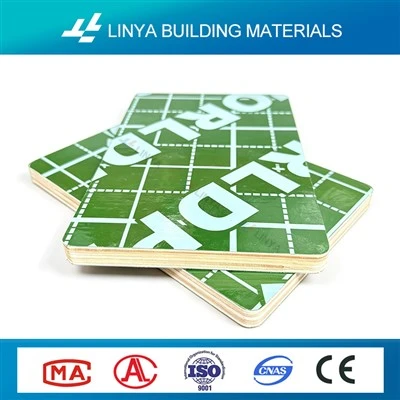
First, let’s get the basics of what a 3 ply shuttering panel even is, because you can’t talk about resilience without understanding the structure. Unlike thinner 2 ply panels that flex way too easy for heavy concrete, 3 ply panels are three thin wood veneers glued crosswise at 90 degrees. Wait, crosswise? That’s not a random choice. Let’s be real: concrete weighs like 150 pounds per cubic foot. That’s a lot of pressure pushing out on your formwork, right? If all the veneers ran the same direction, they’d buckle or split way faster. Cross-graining means each layer reinforces the next—like three buddies standing back to back instead of all facing the same way. It’s way harder to push that group over. That’s the core of their strength, but it’s not just the number of plies—it’s how those plies are made, glued, and treated.
Let’s start with the wood itself. Not just any veneer goes into a good 3 ply panel, trust me. We use softwood veneers—pine, spruce, sometimes fir—but they’re kiln-dried to a specific moisture level, around 8 to 12 percent. Why that? If the wood’s too wet, it’ll warp as it dries; too dry, it’ll crack when it’s exposed to rain or concrete moisture. I’ve seen cheap suppliers skip that drying step, and their panels come off the truck already warped. Total garbage. We also grade each veneer—no knots larger than a quarter in the inner plies, because knots are weak spots. A knot might look small, but when concrete is pushing, that’s where a crack starts. So that initial quality check for the wood is the first line of resilience.
Next, the glue. This is make-or-break for 3 ply panels. You can have the best veneers in the world, but if the glue fails, the plies separate faster than a bad project deadline. We use a phenol-formaldehyde adhesive for our panels—not the cheap urea glue you’d find in furniture that melts in moisture. Phenol glue is waterproof, heat-resistant, and doesn’t break down even after being submerged in concrete slurry (which is basically wet cement, super corrosive). I’ve had customers reuse our panels 10, 12 times, and the glue line still looks solid. Compare that to the cheap panels from overseas that only last 2 or 3 uses, and you’re saving way more money long-term. The glue doesn’t just hold the plies together, either—it adds stiffness. So when concrete pushes out, the panel doesn’t flex, it stands its ground. That’s a big part of resilience most people miss: it’s not just not breaking, it’s holding its shape over time.
Then there’s the surface treatment. The face of the panel that touches concrete is usually a high-density overlay (HDO) or melamine coating, right? Our panels have an HDO surface that’s smoother than regular plywood, so concrete doesn’t stick to it. Why does that matter for resilience? If concrete does stick, you have to pry it off, which can chip the edge or the face of the panel. Chips turn into cracks, which turn into splits when you reuse them. That HDO surface also resists abrasion from tools, rebar, and even the crane hook when you’re lifting panels. I’ve seen guys drag a panel across a gravel worksite, and the HDO still looks good—no scratches deep enough to cause issues. Cheap panels have a thin melamine coating that scratches through after one use, and then you’re stuck with a panel that can’t be reused. Reusability is a huge part of resilience for a supplier like us, because if a panel only lasts once, it’s not resilient. It’s disposable.
Wait, let’s talk about real-world tests, not just lab stuff. Last year, a customer used our 3 ply panels for a 5-story apartment complex in rural Ohio. The site had no covered storage, so panels were left out in rain, snow, and extreme temperatures for 3 weeks before the first pour. Most panels on that job from other suppliers warped so bad they had to be replaced mid-pour. Our panels? They were a little damp on the surface, but no warping, no delamination. They ended up reusing them 11 times for different small pours on the same project. That’s resilience in action. Another example: a bridge contractor in Michigan used our panels for a concrete bridge deck. They needed panels that could handle the weight of concrete trucks driving on them before the concrete cured, and our panels didn’t crack, even with a 10,000-pound truck moving across them. That’s the kind of stuff that matters.
But resilience isn’t just about strength or not breaking. It’s also about how the panel handles stress when things go wrong. Let’s say you drop a panel 4 feet off the back of a pickup truck. A cheap 2 ply panel would split right along the edge. A good 3 ply panel? It might get a small dent, maybe a tiny crack on the back, but it still works. Why? The cross-graining spreads the impact force across all three plies, instead of concentrating it on one layer. I’ve seen that test dozens of times—accidents happen on job sites, and a panel that can take a small drop or a bump and still be usable is way more resilient than one that’s dead after a minor mistake.
Of course, there are factors that can kill a 3 ply panel’s resilience, even if it’s made right. Improper storage is a big one. If you stack panels flat on damp ground, air can’t circulate between them, so moisture builds up, the glue weakens, and plies start to separate. Or if you lean them against a wall at an angle, they’ll warp. I always tell customers to store panels on a level rack, 6 inches off the ground, with spacers between each layer. It’s a small step, but it makes a huge difference in how many times you can reuse them. Another thing: don’t use nails that are too short. If the nail only goes through the top ply, it’ll pull out when concrete pressure builds. Use 2 1/2-inch nails for most panels, that’s the sweet spot. Cut corners there, and even the best panel will fail.
As a supplier, I’ve spent years tweaking our process to boost resilience without jacking up prices. We don’t cut corners on veneer quality, glue, or surface treatment, because I know a panel that fails costs a customer time, money, and stress. The feedback we get from repeat customers is what matters most—they come back because our panels work, pour after pour. That’s the real measure of resilience, right? It’s not what a spec sheet says, it’s how a panel performs on your job site when you’re up against a tight deadline, heavy concrete, and unexpected weather.
If you’re working on a project right now and need panels that can actually handle the job—no cracking, no warping, no falling apart after one use—we’ve got you covered. Our 3 ply shuttering panels are built for long-term use, tested to stand up to whatever a worksite throws at them, and designed to save you money by being reusable multiple times. Don’t waste your budget on cheap panels that turn into trash after one pour. Let’s chat about your project, what size panels you need, and how we can get the right ones to you fast. We’re here to make your shuttering easier, not a headache.
Bamboo Formwork References:
- American Forest & Paper Association. (2021). Performance Standards for Wood Structural Panels.
- Construction Industry Institute. (2019). Formwork Resilience and Reusability Guidelines.
- International Code Council. (2020). Chapter 23: Formwork Requirements for Concrete Construction.
- Forest Products Laboratory, U.S. Department of Agriculture. (2022). Wood Veneer and Plywood for Construction Applications.
Shenzhen Linya Building Materials Co., Ltd.
We are one of the most professional 3 ply shuttering panel manufacturers and suppliers in China, also support customized service. Welcome to buy bulk high quality 3 ply shuttering panel in stock here from our factory. If you have any enquiry about free sample, please feel free to email us.
Address: Bantian International Center, No.5 Huancheng South Road, Ma’antang Community, Bantian Street, Longgang District, Shenzhen
E-mail: linya@formworksteelprop.com
WebSite: https://www.linyabuildingmaterials.com/
