If you’ve ever spent time in a commercial building—whether it’s a downtown office tower, a neighborhood hospital, a retail chain, or a manufacturing plant—you know how much rides on reliable power. Servers holding customer data, life support equipment, refrigeration units for grocery stores, assembly line machinery, and even the basic lighting and HVAC systems that keep a space functional all depend on consistent, clean electricity. What many building owners and facility managers don’t realize is that even a tiny, seemingly harmless power surge can wreak havoc on this infrastructure. A single spike, caused by something as common as a lightning strike a few miles away, a utility grid switching event, or even a large office appliance turning on and off, can fry circuit boards, corrupt data, and disable critical systems before most people even notice a blip in power. Surge Protection Device
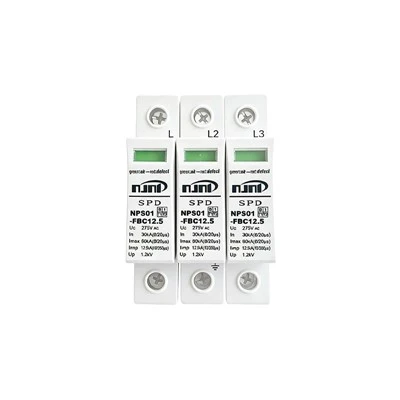
As a supplier of surge protection devices (SPDs), I talk to commercial facility teams every week who’ve learned this the hard way. I’ve heard stories of a restaurant that lost an entire week of point-of-sale data and inventory records when a surge hit its back-of-house server room, costing thousands in lost sales and recovery fees. I’ve heard from a small manufacturing plant that had to replace $20,000 worth of robotic arm controllers after a nearby utility grid upgrade caused a surge no standard power strip could stop. These aren’t rare, one-off incidents—they’re preventable. The key is choosing the right SPD for commercial use, not just grabbing whatever is cheap at the local hardware store.
To cut through the noise, let’s start by debunking a common myth: surge protection isn’t just for sensitive electronics. For commercial spaces, it’s for every electrical system. A single surge can travel through a building’s main electrical panel, winding its way through every branch circuit, wall outlet, and hardwired device. That means it doesn’t matter if you’re plugging a laptop into a desk outlet or a critical fire alarm system into its dedicated circuit—both are at risk if you don’t have the right protection at every level of your electrical distribution.
When it comes to commercial SPDs, there’s no one-size-fits-all solution. The best device depends on the size and type of your space, the criticality of the systems you house, and the specific surge risks your location faces. But after 15 years working with commercial clients across North America, I’ve found that there are three core categories of commercial SPDs that form a reliable, layered defense: service entrance SPDs, panel-level SPDs, and outlet-level SPDs. Each has a specific job, and skipping any of them leaves gaps in protection.
Let’s start with service entrance SPDs, the first line of defense installed right where power comes into your building from the utility grid. These are the workhorses for commercial use because they’re designed to handle the largest surges—those from distant lightning strikes, grid switching, or utility equipment changes. Unlike consumer-grade surge protectors that only handle small spikes, service entrance SPDs are rated for high current capacity, typically measured in kiloamperes (kA) for mode 1 and mode 2 applications. For example, a mid-sized office building or retail space should have a service entrance SPD rated for at least 50 kA per phase; larger facilities like hospitals or manufacturing plants need even higher ratings, often 100 kA or more, because they have more circuits to protect and more critical systems at stake.
What sets a good service entrance SPD apart from a cheap generic model is its durability and compliance with industry standards. Commercial service entrance SPDs should meet ANSI/IEEE C62.33 and IEC 61643-11 standards, which are the gold benchmarks for surge protection performance. They also need to be rated for continuous operation at your building’s nominal voltage—usually 120/208V for most commercial spaces, or 277/480V for larger industrial facilities. A common mistake I see is installing a consumer-grade service entrance SPD, which isn’t built to handle the harsh, high-demand environment of a commercial electrical panel. These units often fail within a year or two, leaving your entire building unprotected when a major surge hits.
Next, panel-level SPDs, installed inside your main electrical panel or subpanels, act as a second line of defense, catching surges that slip past the service entrance device and directing them to ground before they reach individual branch circuits. For commercial spaces, panel-level SPDs are especially important because they protect groups of devices that share a circuit. For example, a group of office printers, a server rack, or HVAC units on a single subpanel all benefit from panel-level protection. These units are typically smaller than service entrance SPDs but still have higher ratings than consumer models, with common ratings of 20 to 40 kA per phase for most commercial applications.
A key feature to look for in panel-level SPDs is thermal protection and status indication. Commercial electrical systems can run hot, and surge devices degrade over time even if they’re never hit by a big surge. A panel-level SPD with built-in thermal cutoffs will safely disconnect itself from the circuit if it starts to fail, preventing it from becoming a fire hazard. Status indicators—like a small LED that glows green when the device is working, red when it needs replacement—make it easy for facility teams to do quick checks during routine maintenance, no special tools required. That’s a huge benefit for commercial operations, where downtime from maintenance checks is costly.
The third layer is outlet-level SPDs, which plug directly into wall outlets to protect individual, highly sensitive devices. This is where many facility teams cut corners, relying solely on cheap power strips with surge protection for their computers, servers, or point-of-sale systems. While outlet-level SPDs are essential, they shouldn’t be your only protection. A good commercial-grade outlet-level SPD has a higher surge rating than consumer options, usually 1,000 Joules or more for small devices, and even higher for server racks or medical equipment. They also should have features like EMI/RFI filtering, which cuts down on electrical noise that can interfere with sensitive electronics, and overload protection to prevent the device from drawing too much power and damaging your equipment.
But here’s the thing about outlet-level SPDs: not all are created equal. I’ve seen office managers buy a 10-pack of cheap surge protectors at a big-box store, only to find out their surge rating is only 300 Joules—less than half of what a single lightning-induced surge can deliver. For commercial use, look for outlet-level SPDs that are UL-listed for surge protection, with a Joule rating of at least 800 Joules for individual office devices, and 1,500 Joules or higher for server racks or medical gear. Also, avoid “power strip” style outlet SPDs for high-end equipment—opt for rack-mountable commercial outlet SPDs that fit securely in server racks and have dedicated circuits for different types of equipment, so you can isolate sensitive servers from devices that draw high power (like space heaters or copiers) that can cause surges just by turning on.
Beyond the type of SPD, there are other critical factors to consider when choosing the best surge protection for commercial use. First, location matters a lot. A retail store in a downtown area with high utility activity has different surge risks than a manufacturing plant near a major airport or a hospital in a rural area prone to thunderstorms. For example, a rural medical facility should invest in a higher-capacity service entrance SPD than an urban office, because lightning surges are more frequent in unpopulated areas, and lives depend on that facility’s equipment never going down.
Second, consider your total cost of ownership, not just the upfront price. A cheap service entrance SPD might cost $150, while a high-quality, compliant unit costs $500. But if the cheap unit fails in two years and a single surge costs you $20,000 in equipment damage and downtime, the $500 unit is a bargain. High-quality commercial SPDs are also designed to last longer, with a lifespan of 10 to 15 years, compared to 3 to 5 years for cheaper models. Many of the better commercial SPDs also come with warranty programs that cover equipment damage caused by a surge, up to a certain amount, which adds an extra layer of financial protection for your business.
Third, compliance and certification are non-negotiable for commercial use. Many industries, like healthcare, finance, and transportation, have strict regulations around equipment reliability and data protection. Using uncertified SPDs can leave you liable if a surge causes damage to critical systems, or if you have to prove to regulators that you took reasonable steps to protect patient data, financial records, or public safety equipment. All of the SPDs we supply for commercial use meet UL, IEC, and ANSI standards, so you can be sure they’re tested and proven to perform as advertised.
I also want to address a question I get all the time: can I just install a single high-capacity SPD instead of a layered system? The short answer is no. Surges come in different sizes and travel through different paths. A single service entrance SPD is great for big surges, but it can’t catch smaller surges that slip through to individual devices, or the electrical noise that builds up on branch circuits. A layered approach gives you multiple points of protection, so if one device is damaged or overloaded, there’s another layer catching the surge before it reaches your most critical equipment. It’s like wearing a seatbelt and having airbags—you don’t rely on just one to keep you safe, and the same logic applies to surge protection.
Let’s talk about a real example to make this concrete. A 50,000 square foot office building in Chicago came to me last year after a surge from a nearby lightning strike fried 12 desktop computers, a server rack, and the building’s HVAC control system. They had installed a generic service entrance SPD they bought from a local electrician for $200, and outlet-level power strips from a big-box store. We installed a UL-listed service entrance SPD rated for 65 kA per phase, a panel-level SPD in each of the three subpanels serving the office floors, and commercial-grade outlet SPDs for the server rack and sensitive workstations. Six months later, a utility grid switching event caused a surge, and the layered system caught it completely—no equipment damage, no downtime, no lost work. The total cost of the system was $3,200, a tiny fraction of the $45,000 they lost in downtime and repairs from the earlier surge.
Now, I know every commercial space is different, so one size doesn’t fit all. A 10-room dental office has different needs than a 100,000 square foot distribution center, and a hospital has different requirements than a retail store. That’s why the best way to figure out what SPD is right for your business is to do a site assessment. A good surge protection assessment will look at your building’s electrical system, the critical systems you have, your location’s surge risk, and industry-specific regulations to recommend a tailored system, not a one-size-fits-all kit.
As a commercial SPD supplier, my goal isn’t to sell you the most expensive device—it’s to help you find the right balance of protection, reliability, and value for your specific needs. Too many commercial teams waste money on overkill protection they don’t need, or cut corners and end up paying for it later. The best surge protection for commercial use is a layered, compliant system designed for your space, installed correctly, and maintained regularly to make sure it works when you need it most.

If you’re ready to protect your building, your equipment, and your bottom line from surge damage, I encourage you to reach out for a consultation. We work with businesses of all sizes across all industries, from small retail shops to large healthcare facilities and manufacturing plants, to design customized surge protection solutions that fit your budget and your needs. Don’t wait until the next surge hits—don’t let a preventable event cost you thousands in downtime, repairs, and lost revenue.
T2 100KA Surge Protective Device References
ANSI/IEEE C62.33-2018, Standard for Surge Protective Devices for Use in AC Power Circuits (1000 V and Below)
IEC 61643-11:2021, Low-voltage surge protective devices – Part 11: Surge protective devices connected to low-voltage power systems – Requirements and test methods
Underwriters Laboratories (UL) 1449, Standard for Surge Protective Devices
Nanjing Ningpu Lightning Protection Equipment Manufacturing Co., Ltd.
As one of the most professional surge protection device manufacturers and suppliers in China, we’re featured by quality products and good price. Please rest assured to buy customized surge protection device made in China here from our factory. Also, pricelist is available.
Address: Building 1, No.20 Shengyuan Road, Lishui Economic Development Zone, Nanjing City, Jiangsu Province, China
E-mail: xuhaiyan@npspd.com
WebSite: https://www.npspd.com/
