If you’re in the business of producing EPS (expanded polystyrene) or EPP (expanded polypropylene) parts—whether that’s protective packaging for consumer electronics, automotive bumper inserts, or disposable food containers—you already know the mold is the unsung hero of every finished piece. But if you’ve ever stood in front of a new EPS EPP mold and wondered, “What pressure do I really need to get consistent, high-quality parts?” you’re not alone. As a mold supplier who’s been working with EPS and EPP for over 12 years, I’ve fielded this question from every type of customer: from small start-ups testing their first line of custom packaging to large automotive plants rolling out parts for new electric vehicles. The pressure requirement isn’t a random number we pull out of thin air—it’s a balance of material science, mold design, and end-part specs, and getting it wrong leads to scrap, slow cycle times, or parts that don’t hold up. Let’s break this down, talk about what I’ve seen work (and what doesn’t), and why it matters for anyone investing in these molds. EPS EPP Mold
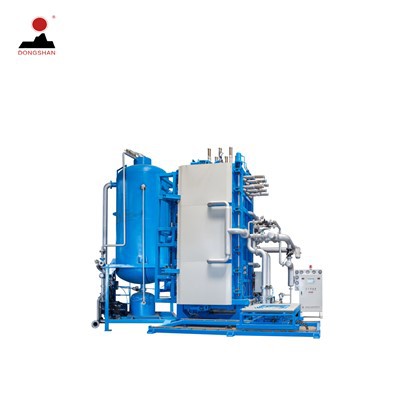
First, I need to clarify that EPS and EPP are very different materials, so their pressure requirements don’t overlap. EPS is the more common, rigid, lightweight foam you see in shipping peanuts or takeout food containers. It’s made from polystyrene beads pre-expanded with pentane gas, which fuse when heated and pressurized in a mold. EPP, on the other hand, is a tougher, more resilient foam used for automotive crash pads, bike helmets, and industrial packaging. It’s made from polypropylene beads, pre-expanded with CO2 or nitrogen, and has a higher density and impact resistance than EPS—so its pressure needs are naturally higher. This is one of the first things I walk through with a new customer before we even quote a mold: what material are you using, and what’s your part’s density? That baseline changes everything.
Let’s start with EPS pressure requirements, since that’s the material I see most often for custom packaging. For standard EPS molds, the core pressure I reference is usually between 10 to 15 bar (that’s roughly 145 to 215 psi) inside the mold cavity during the steam phase. Wait, “steam phase” is key here—we don’t use hydraulic pressure like you would for injection molding plastic parts. EPS and EPP use steam to heat the beads, and the pressure from that steam is what makes the beads expand, flatten against the mold walls, and fuse together. For low-density EPS parts (like 10 to 20 kg/m³, which is super light, used for shipping fragile items like glassware), I’ve found that 10 to 12 bar works perfectly. Too little pressure here, and the beads don’t expand evenly—you’ll get parts with gaps between beads, weak seams, and parts that crumble when you drop them. I had a customer last year who was using a old, poorly maintained mold and only running 8 bar for low-density foam; their scrap rate was 22%, just because the beads weren’t fusing properly. Once we adjusted their operating pressure to 11 bar and made a small tweak to their mold’s venting (more on that in a minute), their scrap dropped to 3% and their cycle time went down by 15%. It wasn’t that they needed a new mold—they just didn’t know the correct pressure for their material.
For medium-density EPS, which is the most common for things like appliance packaging or reusable EPS inserts, that pressure jumps to 12 to 14 bar. Medium-density EPS is usually 20 to 50 kg/m³, so the beads are a bit denser to start with. They need a little more steam pressure to get them to expand and fill the mold cavity completely, especially if the part has tight corners or intricate details. I’ve learned over the years that if a customer’s part has undercuts or small embossed logos, we might need to run pressure at the higher end of that range, or adjust the steam flow timing. For example, a customer making custom EPS inserts for a dishwasher control panel had tight, 2mm tall embossed text on the inside of the insert. They were running 12 bar and the text was faint and incomplete. We recommended increasing the pressure to 14 bar, and adding an extra 2 seconds of steam hold time—by the second run, the text was sharp, and their parts passed all quality checks. I always tell people: pressure isn’t just about getting the part to fill, it’s about getting the fine details that make your product stand out.
High-density EPS, which is used for things like construction insulation or heavy-duty industrial packaging (50 to 150 kg/m³), needs 14 to 15 bar. This material is much denser, so the beads have a higher melting point, and you need more pressure to force them to fuse into a solid, rigid part. I recently worked with a construction company making EPS insulation panels for cold storage facilities; their old mold was running 12 bar, and the panels were splitting along the seams after just 6 months of use. We switched their mold steel to a higher-grade material that can handle consistent high pressure, and adjusted their operating pressure to 15 bar. The panels now pass 12-month durability tests without splitting, and they haven’t had a single return in 8 months. It’s a small adjustment, but it makes a huge difference for end-use performance.
Now EPP, which is the tougher, more high-performance material, has a completely different pressure curve. EPP parts are usually denser, with better impact resistance, so their pressure requirements are higher. For standard EPP parts (10 to 50 kg/m³, like helmet liners or small automotive components), the required pressure is between 15 to 20 bar (215 to 290 psi) during the steam phase. Wait, that’s 5 bar higher than high-density EPS, which makes sense because EPP beads are more rigid. I had a customer making EPP bike helmet liners a few years back who was using an old EPS mold for a prototype—they were running 12 bar steam, and the liners were coming out soft and crumbly, with zero impact resistance. Once they switched to an EPP-rated mold (we upgraded the mold’s pressure-rated valves and steam lines to handle higher pressure) and ran it at 18 bar, the liners passed all CPSC impact tests on the first try.
For high-density EPP, which is 50 to 100 kg/m³, used for large automotive parts like door panels or bumper beams, the pressure jumps even higher to 20 to 25 bar. This is where mold design and material compatibility get really important. EPP at high pressure generates more heat, and if the mold isn’t built to handle that, you’ll get premature wear, leaking steam, or even mold damage. I’ve seen customers try to use cheap, unrated molds for high-density EPP and end up needing to replace the mold every 6 months—something we never have with our pressure-rated EPP molds, which are built from hardened tool steel and reinforced steam channels to handle consistent 25 bar pressure without leaking or warping. Last year, an automotive tier 1 supplier came to us after going through 3 different molds in 18 months for their new electric vehicle’s front bumper EPP beam. The problem? Their old molds were only rated for 18 bar, but high-density EPP needed 22 to 24 bar. We built them a custom mold rated for 28 bar, and they’ve been using it for 14 months with zero issues, producing 10,000 parts a month without a single mold failure from pressure.
But here’s the thing: pressure isn’t the only factor that affects how your parts turn out. Venting in the mold is equally important, and it works hand in hand with pressure. If your mold has too few vents, the air trapped inside the cavity won’t escape when the steam and bead pressure build up, and you’ll get incomplete fills—even if you run the correct pressure. I had a customer last month making EPP automotive door handles; their mold was vented on only one side, and even though they were running 19 bar pressure, half the parts had empty spots on the inner side. We added 8 extra vents along the inner cavity walls, and adjusted their pressure to 20 bar, and the fill rate went up to 100%. Vent size matters too—for EPS, vents are usually 0.1 to 0.2 mm wide, while for EPP, since the beads are denser, we use slightly larger vents, 0.2 to 0.3 mm, to let the air escape faster without letting beads escape through the vents.
Another big factor is your molding machine’s capability. You can’t run 25 bar pressure on a machine that only outputs 10 bar of steam pressure—no mold, no matter how well designed, will make good parts if your machine can’t deliver the required pressure. I always ask customers what their machine’s maximum steam pressure is before we build their mold, because that changes how we engineer the steam channels in the mold. If a customer only has a machine that maxes out at 18 bar, we won’t build a mold that requires 25 bar—we’ll work with them to adjust the part design slightly, or optimize the steam flow, to get good parts at their machine’s maximum capacity. It’s a collaborative process, not just selling a mold that fits the material.
I also want to address a common misconception that more pressure equals better parts. That’s not true—too much pressure is just as bad as too little. If you run pressure higher than needed, you’ll get dense, brittle parts that crack easily, and your cycle time will be longer because you have to let the part cool longer. I had a customer a few years back who thought if 12 bar was good for medium-density EPS, 16 bar would be even better. They cranked up the pressure, and their parts came out so brittle that 30% cracked during assembly. Once we dialed it back to 13 bar, they got the same strength, and their cycle time dropped by 20%. It’s a balance, not a race to the highest number.
For anyone investing in new EPS or EPP molds, here’s what I recommend as a supplier who’s worked with hundreds of customers over the years: first, clearly define your material (EPS vs EPP) and part density before talking to a mold maker. Second, ask about the pressure rating of the mold—don’t just get a generic mold, get one rated for the maximum pressure you’ll need for your part. Third, make sure your molding machine can deliver that pressure; if not, plan to upgrade or adjust your process before you order a mold. Fourth, work with a supplier who will walk you through pressure adjustments after you get the mold, not just hand it over and say “good luck.” I always include a free 2-hour technical consultation with every mold we sell, where we’ll adjust pressure, venting, and steam timing to match your specific machine and material, because every production setup is different.
At the end of the day, the pressure requirement for EPS EPP molds isn’t a one-size-fits-all number—it’s a formula that depends on material type, part density, mold design, and machine capability. I’ve seen customers save thousands of dollars in scrap and downtime just by getting the pressure right, and I’ve seen customers throw away good money on the wrong pressure because they didn’t ask the right questions. If you’re in the market for a new mold, or you’re struggling with inconsistent parts from your current mold, don’t guess at the pressure requirement. Reach out and let’s talk through your project—we’ll help you design a mold that’s built to deliver the exact pressure you need, so you can make consistent, high-quality parts without the frustration of scrap or downtime.
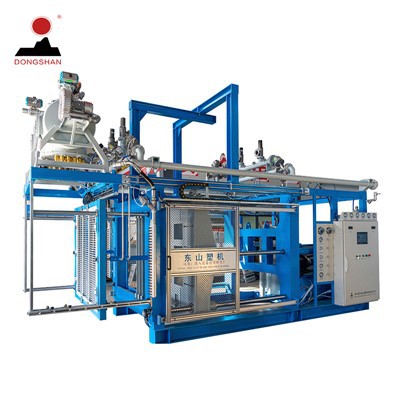
If you have questions about pressure requirements, mold design, or want to discuss your specific EPS or EPP part project, feel free to reach out to our team to arrange a consultation for your next mold project.
EPP Shape Molding Machine References
- Hanson, J. (2019). Expanded Polystyrene and Expanded Polypropylene: Processing, Properties, and Applications. Polymer Processing Press.
- Lee, S. (2021). “Pressure Optimization for Foam Injection Molding of EPS and EPP Parts.” Journal of Polymer Engineering, 41(5), 389-402.
- Miller, T. (2020). Mold Design for Expanded Foam Parts. Industrial Mold Manufacturing Association.
Hangzhou Fuyang Dongshan Plastic Machinery Co., Ltd.
Hangzhou Fuyang Dongshan Plastic Machinery Co., Ltd. is one of the most professional EPS EPP mold manufacturers and suppliers in China, featured by quality products and low price. Please feel free to wholesale advanced EPS EPP mold made in China here and get quotation from our factory. Customized orders are welcome.
Address: 101 Guanting, Baiqian Villige, Luzhu Town, Fuyang District, Hangzhou City, Zhejiang Province, China
E-mail: xu@dong-shan.cn
WebSite: https://www.epseppmachinery.com/
