When I first started working as a demulsifier supplier, I quickly learned that demulsification isn’t just about “breaking” emulsions—it’s about understanding why those emulsions form in the first place. Whether you’re dealing with oilfield produced water, food processing mixtures, or industrial wastewater, emulsions are a stubborn problem that can shut down operations, damage equipment, and even violate environmental regulations. Over the years, I’ve fielded hundreds of questions from plant managers and operators asking, “What type of demulsifier do I need?” The answer isn’t one-size-fits-all, and that’s why I want to break down the main types of demulsifiers we work with, how they work, and when to use each one. Demulsifier
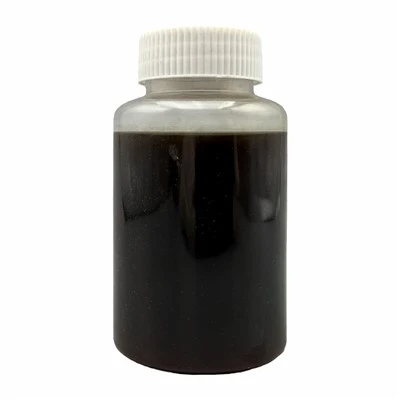
First, let’s get back to basics: an emulsion is a mixture of two immiscible liquids—usually oil and water—where one is dispersed as tiny droplets in the other. Emulsions form when there’s an emulsifying agent, like natural surfactants in crude oil, proteins in dairy processing, or residual solids in wastewater, that keeps the droplets from merging. Demulsifiers are chemicals that neutralize these agents, making the droplets combine into larger ones that separate out.
One of the most common demulsifier categories you’ll hear about is Nonionic Demulsifiers. These are the workhorses of the industry, especially in oilfield applications. Nonionic demulsifiers don’t carry a charge, which makes them versatile because they work in a wide pH range—from slightly acidic to alkaline. Most nonionic demulsifiers are polyethers, like block copolymers of ethylene oxide (EO) and propylene oxide (PO). Here’s how they work: the EO groups are water-loving (hydrophilic), and the PO groups are oil-loving (lipophilic). When you add them to an emulsion, they migrate to the interface between oil and water, displacing the natural emulsifiers that were stabilizing the droplets. For example, in crude oil production, produced water often has a mix of oil droplets stabilized by asphaltenes and resins. Nonionic demulsifiers insert themselves between those droplets, reducing the interfacial tension and letting the droplets coalesce. I’ve seen these demulsifiers work wonders in midstream operations where the crude’s composition is consistent—they’re easy to dose, stable under high temperatures, and don’t leave any residual charge that could cause downstream issues. But nonionic demulsifiers aren’t just for oil. They’re also used in food processing, like separating oil from water in vegetable oil refining, because they don’t add ionic salts that would contaminate the final product.
Next up: Anionic Demulsifiers. These carry a negative charge, which makes them ideal for emulsions stabilized by positively charged emulsifiers. Wait, let’s clarify—emulsifying agents can have charges too. For example, some industrial emulsions, like those from textile dyeing or paper mill wastewater, have emulsifiers that are cationic (positively charged) because of the chemicals used in processing. Anionic demulsifiers, with their negative charge, bond to those cationic emulsifiers, neutralizing their charge so the oil and water droplets can’t stay dispersed. A common type of anionic demulsifier is alkyl benzene sulfonates, which are low-cost and effective for simple, stable emulsions. But here’s the catch: anionic demulsifiers don’t work well in hard water, because the negative charge can react with calcium or magnesium ions to form insoluble salts that don’t do anything to break the emulsion. That’s why we often recommend testing water hardness before suggesting anionic demulsifiers. I had a client in the metal plating industry last year who was struggling with an emulsion of cutting oil and process water that wouldn’t separate with nonionic demulsifiers. When we switched to an anionic demulsifier optimized for metalworking fluids, they saw a 90% reduction in water-oil mixture in just 24 hours. It was a perfect match because the cutting oil’s emulsifiers were cationic, and the anionic demulsifier targeted them directly.
Then there are Cationic Demulsifiers, the opposite of anionic ones—they carry a positive charge. These are a go-to for emulsions where the emulsifying agents are negatively charged, like in oilfield emulsions from water injection systems, or emulsions from sewage treatment. Let’s talk about sewage: wastewater treatment plants often have emulsified oils and fats (FOG) that are stabilized by negatively charged organic matter. Cationic demulsifiers bond to that negative organic matter, forming flocs that sink to the bottom so the water can be treated. Quaternary ammonium compounds are a common type of cationic demulsifier, and they’re also used in dewatering sludges—when you add them to thickened sludge, they bind to the sludge’s particles and release trapped water. A downside of cationic demulsifiers is that they can be more expensive than nonionic ones, and they might not work well in environments with high salt concentrations, which can shield the positive charge and prevent bonding. But for certain applications, like breaking emulsion in produced water that’s been treated with cationic polymers earlier in the process, cationic demulsifiers are the only option. I remember a client in the Gulf Coast who was having trouble with produced water that had already reacted with cationic flocculants during pretreatment. Their existing nonionic demulsifiers weren’t working because the flocculants left a positive charge on the oil droplets. Switching to a specialized cationic demulsifier let them meet their discharge limits without any major changes to their equipment.
Now, let’s talk about Polymeric Demulsifiers—these are a broader category that includes some of the nonionic, anionic, and cationic types I just mentioned, but with a twist: they have a high molecular weight, which makes them more effective than small-molecule demulsifiers for very stable emulsions. For example, high-molecular-weight polyamine demulsifiers are polymeric, and they work by bridging multiple oil droplets together, creating larger flocs that separate faster. I’ve seen polymeric demulsifiers make a big difference in heavy crude oil emulsions, which are super stable because of the high asphaltene content. Small-molecule demulsifiers can’t penetrate the thick asphaltene layer around the oil droplets, but polymeric ones wrap around the droplets and pull them together. We also have graft copolymer demulsifiers, which are polymers with different segments tailored to target specific emulsifiers. For a client processing bitumen (a type of heavy crude), we used a graft copolymer demulsifier with segments that bonded to bitumen’s asphaltenes and other segments that were water-soluble, so it could break the emulsion without leaving residual contaminants. The key with polymeric demulsifiers is that they’re more targeted, so you need to know the exact composition of your emulsion to pick the right polymer. But when you get that right, they’re more efficient—you can use less product, which saves money in the long run.
Another category that’s been gaining traction lately is Biodegradable Demulsifiers. As more industries face strict environmental regulations, many of our clients are looking for demulsifiers that won’t leave harmful residues in separated oil or water. Traditional demulsifiers, especially some anionic and cationic ones, can be toxic to aquatic life or hard to break down in the environment. Biodegradable demulsifiers, on the other hand, are made from natural materials—like plant-based oils, fatty acids, or bio-based polymers—and they break down quickly after use. For example, we offer a biodegradable nonionic demulsifier made from castor oil derivatives that’s perfect for food processing applications, where residues can’t end up in edible oil or discharged to rivers. Last year, a large snack food manufacturer switched to our biodegradable demulsifier for separating fryer oil from wastewater, and they passed their environmental audit with zero issues, plus they reduced their operational costs because the demulsifier didn’t require extra neutralization steps. It’s important to note that biodegradable demulsifiers aren’t one-size-fits-all—some are less effective at high temperatures or for very heavy emulsions, but they’re a great option for clients who prioritize sustainability.
Wait, there’s also Solid Demulsifiers, which are different from the liquid demulsifiers most people are familiar with. These are solid powders or granules that are added to emulsions, usually in cases where liquid demulsifiers might not mix well, or where the emulsion is very concentrated. Solid demulsifiers are often made of materials like calcium oxide, magnesium oxide, or activated carbon, which react with water to release compounds that break the emulsion. For example, in some oilfield operations where produced water is very high in solids, adding solid demulsifier can help separate oil from water without the need for mixing equipment that would spread the emulsion further. We use solid demulsifiers in emergency situations too—if a pipeline breaks and forms a large emulsion in open water, solid demulsifiers can be spread on the surface to quickly break the emulsion and contain the oil. But solid demulsifiers have downsides: they can add solids to the separated water, which might require extra filtration, and they’re not as precise in dosing as liquid demulsifiers. So we usually recommend them for specific, high-concentration applications, not for routine use.
I’ve learned over the years that the biggest mistake people make when choosing a demulsifier is assuming all demulsifiers work the same. Let me give you an example: a client in West Texas was using a generic nonionic demulsifier for their crude oil emulsion, but their crude had a higher wax content than average. The nonionic demulsifier wasn’t effective because the waxes formed a rigid layer around the oil droplets that the demulsifier couldn’t penetrate. We tested a polymeric demulsifier modified to target waxes, and it cut their separation time from 8 hours to 2 hours, and reduced the oil content in the separated water from 500 ppm to 30 ppm. That’s why we always recommend testing a small sample of your emulsion first—even if a demulsifier works for a similar application, the exact composition of your oil, water, and emulsifiers will make a difference.
As a demulsifier supplier, our job isn’t just to sell chemicals—it’s to help clients find the right solution for their unique problem. Whether you’re dealing with oilfield produced water, food processing emulsions, industrial wastewater, or sludge dewatering, there’s a demulsifier type that’s tailored to your needs. Nonionic demulsifiers are versatile for most general applications, anionic and cationic ones target charged emulsifiers, polymeric demulsifiers handle stable or heavy emulsions, biodegradable demulsifiers meet sustainability goals, and solid demulsifiers work for high-concentration, emergency cases.
If you’re dealing with an emulsion that’s causing issues in your operations, don’t try to guess which demulsifier will work. Reach out to our team to discuss your specific needs, share details about your emulsion’s composition, and we can help you test and select the right demulsifier for your process. We’re here to work with you to solve your separation challenges, no matter how complex.
Wastewater Nutrient Additive References
- Sjoblom, J., August, J., & Fjellerup, J. (2003). Demulsification of water-in-crude oil emulsions: Principles and practices. Advances in Colloid and Interface Science, 100-102, 455-487.
- Sheremata, T., & Varley, J. (2004). The role of demulsifier structure in the breaking of water-in-oil emulsions. Colloids and Surfaces A: Physicochemical and Engineering Aspects, 250(1-3), 435-442.
- Moreno, J., et al. (2018). Biodegradable demulsifiers for oil-water separation: A review. Journal of Environmental Management, 217, 762-773.
- Zhang, L., Wang, D., & Yang, H. (2015). Cationic demulsifiers for treatment of oily wastewater: A review. Separation and Purification Technology, 149, 326-335.
Henan Ovation Envioronment Protection Technology Co., Ltd.
As one of the most professional demulsifier manufacturers and suppliers in China, our products have good reputation in the market. Please feel free to wholesale high quality demulsifier in stock here and get quotation from our factory. For price consultation, contact us.
Address: No.305 Jinshui Road, Future Road Street, Jinshui District, Zhengzhou City, Henan Province
E-mail: service@ovationeco.com
WebSite: https://www.ovationeco.com/
