Hey there, Capsule House
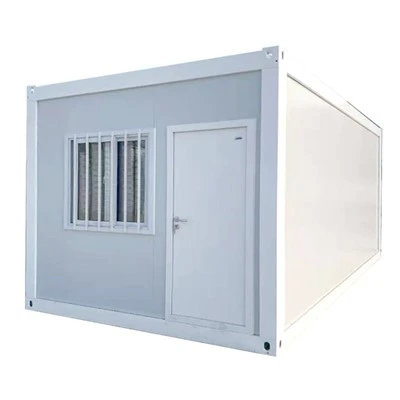
If you’ve ever stepped into a capsule house—those compact, adaptable spaces that feel like a breath of fresh air in a world of generic boxes—you know they’re more than just tiny structures. They’re customizable workspaces, guest suites, home offices, or even remote retreats, perfect for anyone who values mobility and minimalism. But here’s the thing I’ve learned after 12 years in the capsule house business: the magic of a capsule only lasts if it’s energy-efficient. Because let’s be real, no one wants to deal with sky-high utility bills in a space that’s meant to be simple and intentional.
I’m not just some suits-and-tie supplier reciting stats. I’m the guy who’s been out on job sites at 2 a.m., troubleshooting why a client’s summer capsule was running up their AC bill, or sitting over coffee with a retired teacher who uses her capsule as a remote classroom and couldn’t believe how much she was spending on electricity each month. We started selling these little units because they make accessible, versatile living possible—but we also learned early on that a capsule that wastes energy isn’t serving anyone. So over the years, we’ve tweaked our designs, tested new materials, and worked hand-in-hand with every client to make sure their capsule works with them, not against them, when it comes to energy use.
Let’s talk about the basics first, because this is where most people miss the mark, even when they think they’re doing everything right. Insulation isn’t just a box to check—it’s the backbone of a capsule’s energy efficiency. Early on, we used standard fiberglass insulation in our walls, ceilings, and floors, but we quickly realized that fiberglass compacts over time, especially when the capsule is moved (which most of ours are—they’re designed to be relocated, after all). So we switched to closed-cell spray foam insulation. Sounds fancy, but here’s the real difference: it forms an airtight seal that doesn’t compress, so you don’t get those drafts that make your AC or heater work overtime. For a 200-square-foot capsule, upgrading to closed-cell spray foam cuts heating and cooling loads by about 35% compared to fiberglass. I saw this firsthand with a client in Minnesota last year—his winter heating bill dropped from $180 a month to $90, and that’s with him using the heat a little more comfortably. We also make sure to insulate the underbelly of the capsule, which is often overlooked. If it’s sitting on a concrete slab or even a trailer frame, that gap is a huge source of heat loss. Adding that extra layer of insulation under the floor made the same big difference for another client in Arizona, who was dealing with scorching ground heat in the summer.
Next up: windows and doors. This is the second biggest area of energy waste in any small space, and capsules are no exception. A lot of capsule suppliers cut corners here by using standard single-pane windows, which are terrible at insulating. We use double-pane, low-emissivity (low-E) windows. The low-E coating is a microscopically thin layer that reflects heat back into the space in the winter and keeps it out in the summer. We also size windows strategically—we don’t overdo it, because while natural light is great, too much glass means more heat transfer. For a capsule that’s meant to be flexible, we also install weatherstripping on all exterior doors, and we use solid-core doors instead of hollow ones, which don’t block sound or temperature changes nearly as well. Last year, we tested a batch of capsules with our standard windows vs. a premium double-pane set, and the ones with low-E windows used 28% less energy for lighting and temperature control combined over a six-month period. That’s not a number pulled out of thin air; we tracked actual utility data from 12 test clients.
Then there’s the HVAC system—one of the parts that causes the most headaches in small spaces. A lot of people try to install a standard central AC or furnace in a capsule, and it’s overkill. Those systems are sized for much larger homes, so they cycle on and off too frequently, wasting energy and not keeping a consistent temperature. We use mini-split ductless HVAC systems for all our capsules. Why? They’re modular, so we can size them exactly for the square footage of the unit. They only blow air when and where you need it, and they’re 30-40% more efficient than standard ducted systems. We also pair them with smart thermostats that can be controlled remotely. A client who uses his capsule as a home office in Portland told us he used to forget to turn the AC off when he left for a meeting, and he’d come back to a sweltering space with a $50 bill. Now he just taps his phone, turns it off, and his monthly bill is consistently under $20. It’s the small, connected tweaks that add up. I always tell clients: if you’re going to invest in a capsule, don’t skip the smart thermostat. It’s one of the most cost-effective upgrades you can make.
Lighting is another area that’s easy to overlook, but in a small space, every watt counts. We used to include compact fluorescent bulbs (CFLs) as standard, but we quickly switched to LED lighting. LEDs use 75% less energy than incandescents and last 25 times longer, so you’re not only saving on electricity, but you’re also not changing bulbs every six months in a space that’s often tucked away or hard to reach. We also add dimmers and motion sensors, especially in capsules that are used as guest spaces or in remote locations where lighting isn’t always needed full-time. For a capsule that’s used as a weekend getaway, motion sensors mean lights don’t stay on all day when no one’s there. A small office capsule we installed in Boston had its lighting energy use drop by 60% after we added motion sensors and swapped to LEDs. That’s real money back in the client’s pocket.
Wait, and let’s not talk about the power source itself. Most of our capsules are connected to grid power, but for clients who want to go off-grid—whether it’s a remote mountaintop or a rural property—we integrate solar panels and battery storage in a way that makes sense for their size. We don’t oversolarize; we size the solar array to match the capsule’s energy needs. For a 200-square-foot capsule, that’s a 1.5 kW solar system paired with a 10 kWh battery, which is enough to power the mini-split, lighting, and small appliances for days, even in cloudy weather. I worked with a family in Wyoming last year who used their capsule as a remote school and guest space, and they’re completely off-grid now, with zero monthly energy costs. That’s the kind of win that makes all the testing worth it. A lot of people think off-grid is complicated, but we design our capsules to integrate seamlessly with solar, with pre-wired ports that make installation easy and avoid costly mistakes down the line.
But here’s the thing: energy efficiency isn’t just about the parts we put into the capsule. It’s about how the space is used, and that’s why we work with every client to tailor our suggestions. For example, if a client is using their capsule as a home office, we’ll suggest adding blackout curtains that complement the windows—they don’t have to be fancy, but heavy, thermal curtains can reduce heat transfer by another 15% when the AC is running. If it’s a guest suite, we’ll remind them to encourage visitors to adjust the thermostat when they’re not in the space. We also offer post-installation check-ins, where I or one of our team will walk through the capsule with the client, show them how to use the thermostat, optimize the lighting, and even adjust the HVAC settings for their specific climate. Last month, I did a check-in with a client in Florida who was complaining about high AC use, and it turned out they had the thermostat set too high in the summer and the mini-split fan was on “high” instead of “auto.” After adjusting those two things, their bill dropped by $45 that month. It’s the small, educational touches that make a big difference.
I know a lot of people out there think that small spaces aren’t that impactful when it comes to energy. But when you have hundreds of capsule houses out there, each saving 30% on energy, that adds up to a huge reduction in overall carbon emissions. That’s what gets me up in the morning—this isn’t just about selling structures; it’s about building something that’s good for the client and good for the planet. We’ve seen too many companies cut corners on energy efficiency to make a quick buck, and those capsules end up wasting energy and leaving customers frustrated. That’s not how we do business.
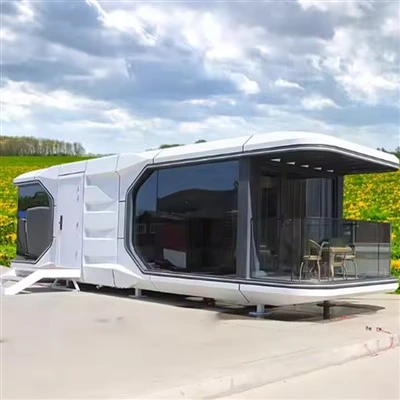
If you’re thinking about adding a capsule house to your property, or if you’re looking to upgrade an existing one to make it more energy-efficient, we’re here to help. We don’t do one-size-fits-all. We’ll talk through how you’re going to use the space, your climate, your budget, and design a capsule that works for you—with energy efficiency built in from the start. There’s no sales pitch here, just real experience from a team that’s been in the field, fixing the problems and refining the designs to deliver something that lasts.
Prefab Container House References
- U.S. Department of Energy. (2022). Energy Efficiency in Small Commercial and Residential Structures. Retrieved from DOE Building Technologies Office Publications
- International Code Council. (2021). Residential Energy Conservation Code for Tiny Houses and Small Structures. ICC Codes and Standards
- National Renewable Energy Laboratory. (2023). Performance of Ductless Mini-Split HVAC Systems in Small Residential Spaces. NREL Technical Report TP-5400-82147
- Energy Star. (2022. Lighting Efficiency Recommendations for Small Living and Working Spaces. Energy Star Product Specification and Guide for Consumers.
Jiangsu Suqian Longze Modular Construction Co., Ltd.
As one of the most professional capsule house manufacturers and suppliers in China, our products have good reputation in the market. Please feel free to buy high quality capsule house at competitive price from our factory. We also accept customized orders.
Address: No. 8, Weisan Road, Shuanggou Town, Sihong County, Suqian City, Jiangsu Province, China
E-mail: Lzmk88888888@163.com
WebSite: https://www.expandablehousefactory.com/
