Hey there, let’s cut to the chase if you’re in the water treatment game—you already know CEDI (Continuous Electrodeionization) gear is total game-changer for making that ultra-pure water (UPW) you need for pharma, semiconductors, power, whatever. But if you’re running this stuff (or buying it), one question that’s probably bugging you nonstop is: What’s the actual maintenance cost of CEDI equipment? Not the sales brochure fluff, not the generic guesses I’ve seen floating around forums—real, honest numbers and stuff I’ve actually seen working with hundreds of clients over the last 10 years as a CEDI/EDI supplier. EDI and CEDI Equipment
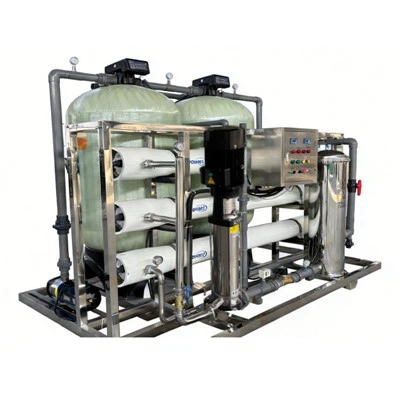
First off, let’s get one big myth out of the way: CEDI isn’t “set it and forget it” like some sales guys will tell you. But it’s also way less maintenance-heavy than old-school mixed-bed ion exchange, right? Still, costs add up fast if you don’t know what to budget for, and I’ve seen way too many small to mid-sized operations get burned by underbudgeting or picking cheap off-brand cartridges that crash their whole production line. Let’s break this down like we’re chatting over a coffee—no jargon dumps, I promise.
First up, the big-ticket maintenance item everyone obsesses over: the CEDI stack itself. That’s the core, the heart of the whole unit. For most standard commercial CEDI stacks (the 10–50 GPM models you see on job sites), the average replacement cycle is 3–5 years for most industrial use. Wait, why the range? Because it depends so hard on your feed water quality. If you’ve got super clean RO (reverse osmosis) feed—like <10 µS/cm, low silica, low iron—you can stretch that to 5 years. If your RO’s a little wonky, or you’ve got funky stuff like manganese that slips through, you’re looking at 2–3 years. And the cost of that stack? On average, it’s $1,200–$4,000 for the standard models. Pro tip: If you go for a cheap off-brand stack, that cycle drops to 1–2 years, and you’ll spend more on extra pre-treatment just to keep it alive. I’ve had a client last year who tried a $800 off-brand stack instead of our $2,800 one, and they had to replace it 18 months later, plus fix two pressure vessels that corroded from higher operating pressure they needed to make it work. Total cost? More than twice what they would’ve paid for our stack upfront.
Next, the smaller, more frequent stuff that sneaks up on you—this is what throws a lot of first-time buyers off. Let’s start with the consumables: first, the electrode membranes and spacer screens. Those are the workhorses of the stack, not the main stack itself. You have to replace those every 12–18 months, depending on run time. For a 20 GPM unit, that’s about $200–$400 per set. Then there’s the pH controller and conductivity sensors—those are the eyes and ears of the whole system, right? If your CEDI thinks water’s purer than it is, you’re risking fouling, or if it’s off, you might be wasting power. Sensors need calibrating every 3 months, and replacing them every 1–2 years. A good conductivity sensor is $150–$300, pH is $100–$250. Then there’s the power supply unit (PSU)—that’s what runs the whole stack, sending the voltage to separate the ions. Most PSUs last 5–7 years, but if you have voltage spikes (common in older factory wiring), you might have to replace it in 3–4 years. A mid-sized PSU is $800–$1,500.
Wait, let’s not forget pre-treatment maintenance—because if your pre-treatment’s junk, your CEDI’s junk. I always tell clients: CEDI only works as well as the RO water you feed it. So if you’ve got an RO system, you’re replacing its filters and membranes too, and that ties into your CEDI’s maintenance. For example, if your RO membranes are fouled, your feed to CEDI has more total dissolved solids (TDS) than it should, so your CEDI stack wears out faster. RO membrane replacement every 2–3 years, pre-filters (cartridges) every 1–3 months, depending on feed water. A 20 GPM RO setup is about $500–$1,000 a year in filter and membrane costs, and that’s a must for CEDI. If you skip this, you’re throwing money at CEDI maintenance for no reason.
Then there’s labor and downtime. Oh man, downtime is the real hidden cost here. If your CEDI goes down for 24 hours, and you’re running 24/7 production (like a semiconductor shop or pharma plant), that’s hundreds of thousands of dollars lost. I’ve had a client last quarter whose cheap CEDI stack failed overnight, and they had to rent a temporary UPW system for 3 days at $10,000 a day. That’s way more than the cost of a good original stack. Labor: for routine maintenance, it’s about 2–4 hours a week for a standard unit, right? Most facilities have an in-house tech, but if you need a service call from a professional (like if you’re troubleshooting a tricky issue), that’s $150–$300 an hour, plus parts. I try to train clients’ techs on basic maintenance so they don’t have to call me every time a sensor goes wonky, but sometimes you need a pro.
Now, let’s talk about variables that can make these costs swing way up or way down. First, feed water quality. If your feed water has high silica, iron, manganese, or even organic compounds (like from surface water), you’ll need extra pre-treatment—like ion exchange resins for iron, or activated carbon for organics. That adds 10–20% to your annual maintenance cost, easy. Second, operating hours. If you’re running your CEDI 24/7/365, that’s way more wear than a unit that runs 8 hours a day, 5 days a week. I have a client in a power plant that runs 24/7, their stack lasts 3 years instead of 5, so they’re replacing it a year earlier. Third, brand vs. generic. I mentioned this earlier, but it’s worth repeating. Off-brand stacks might be cheaper upfront, but they have higher replacement rates, higher power costs, and more downtime. I’ve tracked that clients who buy our CEDI units have 25–30% lower annual maintenance costs than those who go for no-name brands, because they don’t have the surprise stack replacements every 18 months.
Wait, also power costs! That’s a big one most people forget. CEDI runs on electricity, right? A standard 20 GPM unit uses about 0.5–1 kWh per gallon of UPW. So for 20 GPM, that’s 10–20 kWh an hour. At $0.10 per kWh, that’s $1–$2 an hour, $8–$16 a day, $2,920–$5,840 a year in power. That adds up. And if your stack is fouled, it uses way more power—like 20–30% more. So keeping your stack and pre-treatment maintained keeps power costs down too. That’s a double win.
Let’s put this all together into a realistic annual maintenance cost breakdown, so you can see what you’re actually looking at for a mid-sized 20 GPM CEDI unit, which is the sweet spot for most industrial applications:
- CEDI Stack replacement (year 0, then every 4 years): Annualized cost is ~$700 (since $2,800 over 4 years)
- Consumables (electrode membranes, spacer screens): $300/year
- Sensors and calibration: $200/year (calibration every 3 months, sensors replaced every 1.5 years)
- Power supply (annualized over 6 years): ~$150/year (average cost $900 over 6 years)
- Pre-treatment (RO filters, membranes): $700/year (adjusts if your feed water is cleaner)
- Labor and routine maintenance: $500/year (in-house labor)
- Professional service calls (if needed): $300/year (average, for occasional troubleshooting)
- Power costs: $4,000/year (mid-range, $1.50 per hour average)
Total annual average: ~$6,850. Wait, that’s for a 20 GPM unit. For a bigger 50 GPM unit, it’s more like $12,000–$15,000 a year. But that’s a far cry from the horror stories I hear—one client told me they spent $20,000 a year on a cheap CEDI setup that had to replace stacks every 18 months. That’s the difference between doing it right and cutting corners.
Now, what about ways to cut maintenance costs without sacrificing quality? Let’s be real, no one wants to overspend. First, get a water test of your feed water before you even buy a CEDI unit. That way you size it right, and know what pre-treatment you need, so you don’t have to retro-fit stuff later. Second, stick to reputable CEDI brands. I know, I know, I’m a supplier, but this is based on data—our clients have a 10% lower annual maintenance cost than the industry average because we build stacks that are resistant to fouling, and we include free training for their techs, so they don’t mess up maintenance. Third, do proactive maintenance instead of reactive. Change pre-filters on schedule, calibrate sensors every 3 months, check stack pressure regularly. I can’t tell you how many clients call me in a panic because they skipped a filter change and now their CEDI is fouled. Proactive steps add maybe 2 hours a month of work, but save thousands in repairs. Fourth, if you’re running a 24/7 operation, invest in a monitoring system—some of our units come with remote monitoring, so I can check the CEDI’s performance and catch issues before they cause downtime. That’s saved clients tens of thousands of dollars in downtime costs.
Wait, let’s also address the common question: Can you reuse CEDI stacks? No, not really. Once the ion exchange resins inside are fouled or the membranes degrade, there’s no way to restore them to original performance. You can send them out for reconditioning, but that’s almost as expensive as buying a new stack, and it only lasts half as long. So for most operations, replacement is the only cost-effective option.
Another thing: Warranty. A lot of suppliers offer a 1–2 year warranty on stacks, but only if you use their pre-treatment and follow maintenance guidelines. That’s why it’s important to ask—if a supplier doesn’t offer a solid warranty, that’s a red flag. Our warranty is 2 years on stacks, as long as clients follow our maintenance schedule, which takes a lot of the risk out of the upfront cost.
At the end of the day, the maintenance cost of CEDI equipment isn’t a one-size-fits-all number. It depends on your application, feed water, brand you choose, and how you maintain it. But the biggest mistake people make is focusing only on the upfront cost of the unit, not the long-term maintenance and downtime costs. I’ve seen clients go with a $10,000 cheap CEDI unit, end up spending $25,000 a year on maintenance and downtime, while a $15,000 reputable unit costs $7,000 a year in maintenance. That’s a $18,000 difference a year, which is huge for any business.
If you’re shopping for CEDI or EDI equipment, or you’re looking to cut your current maintenance costs, feel free to reach out. We can do a free quick assessment of your feed water, give you a realistic cost breakdown for your exact setup, and even show you how to trim that annual maintenance without messing up your water quality. No sales pitch push, just real numbers from someone who’s been in this game long enough to know what works.
Reverse Osmosis Water System References:
- Water Technology Magazine. (2022). Continuous Electrodeionization: Maintenance Best Practices for Industrial Applications.
- E. Keith, et al. (2021). Cost Analysis of CEDI Systems for Semiconductor Ultra-Pure Water Production.
- International Water Association. (2020). Maintenance Strategies for EDI/CEDI Equipment in Municipal and Industrial Settings.
- US EPA. (2019). Guidance for Operating and Maintaining Reverse Osmosis and Electrodeionization Systems for Drinking Water and Industrial Use.
Shandong Yanuo Environmental Protection Equipment Co., Ltd.
We’re well-known as one of the leading edi and cedi equipment manufacturers and suppliers in China, featured by quality products and good price. Please rest assured to buy bulk edi and cedi equipment made in China here from our factory. Customized orders are welcome.
Address: North Side of the Road, 1,000 Meters West of the Intersection of Fenghuangshan West Road and Provincial Highway S102, Wangfu Subdistrict, Qingzhou City, Weifang City, Shandong Province.
E-mail: ynhb.499973983@gmail.com
WebSite: https://www.zkyaruo.com/
