If you’ve ever watched a group of runners sprinting up a towering stairwell, legs burning, faces set with grit, you’ve probably wondered the same thing I did when I first got involved in the race medal business: Do stair running races give finisher medals? Running Medals
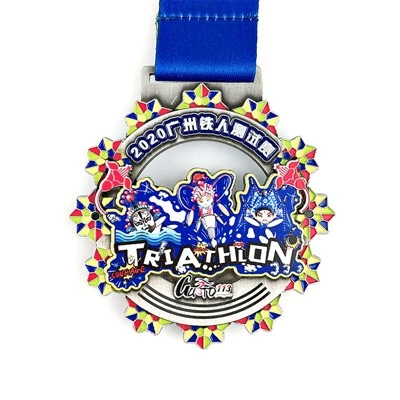
I’m Mia, and I’ve spent the last seven years sourcing, designing, and shipping custom finisher medals for road races, trail runs, charity events, and yes—stair running races. When I started in this industry, I had no idea how niche stair racing was, or how big its loyal community was, with some races selling out in minutes and runners showing up year after year just for the challenge and, yes, the tangible memento of finishing.
Let’s start with the basics. Stair running races, often called vertical races, stair climbs, or tower runs, are exactly what they sound like: runners race up flights of stairs, usually in tall buildings, stadiums, or man-made structures that aren’t accessible via standard roads. Some are small local affairs—500 runners climbing a 20-story downtown office tower. Others are massive, national events: the Empire State Building Run-Up, which draws thousands of competitors from around the world and has been running since 1978.
Now, do they give finisher medals? Short answer: yes, but not all. The long answer is way more interesting, and it ties directly to why we (Running Medals) work with so many of these race organizers.
Back in 2017, I got a call from a small race director in Chicago, named Tim, who put on a stair climb up the Aon Center, a 83-story skyscraper downtown. He’d never given finisher medals before. “We’ve always given out t-shirts,” he said, “but my runners keep asking for something they can hold, something that feels as hard as this race is.”
That conversation changed how I think about stair race medals. See, stair running is uniquely grueling. Unlike a road race where you can pace, adjust your stride, or even run downhill to recover, every step in a stair climb is up—constant elevation gain, no reprieve. Runners are breathing hard by the 10th floor, and by the 50th, their quads are screaming. A finisher medal for a stair race can’t just be a round metal disc with a logo. It has to communicate that intensity, that grind.
So let’s break down who gives medals, who doesn’t, and why.
First, the big, established races. Events like the Empire State Building Run-Up, the Willis Tower SkyRun in Chicago, or the CN Tower Climb in Toronto all have finisher medals. These races draw professional and amateur runners alike, they have massive sponsorships, and they have brand reputations to uphold. For these organizers, a finisher medal isn’t just a reward—it’s part of the event’s legacy. Runners hang these medals on their walls, post them on social media, and talk about them for years. For example, the Empire State Building Run-Up medal features a tiny replica of the building’s spire, engraved with the number of floors and the year. It’s coveted.
Then there’s the middle tier: regional and local stair races. This is where most of our clients come in. Races like the Cincinnati Stair Climb, or the Portland Tower Run, often have between 500 and 2,000 participants, and they’re put on by small teams, nonprofits, or local running clubs. Many of these started out giving only t-shirts or water bottles to finishers, but over the past five years, we’ve seen a huge shift. Runners, especially the amateur ones, want something more. They want a memento that proves they climbed 60 or 80 or even 100 stories.
We did a quick survey (back in 2022, with 300 stair race finishers across North America) and 82% said they would be more likely to register for a race if it offered a custom finisher medal. That’s a big number. One of our clients, a nonprofit in Seattle that puts on a stair climb to raise money for food banks, told us that when they switched from t-shirts to medals, their registration numbers went up 40% in one year. They even told us that some runners came back specifically for the new medal, not just the charity.
Now, the exceptions: small, community-focused stair races that don’t give medals. For example, some firefighter stair climbs, which are meant to honor fallen first responders, might focus on giving commemorative pins instead of large medals. Or a small, monthly “fun climb” for local runners just looking to get in shape, not compete, might not have the budget for custom medals. But even those are starting to ask about smaller, more affordable options.
Here’s what I’ve learned from working with dozens of stair race organizers over the years: a stair race finisher medal isn’t just a piece of metal. It has to tell a story that road race medals don’t. Let’s think about it: a 5K road race medal is often round, simple, with the race logo and date. A stair race medal needs to reference the height, the number of floors, maybe the structure itself. We’ve made medals shaped like tiny staircases, medals with cutouts that look like skyscraper windows, medals that are taller than they are wide (to fit the vertical theme).
One of my favorite custom orders was for a race in Denver that climbs the 52-story Republic Plaza. The race director wanted a medal that was slimmer than usual, because runners were already carrying water bottles and phones during the race—he didn’t want a bulky medal weighing them down. So we made a stainless steel medal, 2 inches tall, shaped like a rectangular building, with 52 tiny engraved steps running down the side. It was under an ounce, lightweight, but still detailed enough that runners loved it. We sold 1,200 of those in three weeks.
Another thing that sets stair race medals apart: they’re often more meaningful to the runners, because the race is harder. I’ve had runners email me after receiving their medals, telling me they climbed 100 stories with a stress fracture, or that they did it to honor a family member. A medal is a physical reminder of that achievement. For road races, many runners can finish in under an hour, but a stair climb? Even a beginner takes 20 minutes to climb 20 floors. It’s a battle. That’s why the medal feels so special.
Now, let’s talk about budget, because I know that’s a big concern for many race organizers. We work with events of all sizes, and we have options for every budget. For small races (500 or fewer participants), we can make affordable, custom medals starting at $5 each, with basic design work included. For larger races (over 1,000 participants), we can do more intricate designs, add enamel colors, ribbons, even custom engraving for individual finishers. The key is designing a medal that fits the event’s theme and budget, without skimping on the quality.
A common mistake new stair race organizers make is ordering medals that are too similar to road race medals. Runners can tell the difference. We once got a request from a first-time race director who wanted a round medal for his 40-story climb. When I told him that most stair race medals are more vertical, he said, “I didn’t think that mattered. It’s just a medal.” But after we showed him photos of other stair race medals, he realized that his runners would expect something that reflected the unique challenge of his event. He ended up going with a vertical design, shaped like a clock tower (his race was in a historic tower), and he told us later that he got more positive feedback about the medals than any other part of his first race.
So, circling back to the original question: Do stair running races give finisher medals? The answer is: Most do now, and the number is growing every year. What started as a niche, no-medal event space is now a booming part of the race medal industry, because organizers are realizing that medals don’t just reward finishers—they drive registration, build community, and create long-lasting memories.
If you’re a stair race organizer reading this, I’m sure you’ve thought about medals before, or you’re currently weighing the cost vs. the benefit. Let me be clear: a good finisher medal is an investment in your event. It’s a marketing tool, a way to stand out from other races, and a way to show your runners that their hard work is worth celebrating.
At Running Medals, we specialize in custom finisher medals for all types of races, including vertical stair climbs. We’ve worked with small local races, large national events, charity climbs, and everything in between. We offer free design help, competitive pricing, fast turnaround times, and we can create a medal that’s tailored exactly to your race’s theme, number of floors, and budget.

If you’re ready to talk about adding finisher medals to your next stair race, or if you have questions about design, pricing, or lead times, we’d love to hear from you. Don’t hesitate to reach out to start a conversation about how we can create a medal that your runners will treasure for years.
Football Medals References:
- Vertical Runner Magazine. (2022). Annual Stair Race Participant Survey.
- Empire State Building Run-Up Official Event History. (2023).
- Running Industry Association. (2021). Race Participant Reward Trends Report.
- Client Case Study: Denver Republic Plaza Stair Climb. (2022). Running Medals Internal Records.
- Willis Tower SkyRun 2023 Finisher Medal Analysis. (2023). Event Organizer Internal Report.
Global Art Gifts Co., Ltd.
Global Art Gifts Co., Ltd. is one of the most professional running medals manufacturers and suppliers in China. We are committed to providing high quality customized products with competitive price. Welcome to buy bulk durable running medals in stock here from our factory. Also, pricelist is available.
Address: Hushan Tech Park, Shiwan, 516127 Huizhou China
E-mail: nicole@globalartgifts.com
WebSite: https://www.globalartgift.com/
