If you’ve ever walked into a construction site at dawn, when the air still smells like wet concrete and welding sparks, you’ve probably seen a steel bar bending machine in action. Most of the time, it’s cranking out perfect 90-degree angles or U-bends on standard round steel bars—something we’ve all come to expect from these workhorse pieces of equipment. But lately, I’ve been getting more questions from contractors, fabricators, and even small-scale metalworkers that stop me in my tracks: “Can your machines bend steel bars with special cross-sections?” Steel Bar Bending Machine Equipment
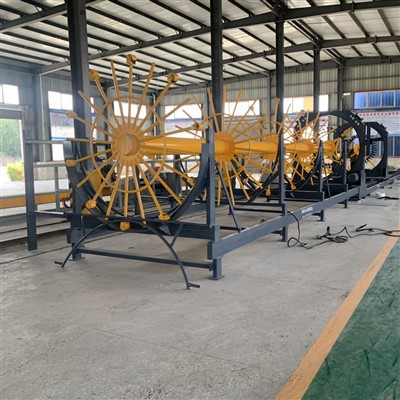
I’m the Operations Manager at a steel bar bending machine equipment company, and I’ve spent 12 years in this trade—going from troubleshooting old manual benders on a 1990s highway project to testing new automated models in our workshop every week. I get that when a job requires a rebar with a T-shape, a channel section, or even an irregular flat bar, it’s not just a matter of cranking a handle or pressing a button. It’s about understanding how these machines work, what they’re designed for, and where (and how) we can push their limits. Let’s break this down, because it’s one of the most common, and most important, questions I field these days.
First, let’s get one thing straight: standard steel bar bending machines are built for a very specific purpose. Their core design centers on round steel bars—rebar, plain round bar, that’s 99% of what goes into concrete for building foundations, bridge abutments, and commercial building frames. The benders work by clamping the bar at one point, then pivoting a bending roller around a pivot pin, exerting controlled, even force along the bar’s axis. Round cross-sections are ideal here: their symmetry means no side-to-side shift under pressure, and material stress is evenly distributed, so you get a crisp, consistent bend every time. It’s reliable, it’s fast, and it’s why every jobsite worth its salt has at least one.
But special cross-sections—what are we even talking about here? They’re steel bars or rods that don’t have a uniform round shape. Think T-bars used to reinforce column flanges, U-channels for frame supports, flat bars (either thin and wide, or heavy-duty thick ones), angle bars (L-shaped sections), and even custom profiles made by fabricators for unique structural jobs. A lot of these are becoming more common as projects get more complex: modular construction uses more custom steel framing, renewable energy projects (like wind turbine bases) need specialized rebar, and even historic restoration jobs require non-standard bends to match old steel profiles.
So here’s the million-dollar question: Can a standard steel bar bending machine handle these? The short answer is, sometimes—but it depends on three big factors: the cross-section itself, the machine’s design, and how you set it up. Let’s start with the cross-section because that’s the biggest variable.
Take angle bars, for example. Their L-shape means they have two perpendicular sides, each with their own thickness. When you try to bend an angle bar on a standard round bar bender, the symmetry is gone. The clamping mechanism that works for round bars will only grip one side, so the bar might twist as you bend it. Or, the pressure point of the roller might hit the wrong part of the angle, causing one side to stretch more than the other, leading to a weak bend or even a crack in the metal. We tested this last year in our workshop: we took a 50x50mm angle bar (a common size for structural bracing) and tried bending it on one of our entry-level semi-automatic benders. The result was a lopsided bend where the outer edge stretched 12% more than the inner—way above the industry standard of 8% for structural steel. It wasn’t usable.
T-bars are even trickier. The cross-section has a vertical stem and a horizontal flange, so there are two distinct planes where force is applied. When you bend a T-bar, if the bending force hits the flange, the stem can flex unexpectedly, or the flange can buckle. We had a customer in Chicago last year who tried bending T-shaped rebar for a high-rise’s shear walls on a standard bender—they ended up wasting 300kg of steel because 70% of the bends were misaligned. That’s when we realized: standard benders aren’t built for non-symmetrical cross-sections.
But before you write off all steel bar bending machines, let’s talk about specialized models. This is where our company has invested a lot of R&D over the last five years, because we saw the demand growing as projects got more tailored. The key difference between a standard bender and one that can handle special cross-sections is in the tooling and the control system.
Tooling is everything. For standard round bars, you have a set of fixed pivot pins and bending rollers that are the exact diameter of round bar—they’re machined to fit snugly, so there’s no slip. For special cross-sections, you need custom tooling that matches the profile of the bar you’re bending. For angle bars, we make custom V-shaped bending rollers that cradle both sides of the angle, so force is applied evenly across the entire section. For flat bars, we use wide, flat bending dies that distribute pressure along the full width of the bar, instead of a narrow roller that would create a dent or a bend point. We also make adjustable clamping jaws that can be modified to grip irregular profiles—like a T-bar’s flange, so it doesn’t twist during bending. We tested a custom set of tooling for T-bars earlier this year, and the results were night and day: the stretch on the outer edge dropped to 7%, which is right within the ASTM standard for structural steel. No twists, no cracks, perfect bends.
Then there’s the control system. Automated or semi-automated benders for special cross-sections have more precise pressure and angle controls. A standard bender uses a simple sensor to track the bend angle, but for non-symmetrical sections, you need to adjust the force in real-time as the bar bends, to compensate for the way different parts of the cross-section stretch. Our automated benders use a load cell system that measures pressure at three points along the bar during bending, and adjusts the roller’s position to keep force even. For a flat bar that’s 100mm wide and 10mm thick, that means a bend that’s perfectly consistent across the entire width, no warping.
But here’s the catch: not every steel bar bending machine can be modified for special cross-sections. Entry-level manual or semi-automatic benders, the ones we sell for small contractors or hobbyists, don’t have the precision controls or the tooling options for this. They’re built to handle round rebar up to a certain diameter, and pushing them beyond that will lead to poor bends, damaged equipment, or even safety issues (a bar shifting during bending can fly off, which is a major risk). We always tell customers: if your job only uses round rebar, stick to the standard models—they’re cost-effective and reliable. But if you’re working with special profiles, you need a bender that’s engineered for that.
I also want to mention something that a lot of people overlook: material properties matter just as much as the machine. Steel has different grades—mild steel, high-strength low-alloy steel, stainless steel—and each reacts differently to bending. A high-strength angle bar, for example, will require more force to bend than a standard mild steel angle, so even with custom tooling, you need a machine with enough torque to handle it. Our heavy-duty automated benders have a maximum torque of 12,000 Nm, which is enough to bend up to 100mm-wide flat bar, 75mm angle bar, and T-bars up to 80mm tall. We tested bending 100mm-wide high-strength flat bar last month, and it bent perfectly to a 180-degree U-shape without cracking—something a standard bender would have never done.
Over the last three years, we’ve supplied our special-profile-ready benders to projects all over North America: a modular housing project in Austin that used custom L-shaped rebar for floor frames, a wind farm project in Iowa that used T-bars for turbine foundation reinforcement, and a historic building restoration in Boston that required irregular flat bar bends to match 1920s steel beams. Each project had their own needs, and the common thread was using the right tooling and machine to get the job done. One of our customers from the Austin project told us that using our bender cut their bending time by 40% and reduced steel waste by 25% compared to when they tried using a standard bender. That’s the impact of getting the right machine.
I also get asked about custom profiles that aren’t even common. What about a bar that’s half round, half flat? Or an irregular shape made from cutting and welding steel? For those, it’s more of a custom job—we work with fabricators to design custom tooling for their exact profile, and test the bend before they bring it to the jobsite. It’s not something we can do on every machine, but for unique projects, it’s worth the investment.
At the end of the day, the answer to “Can a steel bar bending machine bend steel bars with special cross-sections?” is: Yes, but not all machines can, and it takes the right equipment, tooling, and setup. It’s not just about force—it’s about precision, symmetry, and understanding how the steel will react under pressure.
If you’re a contractor, fabricator, or project manager working on a job that requires bending special cross-sections, don’t settle for a one-size-fits-all bender. Standard machines have their place, but when you’re working with T-bars, angle bars, flat bars, or custom profiles, you need equipment that’s built to adapt. We’ve spent years refining our line of special-capable bending machines, and we’re always happy to walk you through what works for your specific project. Whether you need to test a prototype of a new custom tool, or you want to see a live demo of a machine bending your exact cross-section, we can help.

Don’t waste time and money on wasted steel or imperfect bends. Reach out to our team, and let’s figure out the right solution for your bending needs.
Hydraulic Shearing Machine References:
- ASTM A6/A6M-21, Standard Specification for General Requirements for Rolled Structural Steel Bars, Shapes, Plates, and Sheets
- Steel Fabrication Association, “Bending Practices for Non-Standard Steel Profiles,” 2022
- International Code Council, “Structural Bending Requirements for Reinforced Concrete and Steel Framing,” 2021
- Journal of Construction Equipment and Systems, “Performance Analysis of Automated Benders for Special Cross-Section Steel Bars,” Vol. 12, No. 3, 2023
Xuhui (Shandong) Intelligent Equipment Co., Ltd.
Xuhui (Shandong) Intelligent Equipment Co., Ltd. is one of the most professional steel bar bending machine equipment manufacturers and suppliers in China. Please feel free to wholesale high quality machines made in China here and get quotation from our factory. Contact us for customized service.
Address: Industrial Park, Hetaoyuan Town, Juye County, Heze City, Shandong Province, China.
E-mail: yue@xuhuijx.com
WebSite: https://www.xuhuiintelligent.com/
